In Aimgod: Habits you don't do, live now
How to Stop Eating When You're Bored and Turn the Urge Into Energy
How to stop eating when bored without a diet or an empty fridge: the sweets stay at home, the evening gets a line in the plan at 22:00, the picture does the rest.
 By Oleksandr Sendziuk, founder of AimgodHas planned every day in his own system for 10 years. · 6 min readFollow on LinkedIn ↗
Ten in the evening, the fridge opens, and you weren't hungry. The screen was on, the day was long, the hand went by itself. Half an hour later you've eaten something you didn't choose and you feel worse than before the fridge.
Every guide on how to stop eating when bored says the same two things: don't keep it in the house, and drink a glass of water. The first one is half a lesson. This is the other half.
Not buying it is not the same as not needing it
I decided this year not to be run by food. Not with another diet. I've done the big versions: no meat in two months, fully raw in six, no bread in twelve, all in healthy eating habits. Most of it came back. Meat never did. The thing that was left was smaller and harder: eating without deciding to.
The usual fix is an empty house. No sweets, no chips, nothing to reach for. It works right up to the moment someone brings a cake, or you're at a friend's table, or you pass a shop. Then the habit is back and it's stronger, because you never practised against it.
I'd rather have the sweets in the house and not need them. The jar on the shelf, the hand still. That's not a diet rule. That's the skill, and you can only build it with the thing in reach.
Get the free 2027 Planning Kit
9 printable pages: your year on one page, 3 goals with a plan for the obstacle, a 90 day map, the weekly review, a daily page and a 67 day habit tracker. Plus one calm letter a week from the founder of Aimgod.
We only use your email to send the letter. Privacy
Boredom eating is a habit, not a hunger
Hunger has a time and a body behind it. Boredom eating has a trigger: the screen, the pause, the evening with nothing in it. You don't decide, you drift.
So treat it like any other habit you don't do. A habit can be a thing you don't do, and this one has an hour: late evening, when the day is done and the fridge is close. Mine is 22:00.
The line in the plan
"Didn't eat out of boredom", 22:00, every day. It's in my plan with the gym and the smoothie. At ten I look at it. Didn't? Tick. Did? It stays open and I go to bed. No speech, no guilt, no making up for it tomorrow.
Why a time? Because the decision is made in the morning, when you're clear, and the plan carries it to 22:00 when you're not. In my own account a task with a time gets done 69% of the time, one without 48%.
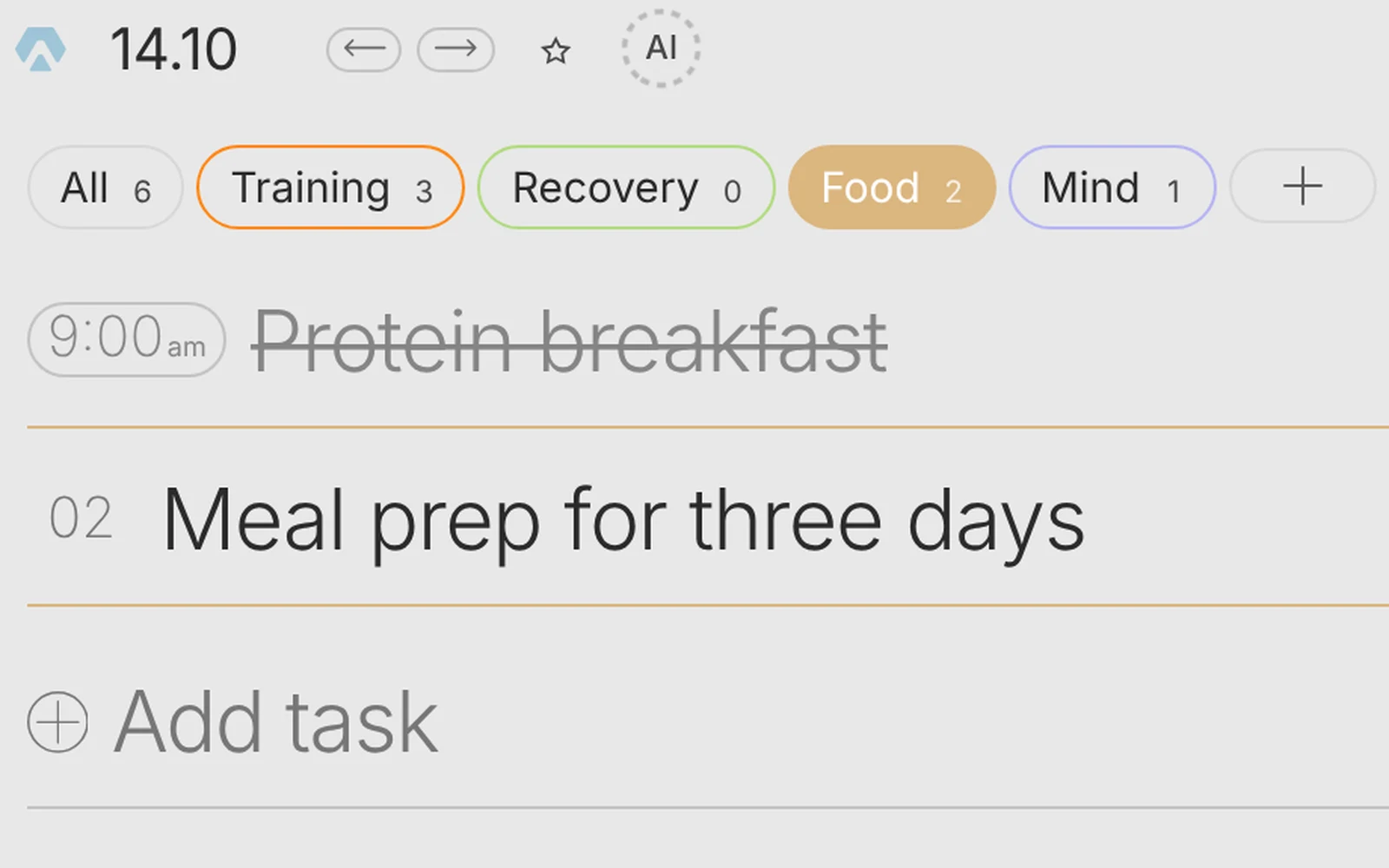
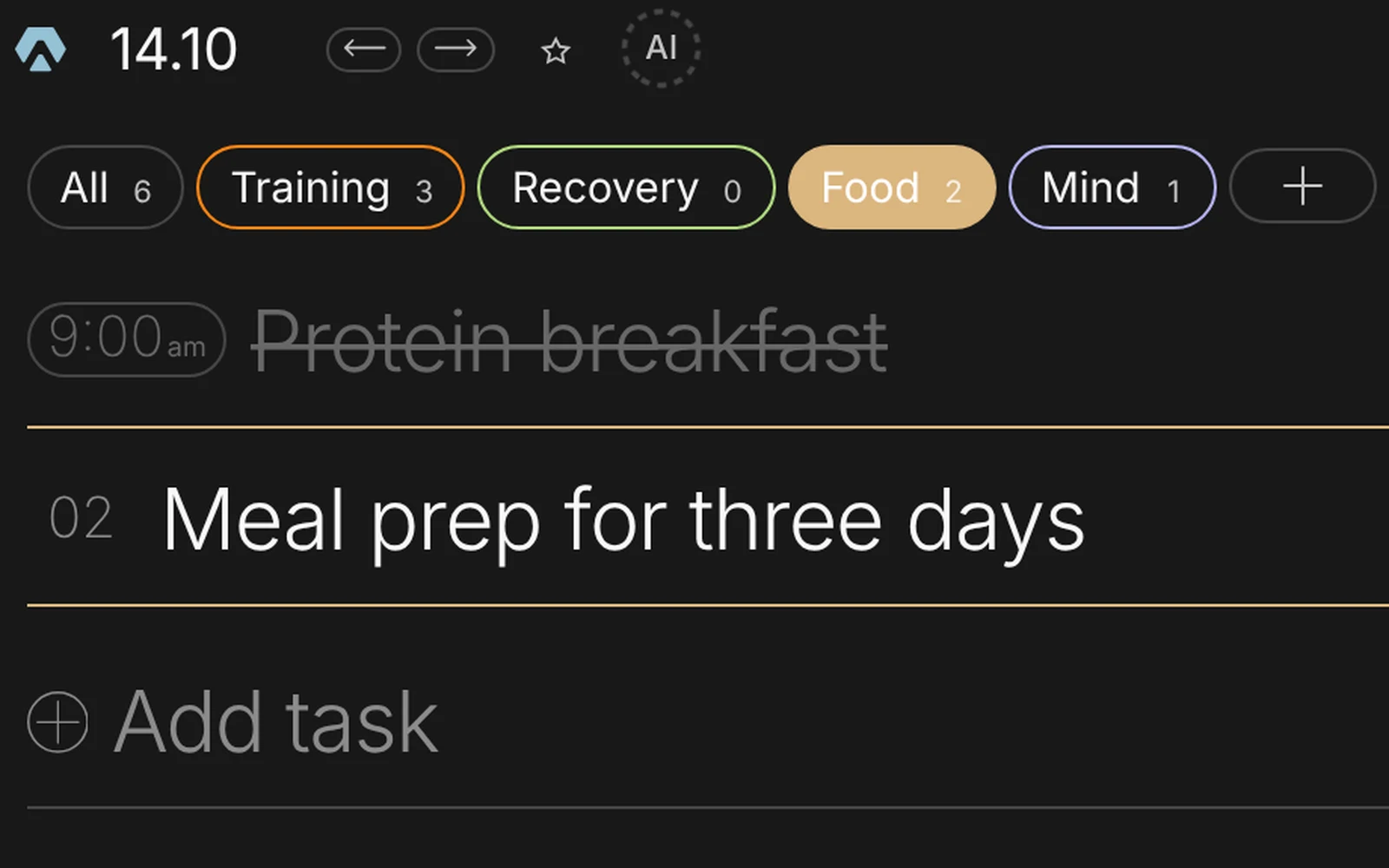
On paper it's a notebook line and a tick at night. In Aimgod it's a repeating task, and the Habit tab counts the days in a row, the rate and eight weeks of bars without any work from you.

What the picture gives you
Tap the repeat icon on the task and look. Days in a row. The rate. The weekday it slips on. One plain suggestion.
That picture gives clarity: you see the real number, not the one you felt. Clarity gives strength: a row of ticks makes the next evening easier, and the weak day gets its own plan. Strength gives freedom: the sweets are still in the house. You just don't need them. That's the whole point for me, and it's the reason I built the counting into Aimgod instead of a food diary.
What I eat instead, and when
Boredom eating is loud when the day had no shape. Mine has one:
- Green smoothie first, before 10. The first food of the day, the same recipe, no decision.
- Sprouted buckwheat, about 400 g, my base for 15 years. A jar in the fridge beats a quick, worse option every time.
- Raw lunch, cooked evening. Buckwheat and salad at noon, shrimp or pasta at night.
- Fewer sweets, more cooking at home. My 2027 goal is twice as much raw, healthy food: a raw borscht, new salads, maybe raw cutlets.
None of that is a diet. It's a day where food has times, so the evening fridge has nothing left to say.
When you ate anyway
One evening is one evening. The line goes back into tomorrow's plan at 22:00, the streak restarts, and the eight weeks keep the whole picture, one gap included. The habit only wins if you stop planning the line.
Two honest notes. This is my experience, not a method for everyone. And if eating has become something you can't control, or the opposite, the right next step is a doctor, not a planner.
How I run the other habits of not doing, smoking and the evening glass among them, is in stronger than your habit. The setup, on paper and in the app, is in track what you don't do.
FAQ
How do I stop eating when I'm bored at night?
Give the evening a line in the plan: "Didn't eat out of boredom", 22:00, repeating. The decision is made in the morning and the plan carries it to the fridge hour. Tick it at ten. One day at a time.
Should I keep snacks out of the house?
If you can't control it, yes, and talk to a doctor. Otherwise I'd keep them. A habit you beat only with an empty kitchen comes back at the first party. The jar on the shelf and the hand still is the skill.
Is boredom eating the same as hunger?
No. Hunger has a body behind it and a time. Boredom eating has a trigger: a screen, a pause, an empty evening. Treat it as a habit, not as a meal.
How long until the evening fridge stops calling?
Research puts a habit at about 66 days to form. My streak counter in Aimgod goes to 67. The first two weeks of ticks on the page already change the evening.
Terms used in this guide: Habit, Streak, Lapse, Goal, Year goal
From our own data
- 65%
- done out of 375 planned in 90 days, in the founder's own account
- 69% vs 51%
- tasks with a time get done more often than tasks without one, same account
- iPhone
- a native app, free in the App Store, same day as on the web
Aimgod data as of October 30, 2026, counts only.
Oleksandr Sendziuk is a product designer with 22 years in SaaS and the founder of Aimgod. He has studied personal growth, psychology and productivity for over a decade, and has been building the system behind Aimgod since 2013.
Follow the build on LinkedIn ↗