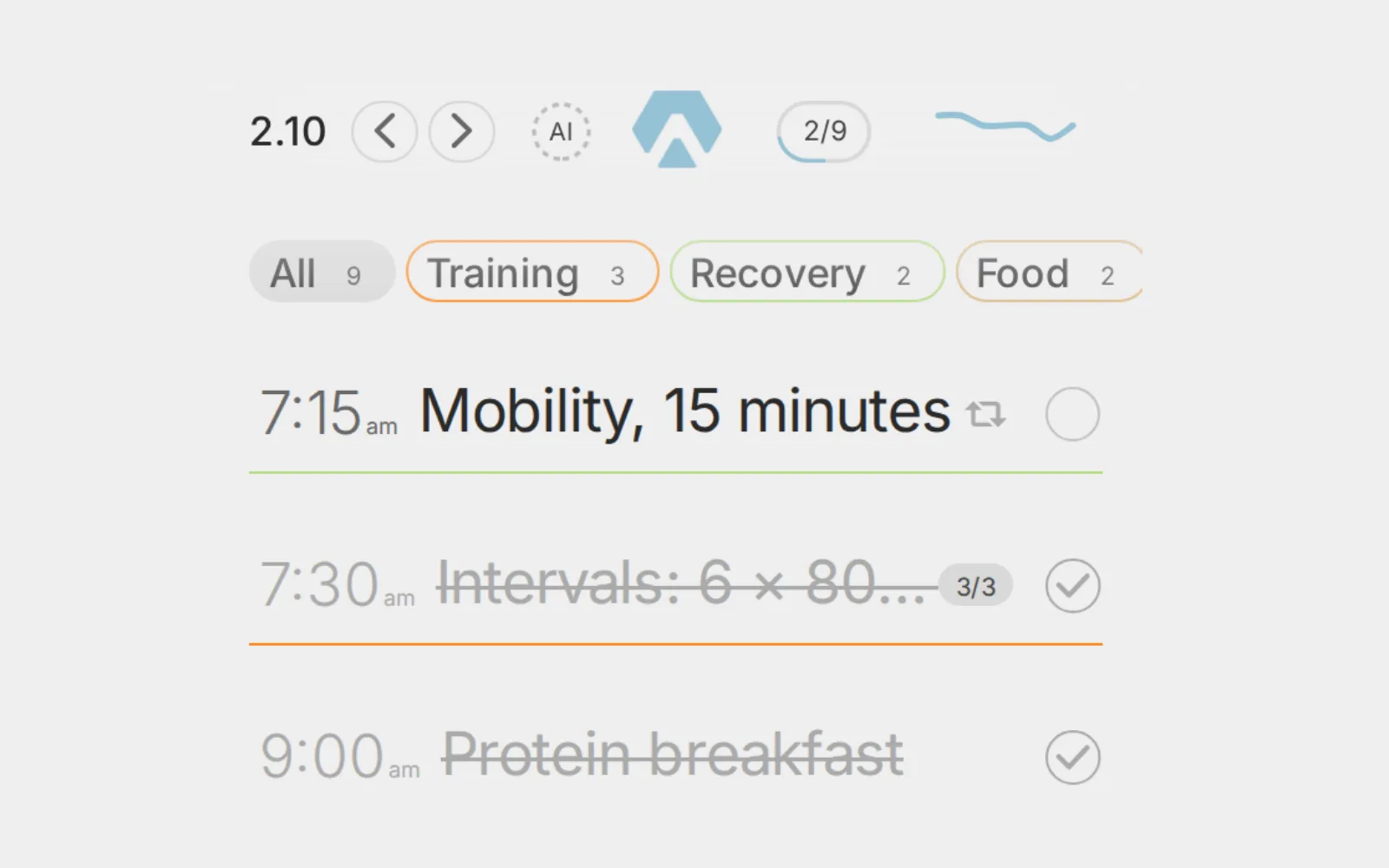
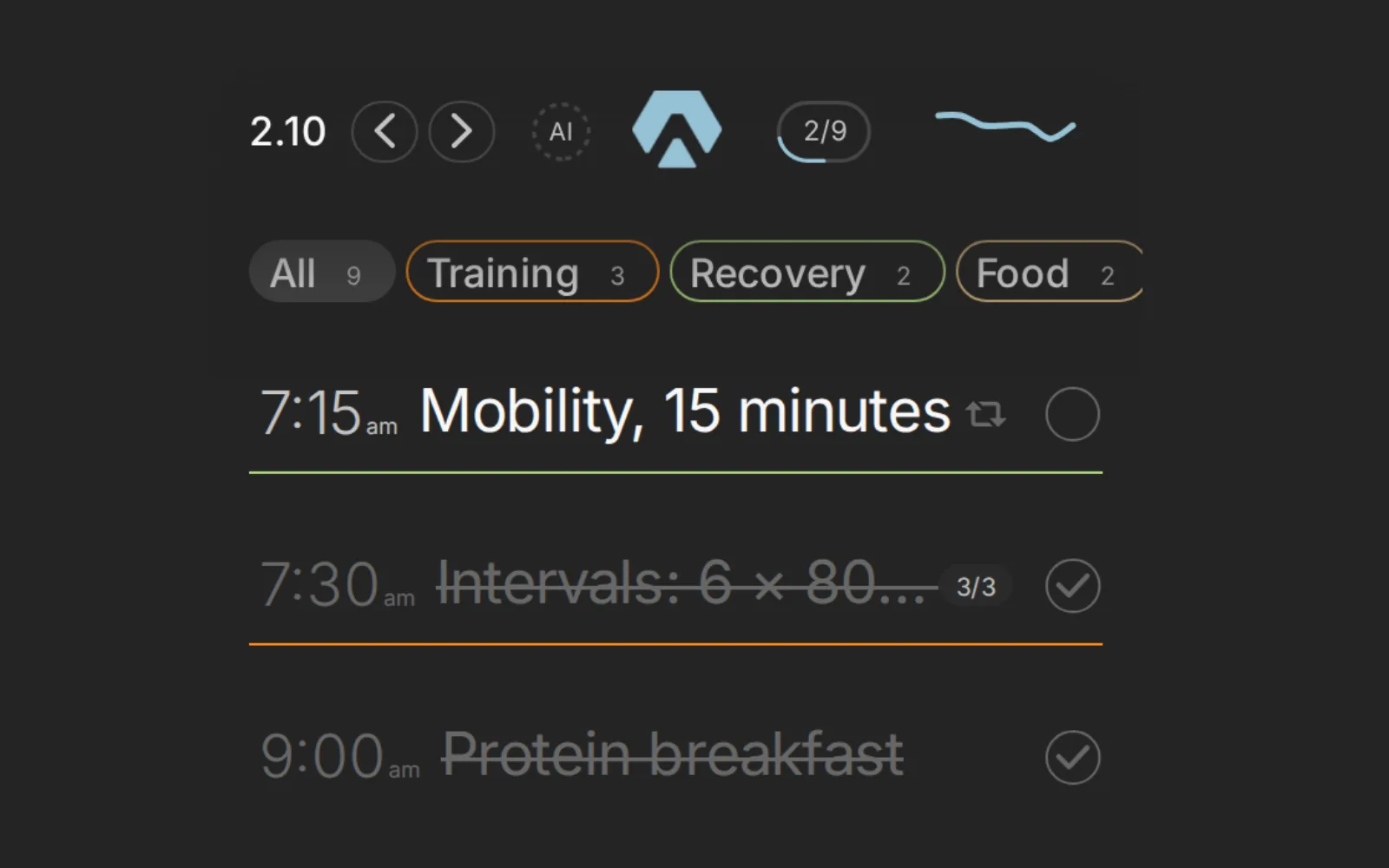
In Aimgod: Day planning, live now
How to Plan Your Day: A Simple 5 Step System That Actually Works (2027)
How to plan your day in 5 steps: a numbered list, times only for fixed things, rest built in, and a plan vs done check. A founder's system after 10 years.
 By Oleksandr Sendziuk, founder of Aimgod · · 8 min readFollow on LinkedIn ↗
The list wins every morning and loses every evening. Writing a task takes ten seconds, doing it takes an hour, and by night half the list is still there. Ten years of planning my days in my own app left me with a short system. Here is how to plan your day in 5 steps, the daily planning routine I actually use, where it breaks, and how to copy it.
Key takeaways
- 1 number on every task. A numbered list gets taken seriously.
- 1 to 1.5 hours of rest live inside my working day. A nap, a video, a book.
- 20% gap between plan and done is fine. 50% means the plan was greedy.
- 4 spheres in view: health, love and family, money and work, hobby.
- 1 block swapped for another. A freed hour goes to one focused thing, never to the news.
Why daily planning often fails: 3 reasons
Most plans don't die because people are lazy. They die on the same three things.
| Reason | What it looks like | What I do |
|---|---|---|
| We plan more than we can | The list is long, the evening is short | Compare plan and done every day |
| Planning is easy, doing is hard | A beautiful list, half of it untouched | Number the tasks, start from the top |
| No rest in the plan | Forcing yourself through a sleepy afternoon | Rest goes into the plan as a block |
The first one is the main one. We always plan a bit more than we can, because we think we're cooler than we are. Writing a task takes ten seconds. Doing it takes an hour. So the list wins every morning and loses every evening.
People also describe the problem in general words. "Try harder." "Be less lazy." Lazy in what, exactly? For me, procrastination is when a sphere of life shows no results. One sphere, seen clearly. Not "everything is a mess".
From the moment we open our eyes in the morning until we close them again at night, we are surrounded by tasks that follow one after another and leave no empty moment, if we pay attention to ourselves and do not give in to laziness and neglect.
That's from a book on strengthening the spirit that I'm reading now. The day fills itself anyway. A plan only decides with what.
How to plan your day in 5 steps
This is my daily planning system, step by step. It takes a few minutes in the morning or the evening before.
- 01Write everything down. One list for the day. Client work, the gym, a call, reading. If it matters, it's on the list.
- 02Give every task a number. The order is the number. Change your mind, change the number.
- 03Set a time only for what is fixed. A call, a meeting, a session that starts at 10. Everything else lives in the numbered order.
- 04Cut the list down. Look at it and remove what clearly won't fit. Then remove one more.
- 05Put rest in. A block for a nap, a walk, a book. Planned, so it doesn't feel like stealing.
In the evening, one more step: look at what got done, and move or drop the rest. More on what to do with the tail in how to plan your day when you have too many tasks.
The first hour of my morning goes to habits, before any of this work starts. I wrote about that order in do the hardest thing first?
Case 1. Every task gets a number
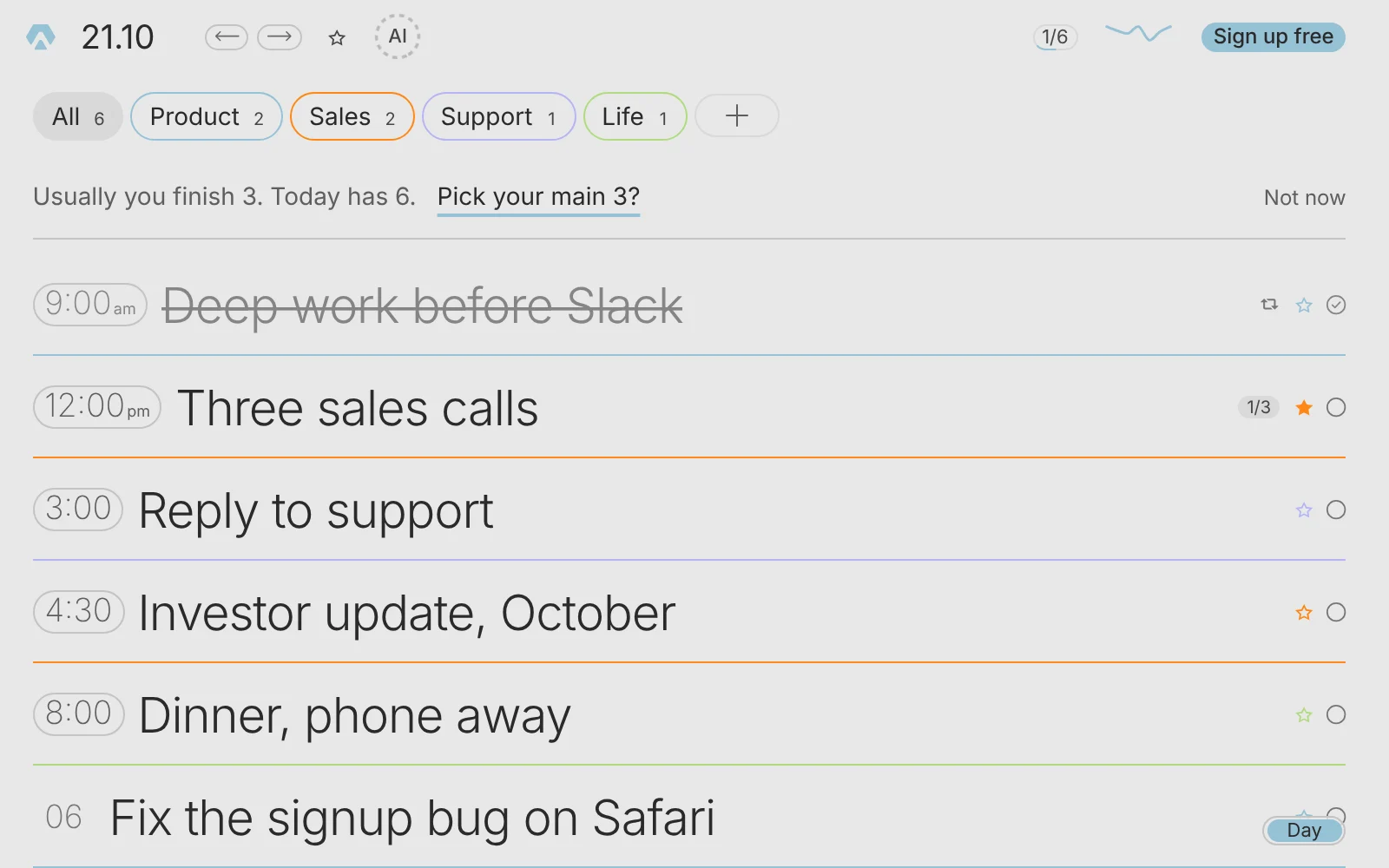
A task with a number reads differently. "Write to the client" in a loose list is a wish. "3. Write to the client" is the third thing I do today. The number alone makes me treat the list more seriously.
Most task managers don't number anything. You type a number yourself or you don't. In my app every task has one, and I reorder the day by changing it.
Not every task needs detail. The gym is in my plan every day. I don't write which exercises. I tick it, and that's enough to see it on the dashboard later.
What I take from this for any daily planning routine:
- A number per task, every day.
- The order is a decision. Make it once, in the morning.
- Short titles. You should read the day in one glance.
Case 2. Rest is part of the plan
My working day always may include rest. If I really want to sleep, a daytime nap of an hour or an hour and a half. If not, the same time on YouTube or with a book, fully off work.
I never force myself. Effective work happens only when you're more or less in the mood. Forcing yourself while falling asleep doesn't work. When the mood is there, the work goes fast and easy.
So I follow two things at once. The internal clock: time to joke around, time to walk, time to work. And structure: sleep, an earlier bedtime, a daily routine. One without the other doesn't hold.
There's a bigger reason too. If you sit all day on one piece of work, never distracted, every day, the rest of life doesn't exist. Leave time to think, to call someone, just to rest. More on matching work to energy in how to manage your energy, not just your time.
| Rest option | How long | When I pick it |
|---|---|---|
| Daytime nap | 1 to 1.5 h | When I really want to sleep |
| YouTube | 1 to 1.5 h | When the head is full, not tired |
| A book | 1 to 1.5 h | When I want something slow |
| A walk | as long as it takes | When I need air and space to think |
Case 3. Plan vs done: we think we're cooler than we are
Planning is easy. Doing is hard. So we do less than planned, every day, and that's normal. A daily planning system that ignores this gap breaks within a week.
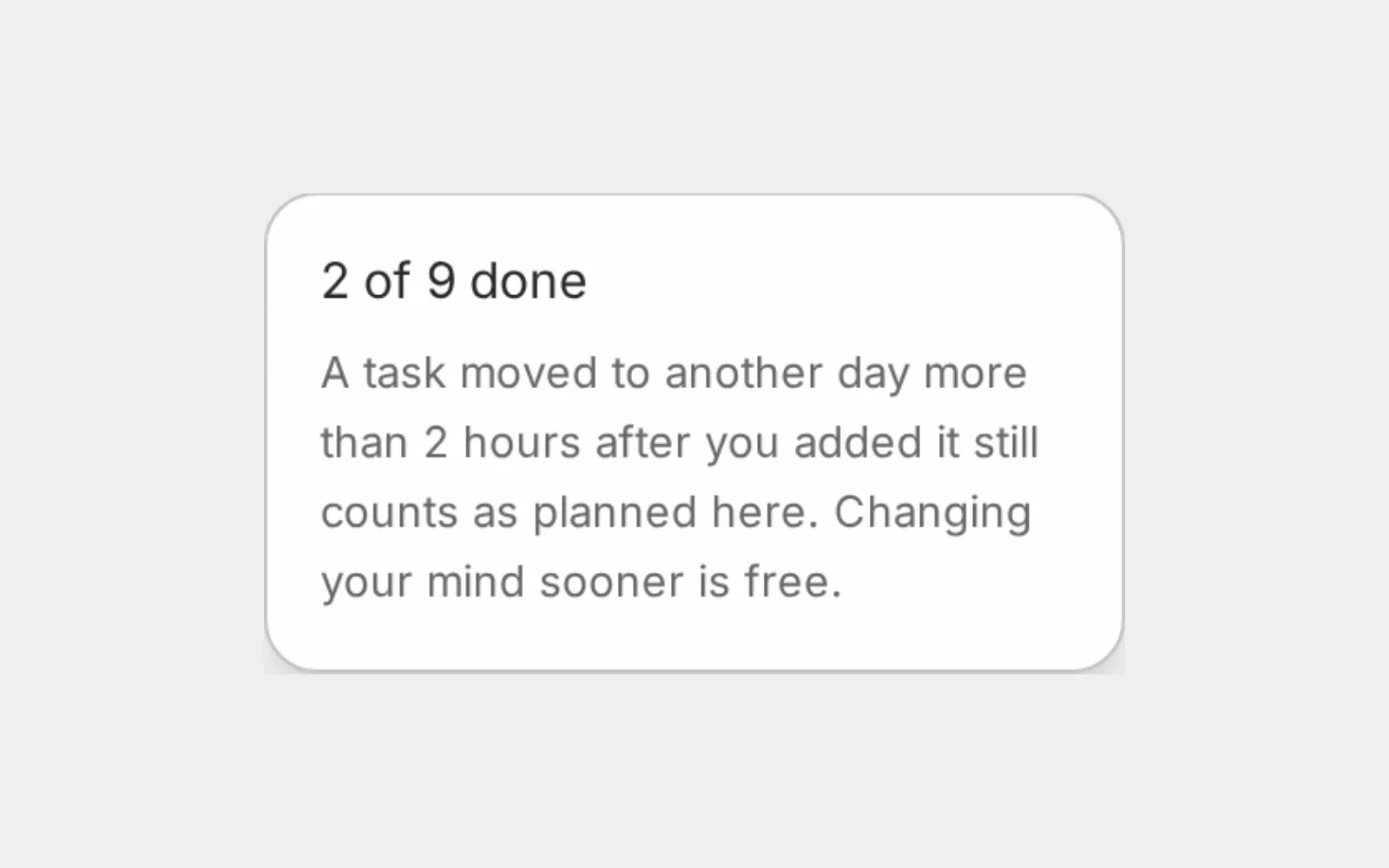
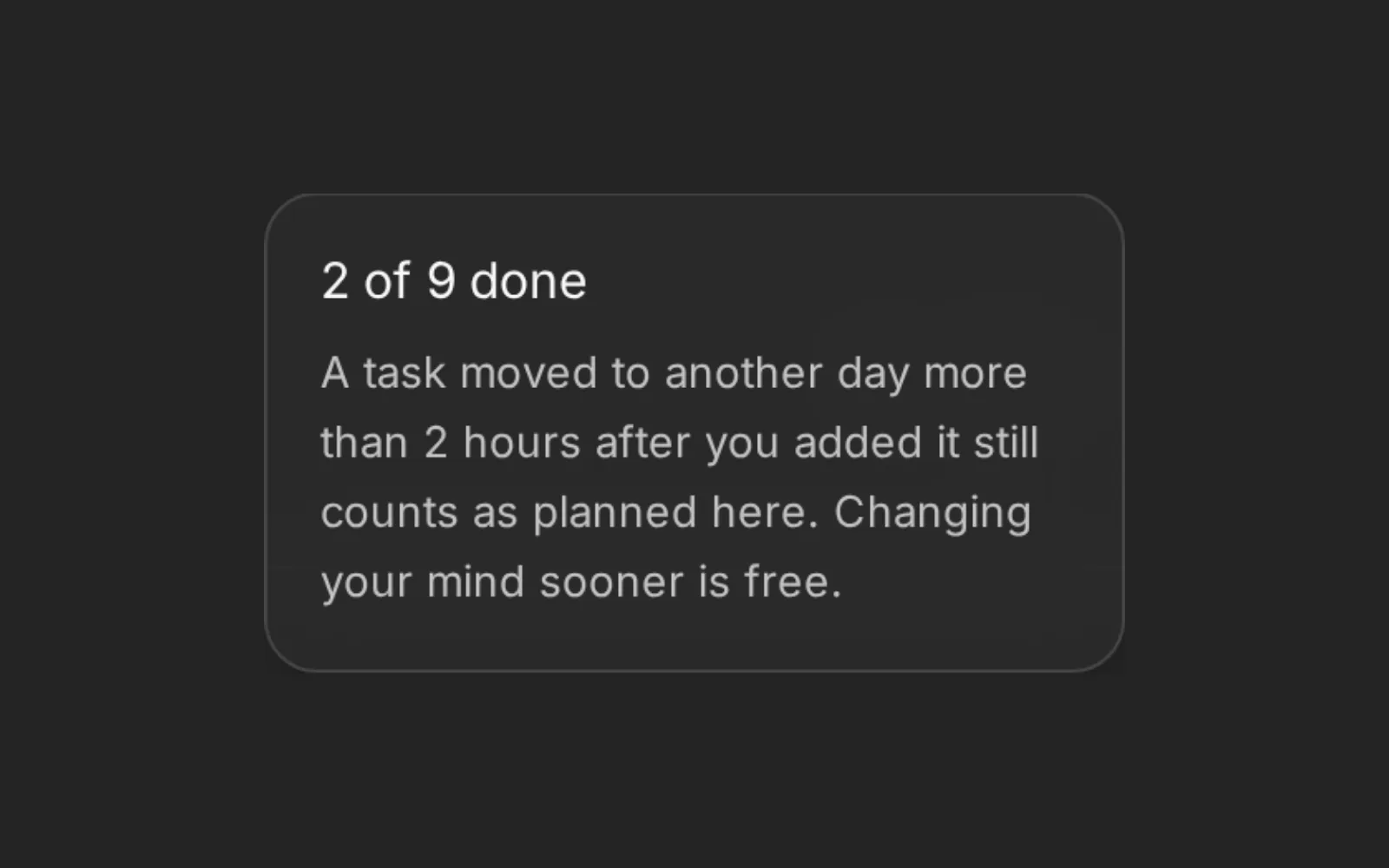
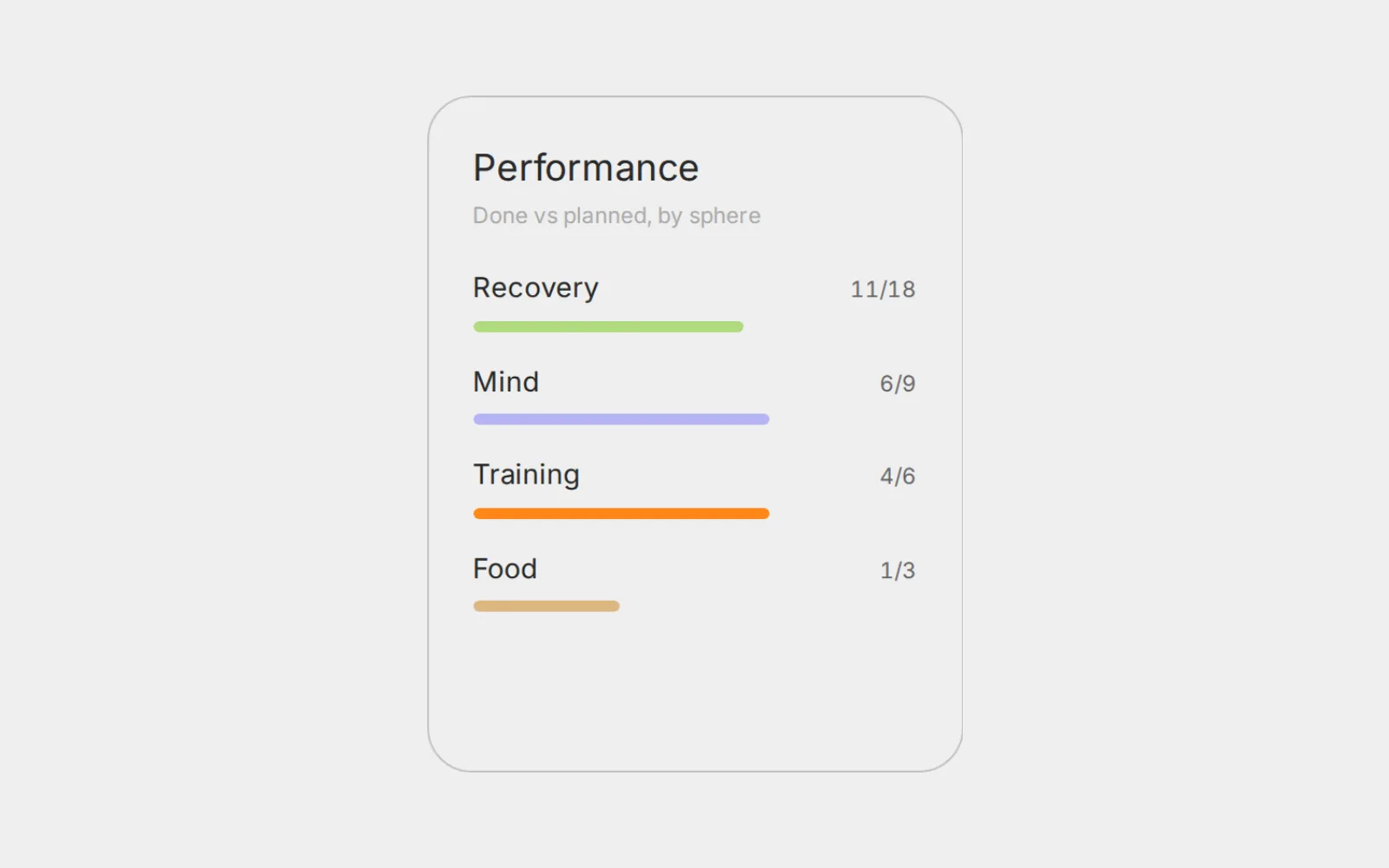
The trick is to see the gap. My app counts it: planned and done, per day, and weekly productivity per day of the week. Up to 20% gap is good for me. Over 50%, the plan was greedy and I start scolding myself. That's a signal to cut tomorrow's list, not to work longer.
How to plan your day for productivity, then? Aim the plan at what you will really do, plus a little. Then check.
How to organize your day around 4 spheres
I see life in about four spheres. Health: body and mind. Love and family: close people and friends. Money and work: clients and everyone you exchange with. Hobby: no money, food for the soul. When one lags, all four suffer.
So when I organize my day, I look at more than work. Is there something for each sphere this week?
The dashboard shows which spheres dominate. When one takes two thirds of my effort for a long time, I swap one of its blocks for one focused thing in another sphere. The whole swap is in time blocking for beginners.
| Sphere | One thing a day can hold |
|---|---|
| Health | Gym, yoga, a walk |
| Love and family | A call, an evening together |
| Money and work | One focused work block |
| Hobby | Music, reading, a side project |
That's how to organize your day without a spreadsheet: a few numbered tasks, coloured by sphere, so you see the balance at a glance.
Daily planner for entrepreneurs: a sample day on these rules
Here's a sample shape of a founder's day built on the rules above. Your hours will differ. The blocks are the point.
| Block | What goes there |
|---|---|
| Morning | Habits first, about an hour. Then the plan. |
| Late morning | Short, sharp tasks. Writing to new leads. |
| After lunch | One long work session. The creative, heavy part first. |
| Afternoon | A rest block. Nap, video or book. |
| Late afternoon | Lighter work: polish, emails, sending. |
| Evening | No work. Music, people, reading. |
| Before bed | A look at plan vs done. Tomorrow's numbers. |
A daily planner for entrepreneurs has one job: to keep the important block safe from the urgent stream. Clients from other time zones will always try to take the morning. The plan says no first.
5 common mistakes when planning your day
| Mistake | What I do instead |
|---|---|
| A list with no order | A number on every task |
| A time on every task | A time only on what is fixed |
| Planning for the best version of yourself | Plan a bit less, check the gap |
| Rest as a reward you never reach | Rest as a block in the plan |
| A freed hour lost to the news | Swap one focused block for another |
How Aimgod helps
The day is a numbered list. Reorder it by changing the number. A time takes two taps and shows large. Subtasks stay visible in the list. Spheres colour the day, so you see the balance. The dashboard shows which spheres dominate, weekly productivity per day and plan vs done. You can also plan and move tasks by voice with AI. iPhone and web.
FAQ
What is the best way to plan your day?
Write one short list, give every task a number, set times only for fixed things, cut the list a little, and plan rest as a block. In the evening, compare plan and done.
How many tasks should I plan per day?
As many as you really finish, plus a little. If the gap between plan and done is over half, cut the list. Around 20% is a healthy gap.
How to plan your day for productivity without burning out?
Plan a bit less than you think you can do and put rest in as a block. Work when you're in the mood, rest when the body asks, and keep sleep and a daily routine as the frame.
How do I stick to a daily planning routine?
Keep it short and make it pleasant to open. A numbered list in one glance, a few minutes in the morning, a short check in the evening. Some days you'll skip it. Come back the next day.
One calm letter a week
A short read on planning, habits and focus, from the founder of Aimgod. No spam, unsubscribe anytime.
We only use your email to send the letter. Privacy
Oleksandr Sendziuk is a product designer with 22 years in SaaS and the founder of Aimgod. He has studied personal growth, psychology and productivity for over a decade, and has been building the system behind Aimgod since 2013.
Follow the build on LinkedIn ↗