In Aimgod: Honest day count, live now
How to Plan Your Day When You Have Too Many Tasks
Learn how to plan your day around what you actually finish. Beat the planning fallacy, tame to-do list overwhelm, and build a realistic daily plan that fits.
 By Oleksandr Sendziuk, founder of Aimgod · · 6 min readFollow on LinkedIn ↗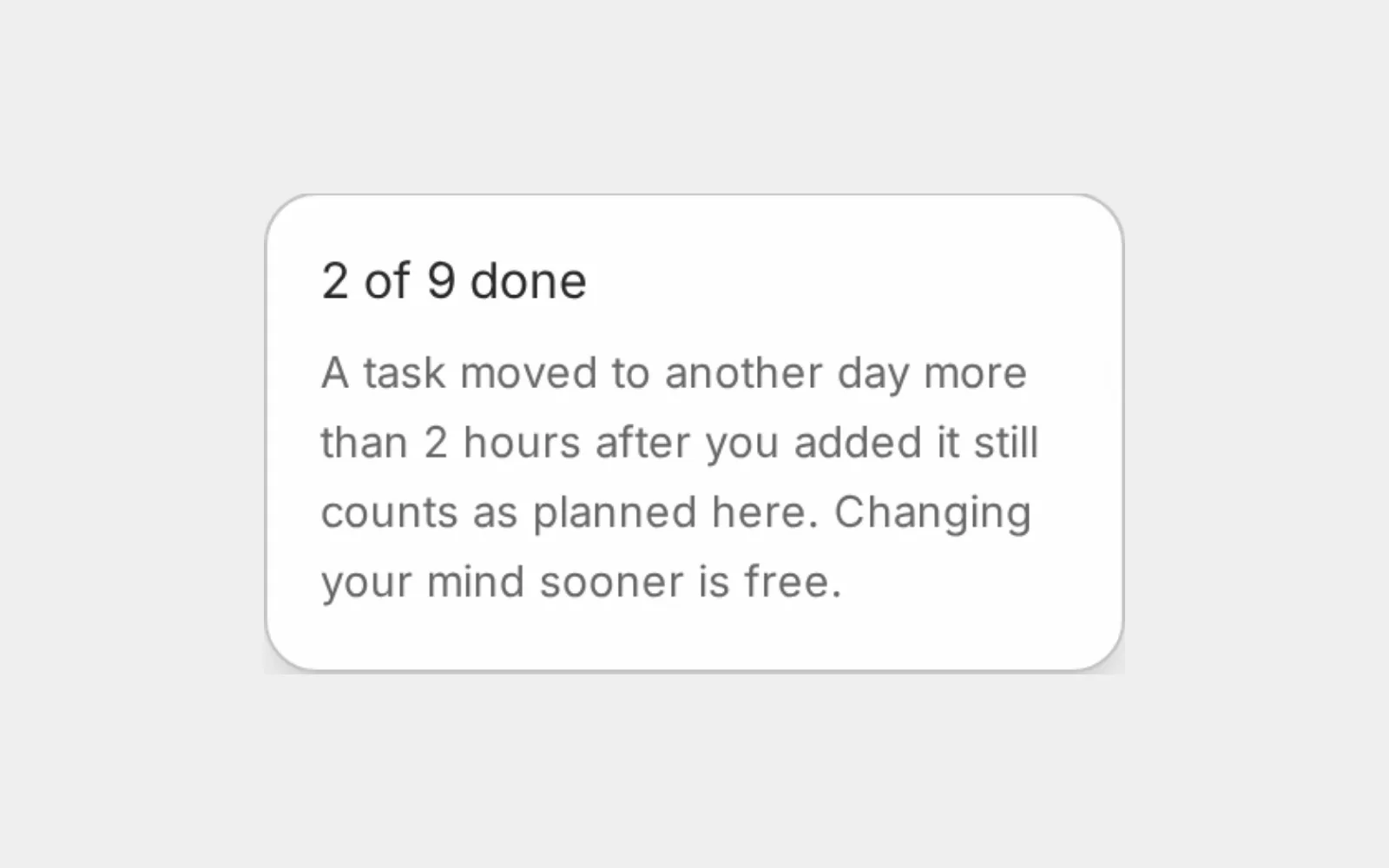
The morning to-do list is written by an optimist and executed by a realist. At 8 a.m., coffee in hand, twelve tasks look easy. By 4 p.m., five are done, seven slide to tomorrow, and the day feels like a loss, even though you worked the whole time.
So here's the short answer on how to plan your day so it actually ends with a finished list: plan from what your days really hold, not from what you hope they'll hold. Everything below is the long version, with a few more jokes.
I was that optimist for years. As a designer I could estimate a client project with decent accuracy. My own daily list? Fiction. Effort was never the problem. The problem was a bug in the system: the gap between what I planned and what a day can physically fit.
Why you always end up with too many tasks
This has a name. Psychologists call it the planning fallacy: we underestimate how long tasks will take, even when we know similar tasks ran long before. Daniel Kahneman and Amos Tversky described it in the late 1970s, and it shows up everywhere, from giant construction projects to the eight small items on a Tuesday list.
When we plan, we picture the happy path. No surprise client email, no call that runs long, no bug in the export, no slump after lunch. And the days that ran over? We file them under "unusual." Last week was weird, we say. This week will be different. It usually isn't.
Research on the planning fallacy suggests that simply remembering past overruns often doesn't fix it. What works better is using your actual track record as the starting input. Forecasters call this the outside view. Before you ask how long this task should take, you ask how long tasks like it have taken you. Less wishful thinking, more real data.
The real cost of to-do list overwhelm
A list you can't finish does more damage than a few missed items. It turns every day into a small failure. You start picking easy tasks just to check something off, the important work keeps sliding, and slowly you stop trusting your own list. That's to-do list overwhelm, in one loop.
Run the loop the other way and the effect flips. When the plan fits the day, finishing it builds momentum. You believe your list again. Which, honestly, is the whole point of having one.
How to plan your day in 8 simple steps
A realistic daily plan runs on evidence. It starts with how much you usually finish on an ordinary day, and only then asks what matters most. Here's the setup.
- 01Count for two weeks. At the end of each day, write down two numbers: tasks planned and tasks done. No judgment, no commentary. You're collecting data on yourself, like a friendly scientist with good snacks.
- 02Find your number. Look at a typical day and ignore the best and worst ones. Plenty of people find they plan nine or ten tasks and finish five or six. That second number is your working capacity.
- 03Plan to that number. Pick the most important tasks first and stop at capacity. Finished early? Add one more. Adding feels great. Moving feels lousy.
- 04Weigh tasks by size. A client workshop and replying to an invoice are different animals. Count a big task as two or three slots, or break it into steps so you can see what's really inside.
- 05Pad your estimates. For unfamiliar work, a rough rule: add half again to your first guess. If a landing page section feels like two hours, plan three.
- 06Keep a separate list for the week. Today holds what you'll do today. Everything else lives on a weekly list, where it can't crowd your head.
- 07Decide early. If you can tell in the morning that a task won't fit, move it right then. Changing your mind early is planning. Moving it at 6 p.m. is a miss worth noticing.
- 08Look back once a week. Compare planned and done across the week and tune your number. A short Sunday weekly review is the perfect place for it.
A realistic daily plan in real life
Here's an example that might look familiar. A freelance designer writes this list for Tuesday: client call, two revisions, a proposal, a portfolio case study, an invoice, a social post, inbox zero, and research for a new pitch. Her last two weeks say she finishes about five tasks a day, and the call plus its follow-up eats the first hour.
So she keeps the call, the two revisions, the proposal and the invoice. The case study moves to Thursday, the post goes on the week list, and inbox zero quietly leaves the building. At five o'clock she's done, and she knows it. That feeling is the whole game.
Not sure which task gets the first slot? Try the do the hardest thing first approach for your most important task. It settles the question fast.
Daily planning tips: mistakes to skip
Planning for your best day
Everyone gets the occasional day where everything flows. Plan every day as if it'll be that day and disappointment is guaranteed. Plan for an ordinary day. Let the good ones be a bonus.
Hiding misses by moving tasks quietly
Dragging unfinished tasks to tomorrow without noticing keeps the list looking tidy and the pattern invisible. The fix is an honest count: a task you planned and moved late still counts as planned, so you see your real ratio.
Counting tasks without their size
Five tasks can be an easy day or an impossible one. If a task takes more than half a day, break it into steps and plan the steps.
Ignoring your energy
Capacity shifts with sleep, meetings and the kind of work. Deep design work and admin draw from different batteries. More on that in the post on planning your day around your energy.
How Aimgod helps
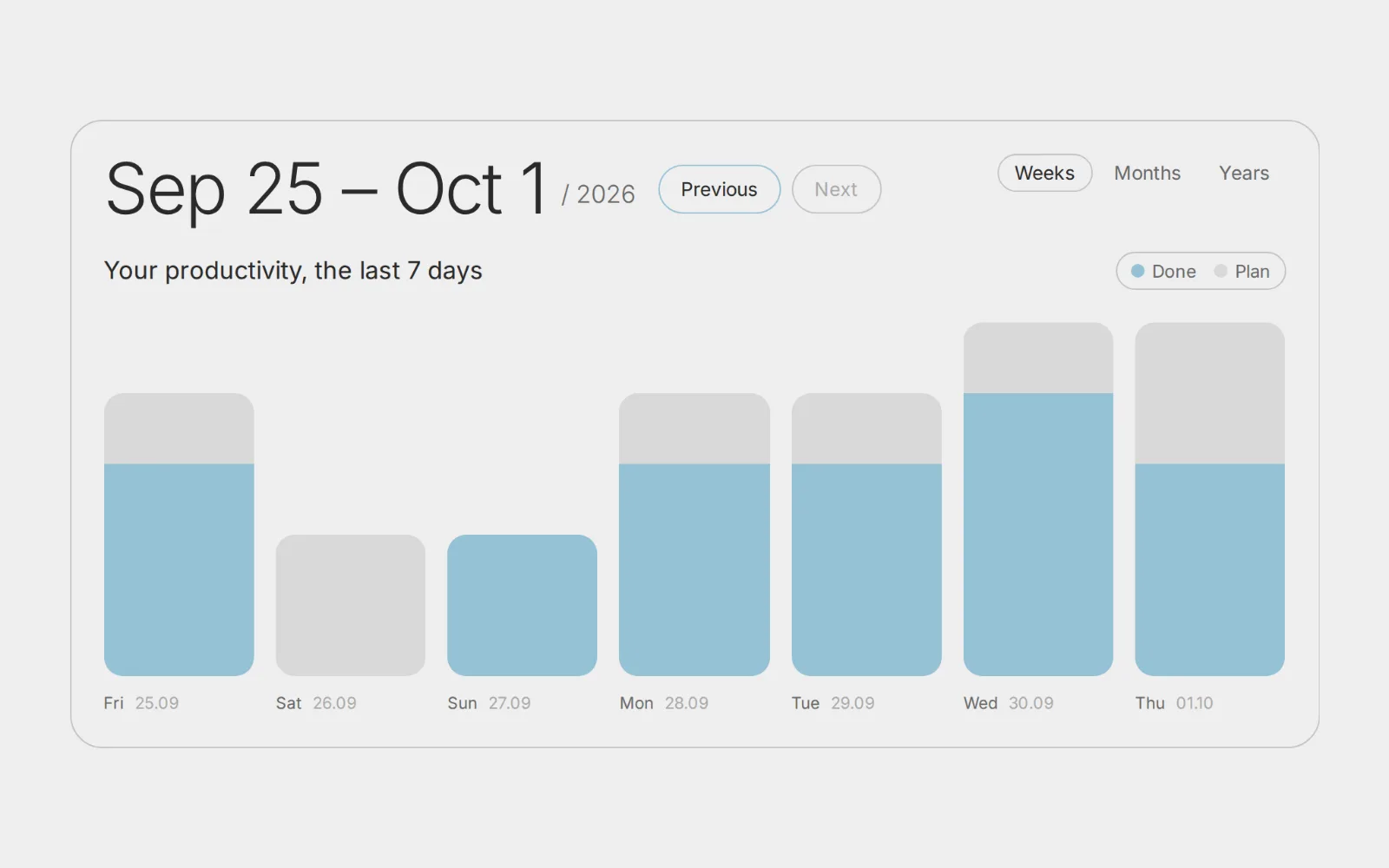
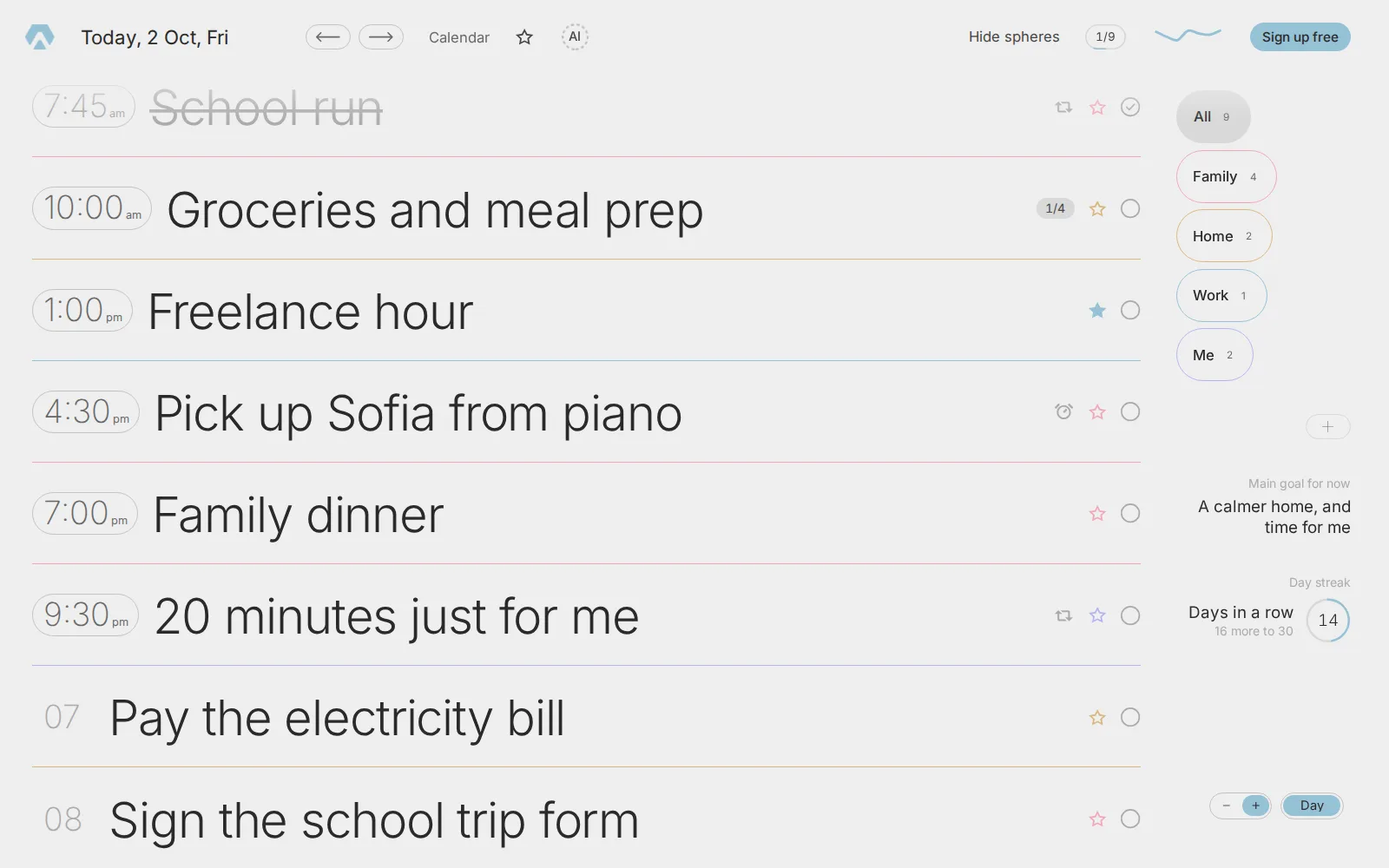
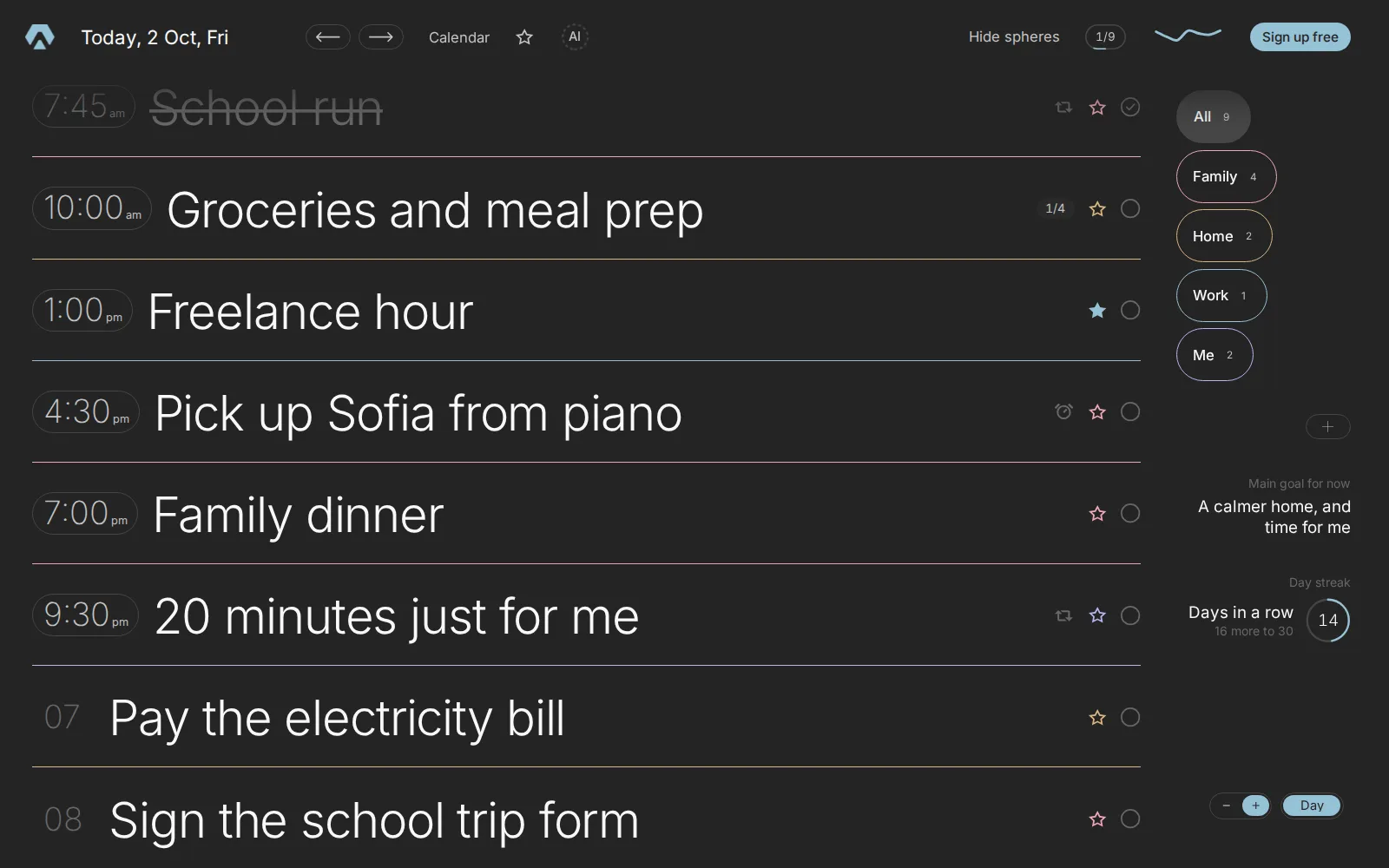
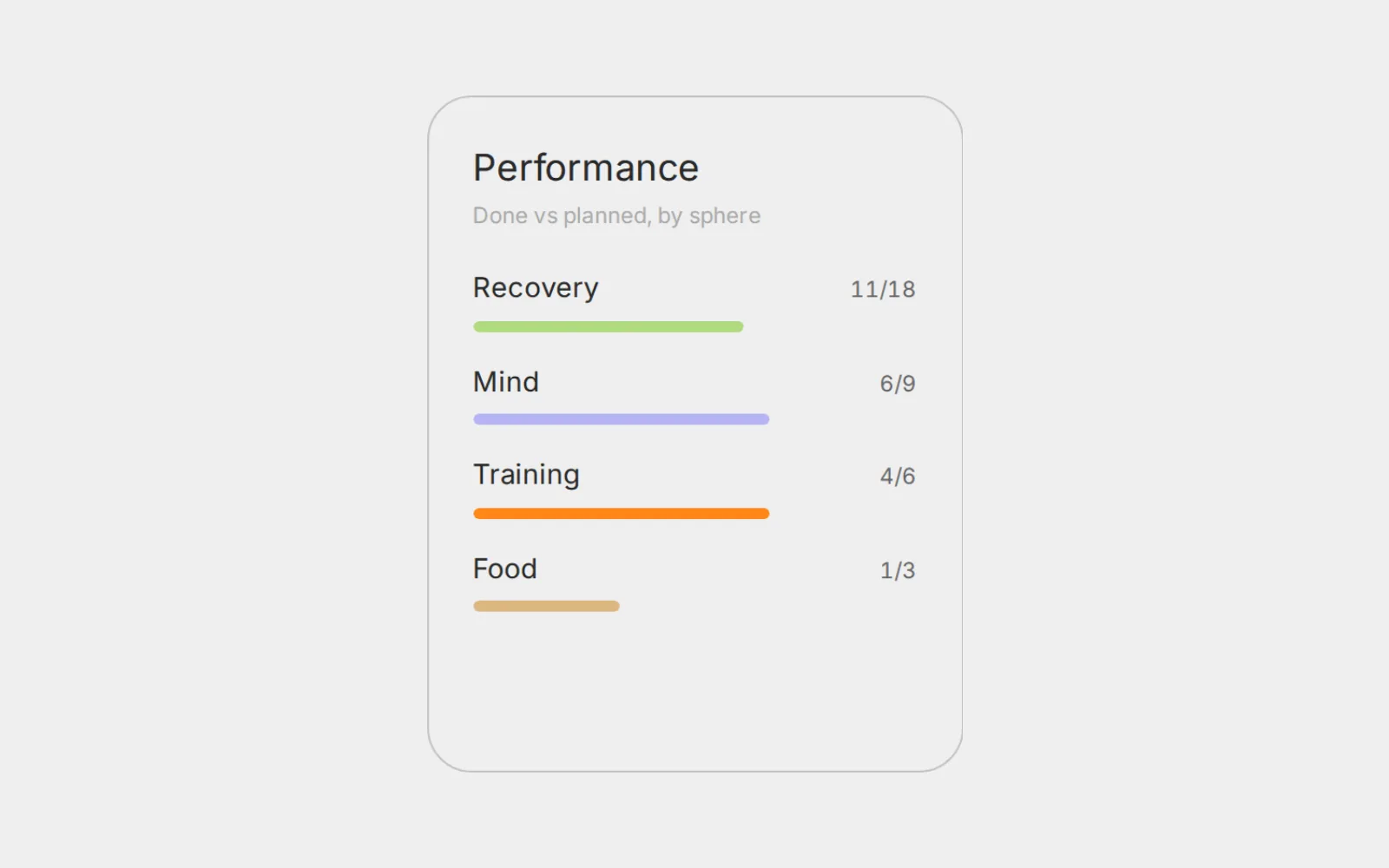
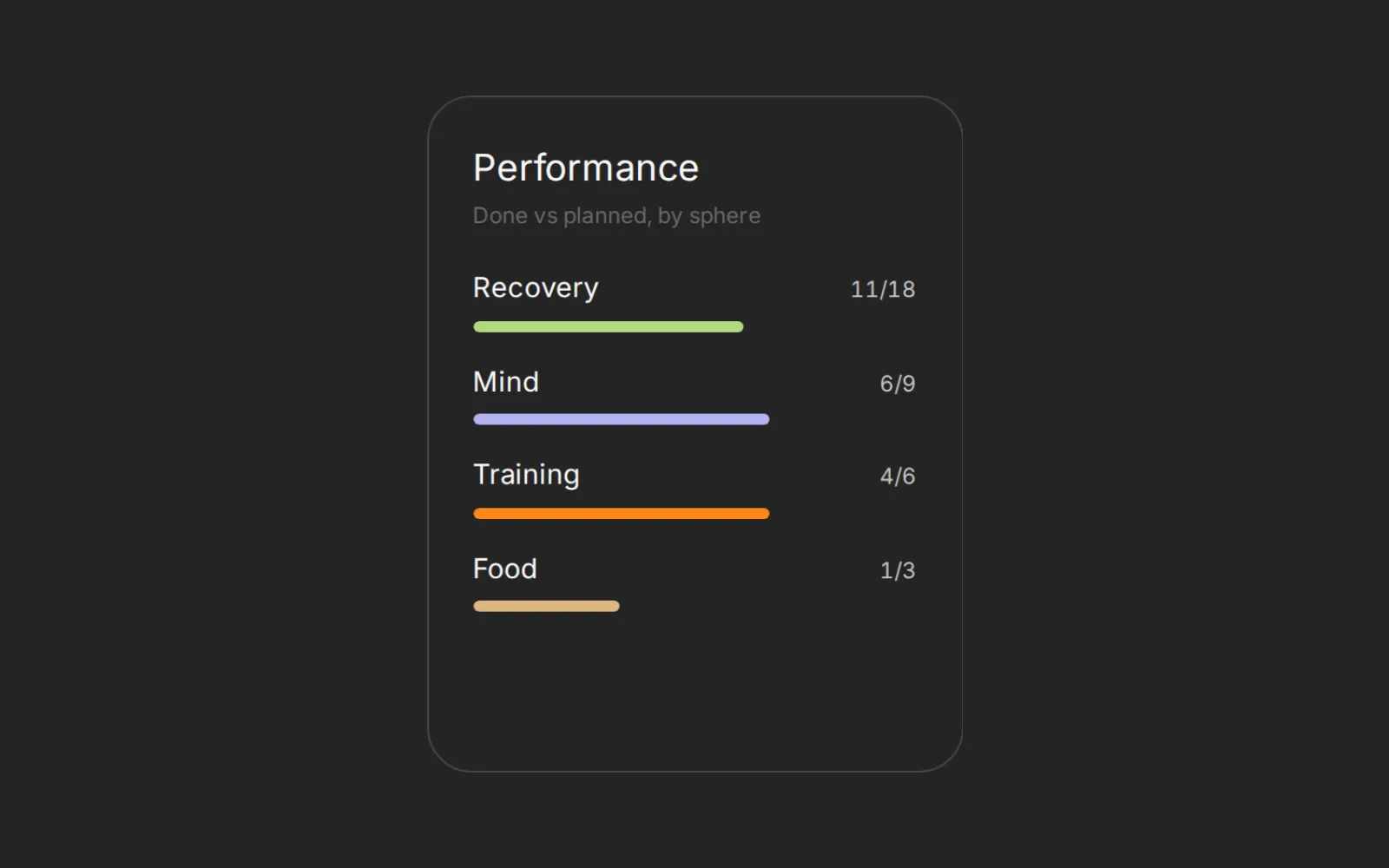
Aimgod has an Honest day count, and it's live today. At the top of the day you see a small oval with done over planned, for example 4 of 6. A quiet mirror for the day.
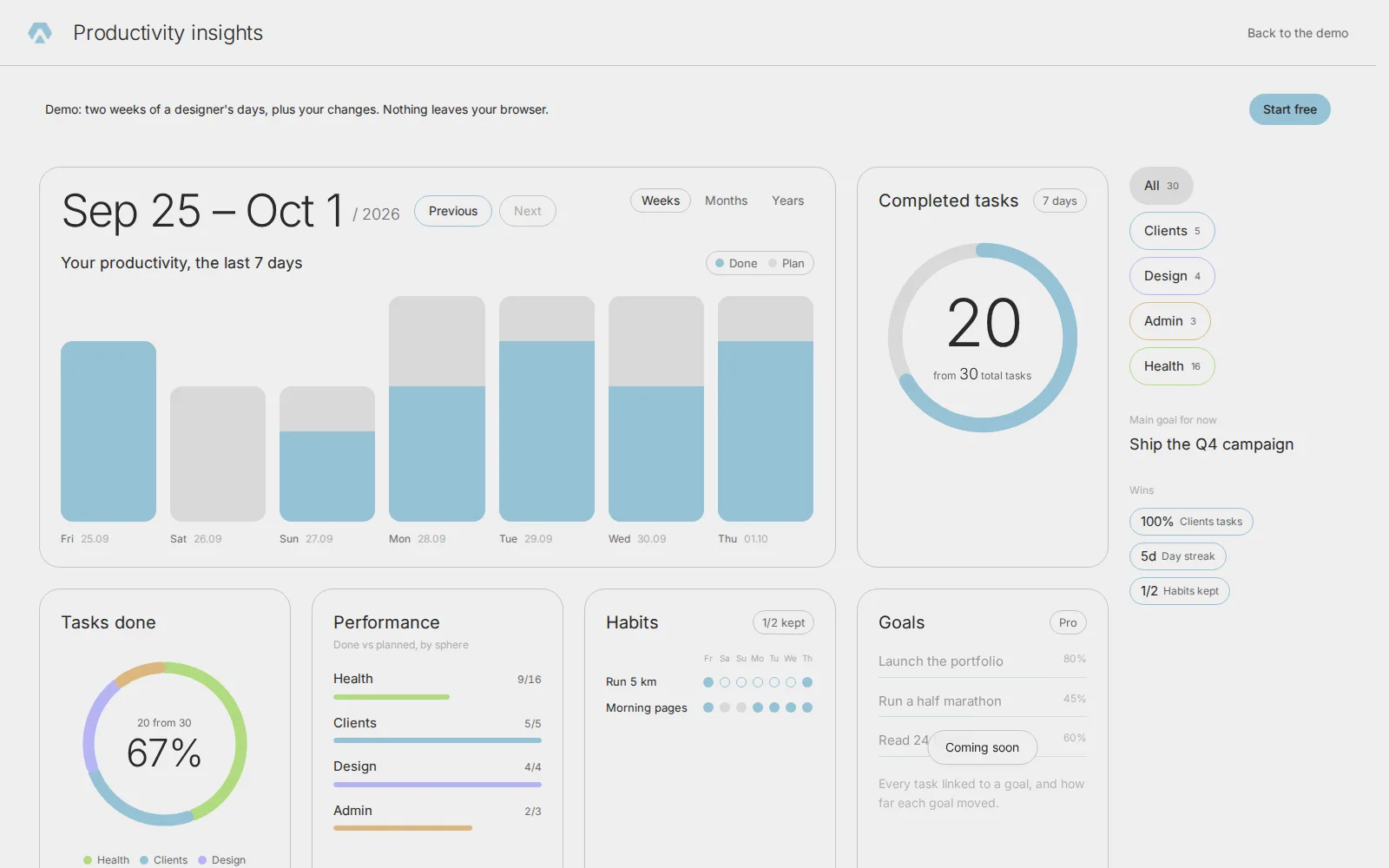
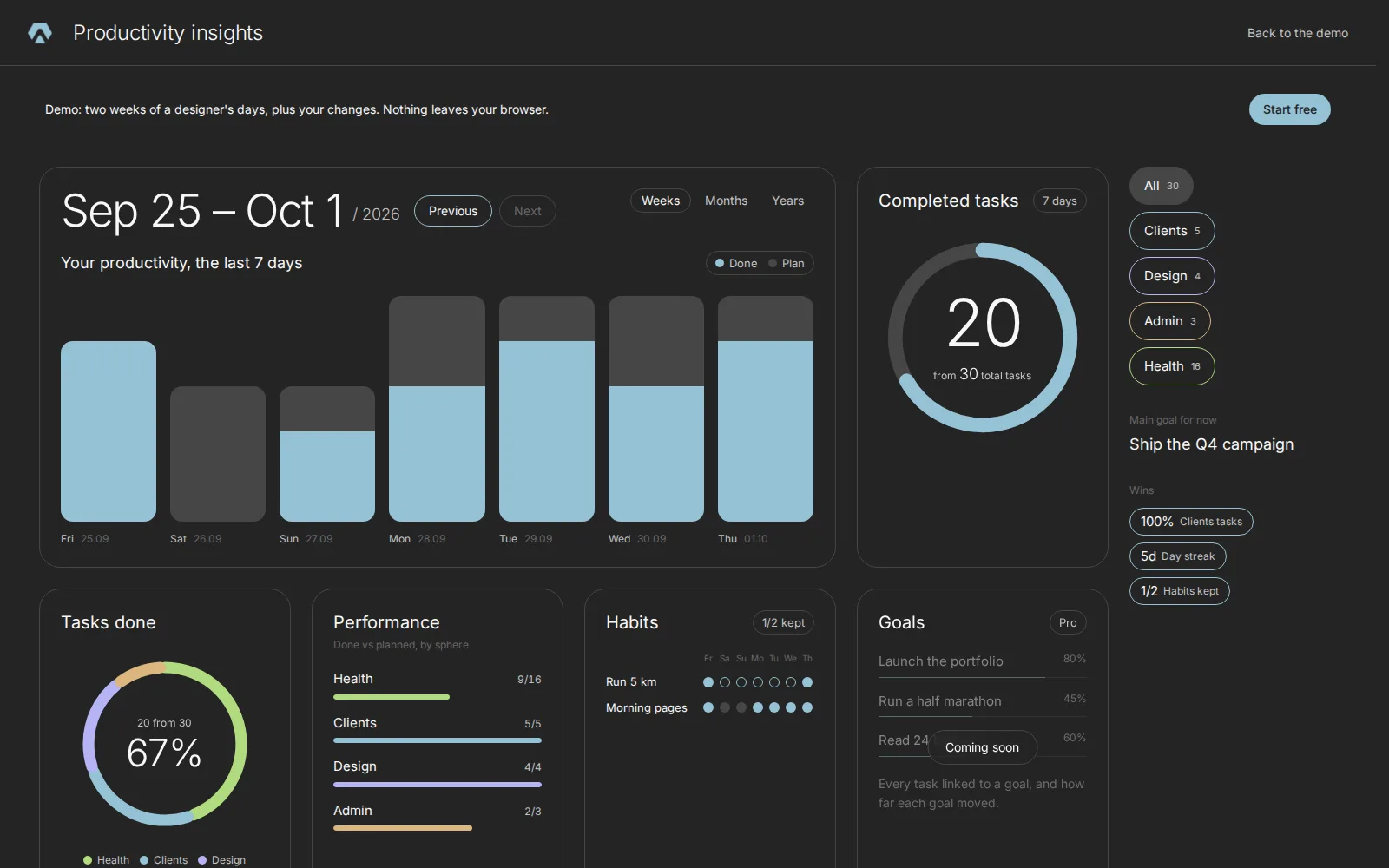
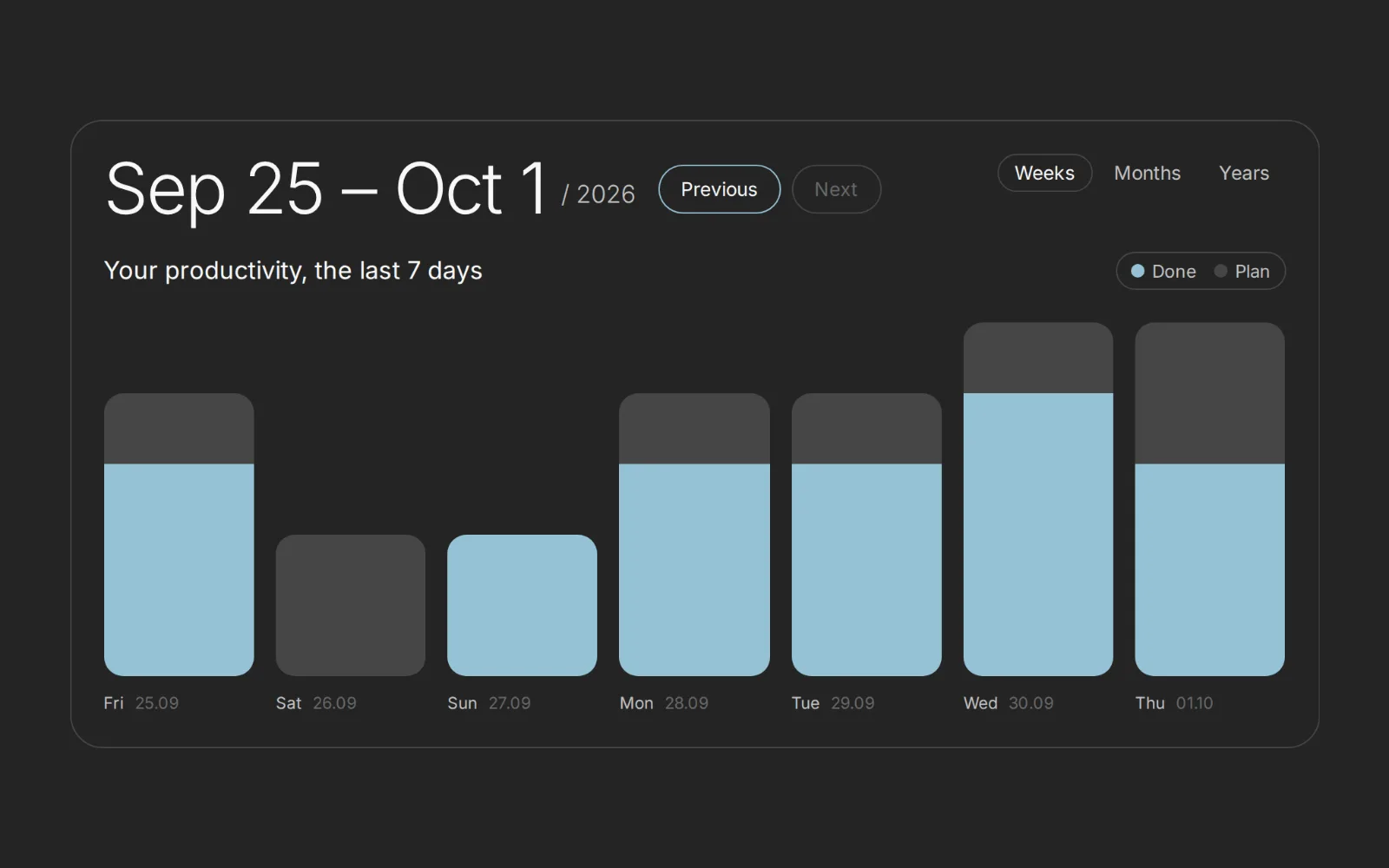
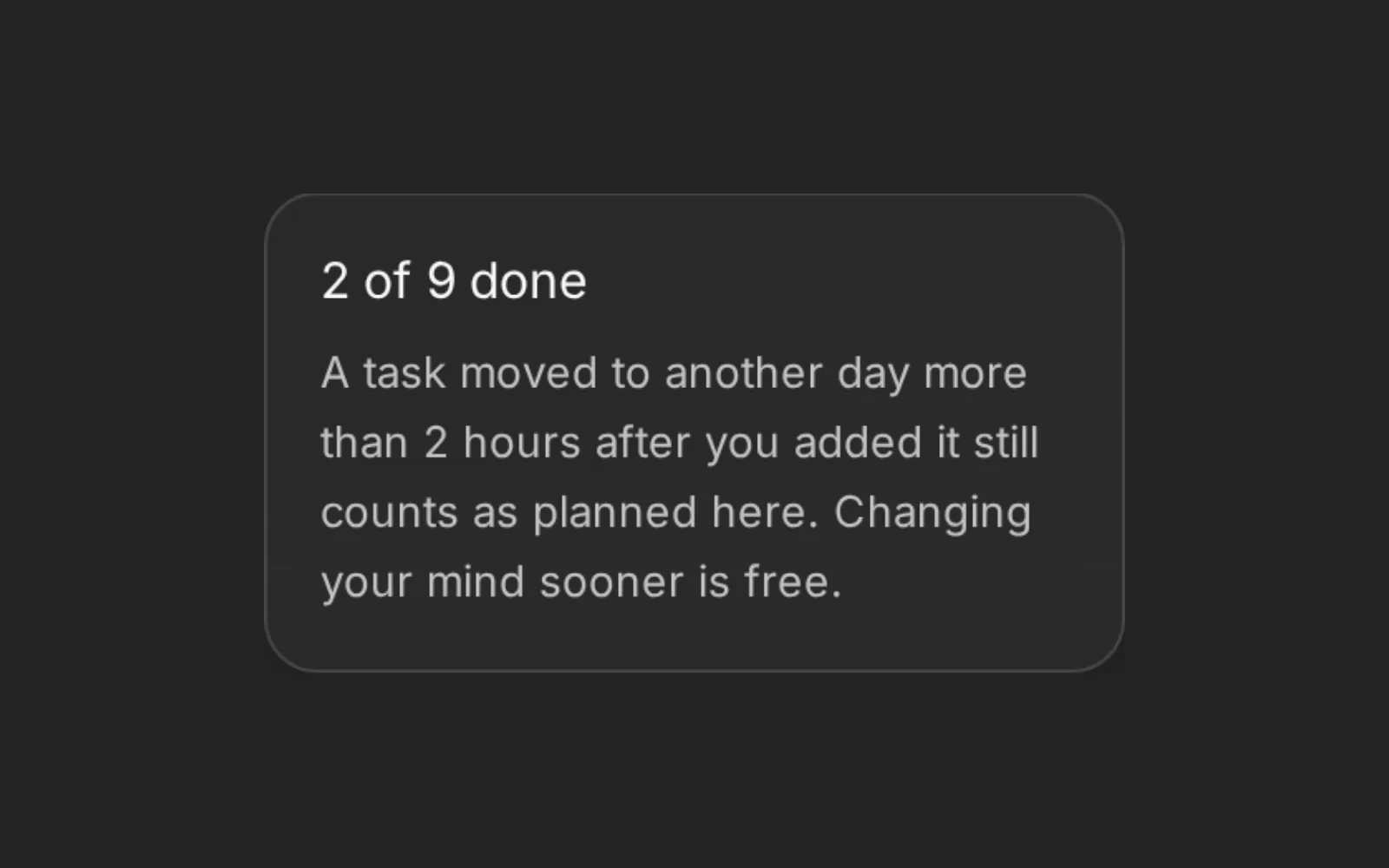
The count is honest by design. If you move a task to another day more than two hours after you added it, it still counts as planned for the original day. A change of mind within two hours is free, so quick morning reshuffling doesn't count against you. Tap the oval to see the tasks you moved, listed calmly, with no red marks. On the dashboard, the week shows planned versus done for each day, so finding your real capacity takes one glance.
Coming in October 2026: a gentle hint when today holds far more than you usually finish. A suggestion, never a block. You stay free to plan a big day whenever you want.
If moving tasks around has left your list feeling heavy, read about starting fresh without guilt next.
A plan you can trust
A realistic daily plan is smaller than you want and bigger than you fear. Of all the daily planning tips out there, this one is the least exciting and the most useful: count for two weeks, plan to the number you find, and give the important tasks the first slots. The first day in months you actually finish your list, you'll get why it matters. It feels pretty great.
FAQ
How many tasks should I plan in a day?
No magic number fits everyone. Count planned and done for two weeks, then plan to what you usually finish on an ordinary day. Your own data beats any rule of thumb.
What is the planning fallacy?
It's our habit of underestimating how long a task will take, even when similar tasks ran longer before. The most reliable fix: plan from your actual track record, not your best-case guess.
What should I do with tasks that don't fit today?
Move them early, to a specific day or to a weekly list. If a task keeps getting moved, it's usually too big or too vague. Break off a smaller first step and plan that.
Oleksandr Sendziuk designs calm tools and believes a good day is one you can actually finish.
Follow the build on LinkedIn ↗