In Aimgod: Energy of the day, coming December 2026
How to Manage Your Energy, Not Just Your Time
How to manage your energy, not just your time: find your peak hours, guard them for deep work, and learn your daily rhythm with a quick evening check-in.
 By Oleksandr Sendziuk, founder of Aimgod · · 6 min readFollow on LinkedIn ↗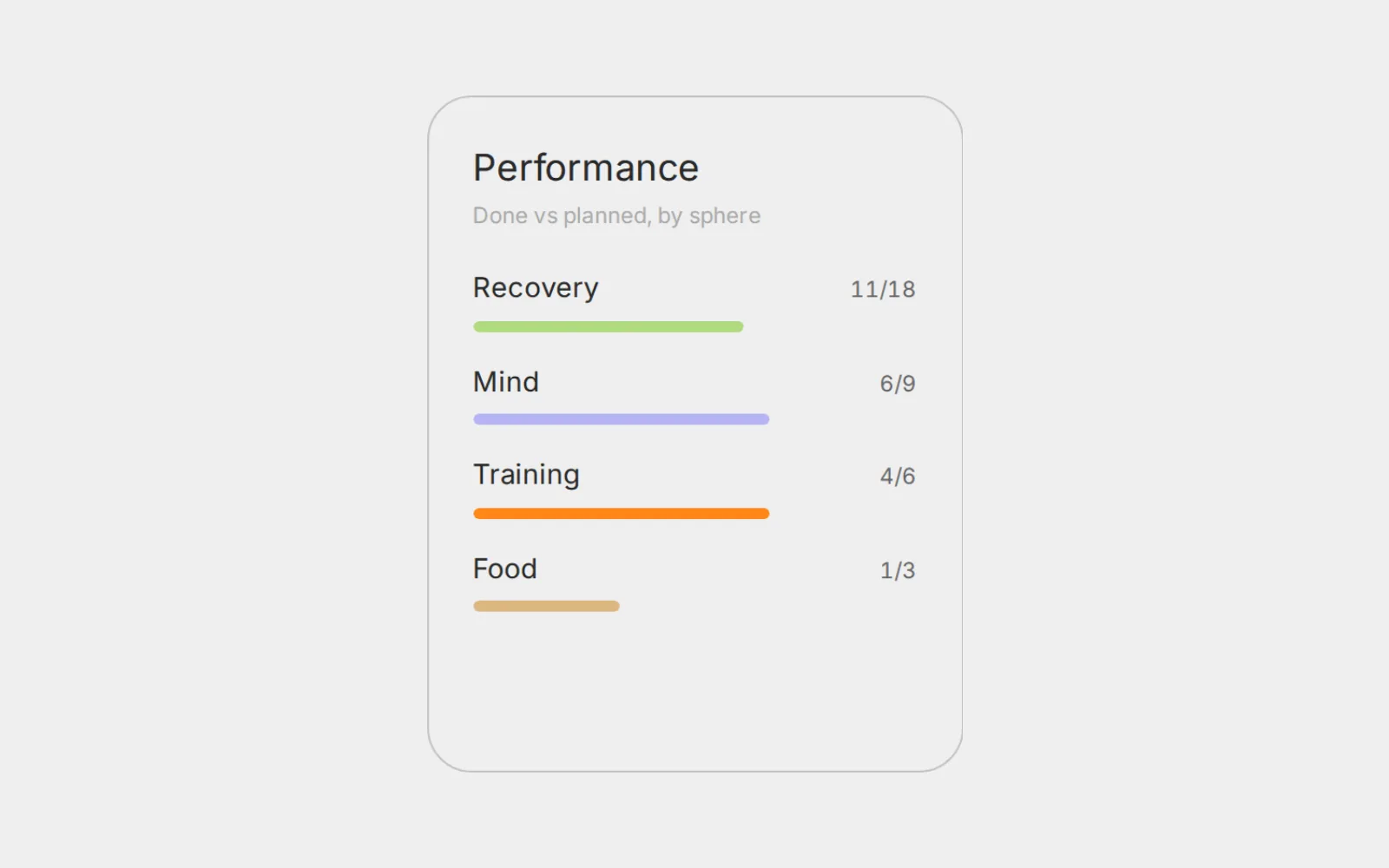
For a long time I planned my days like every hour was the same. Eight hours of time, eight hours of work. Clean math. Then three in the afternoon would roll around, I'd open a tricky onboarding flow, and just stare at the screen. My sharpest hours? Already gone. Spent on the inbox.
The hours were there. The energy to use them was not.
This post is about how to manage your energy, not just your time. Twenty years into design work, it's the shift that changed my days more than any app or method. And once it clicks, it's surprisingly low effort.
How to manage your energy, not just your time
Time is fixed. Everyone gets twenty four hours, and there's no premium tier. Energy plays by different rules. It rises and falls with sleep, food, movement, stress and the natural rhythm of your body.
Energy management means noticing how your physical and mental energy moves across the day and the week, then placing your work to match. You plan for the system you actually run on, not the one on paper. In practice it comes down to three habits:
- Notice when your attention is sharpest. Protect that time for deep work.
- Push the light stuff (email, admin, small fixes) into the lower stretches.
- Check in at the end of the day, so you learn your pattern from real data, not guesses.
That's it. No color coded spreadsheets.
Why your energy levels throughout the day matter
Your energy levels throughout the day really do move, and your attention moves with them. Research on daily rhythms shows that alertness and concentration run in a cycle, and the peak lands at different times for different people. Some people are sharp early in the morning. Others hit their stride later. Plenty of us feel a dip in the early afternoon, the classic afternoon slump.
Deep work, the focused thinking that design, writing and strategy need, runs on that sharp attention. A task that takes ninety minutes at your peak can drag on much longer in a low period, and the result is usually weaker. Routine work barely notices. Email at two in the afternoon costs about the same as email at nine.
So the order of your day matters as much as its length. Match hard work to high energy and you get more done without working longer. Same day, better lineup.
There's a bonus. Track your energy for a few weeks and you start seeing the inputs: what drains it and what refills it. Late calls. Skipped lunches. A walk before a design session. Vague tiredness turns into variables you can actually tune.
Energy has a weekly shape, too. Many people find Monday carries more focus than Friday, and a big weekend tends to show up in Monday's work. Zoom out to the week and you see rhythms a single day hides.
When to do deep work: a simple practice
- 01Rate your energy for one week. Every evening, one number from 1 to 5. Quick. No analysis, just notice.
- 02Spot your sharpest hours. That same week, jot down when hard work felt easiest. For many designers it's the first two or three hours of the morning. For some it's late evening. Trust what you see, not who you think you're supposed to be.
- 03Put your most important task in that window. Each day, pick the one task that needs your best thinking and give it a time inside your peak. For example, 9:00: wireframes for the checkout flow.
- 04Guard the window. No calls, no inbox, phone in another room if needed. A peak lasts a few hours at most. Spending it on replies is an expensive trade.
- 05Batch the light work. Email, invoices, file exports and quick client fixes go into one or two blocks in your lower periods, often after lunch.
- 06Recover on purpose. A short walk, lunch away from the screen, ten minutes of stretching. These recharge you for the next block. They're part of the plan, not a break from it.
- 07Review the pattern every week. Put your daily ratings next to what you finished. If output drops on low energy days, plan lighter days after late nights or meeting heavy days. A simple weekly review routine is the right place for this.
Here's how that can look for a freelance designer with a morning peak. 9:00, the hardest design problem of the day, notifications off. 11:30, a client call, since conversation needs less quiet focus than design. After lunch, feedback rounds, exports, invoices. Late afternoon, a short walk, then an hour of light layout polish if there's fuel left in the tank. Same amount of work. Different order. The hard part gets the best hours.
If your most important task is also the one you dread, put it first, inside your peak. Everything after it feels lighter. That's the core of do the hardest thing first, and it pairs perfectly with energy planning when your peak is in the morning.

Beating the afternoon slump: common mistakes
Ignoring your real rhythm. Lots of people force deep work into the early morning because they read that mornings are best. If your peak is at four in the afternoon, build around four. Fix: use your own week of ratings.
Filling peak hours with meetings. Meetings feel productive and slide straight into open slots. Fix: block your peak for focused work first. Meetings get what's left.
Treating low energy as failure. Everyone has low days. Plan the same heavy load for every day and some of those days will end in frustration, guaranteed. Fix: plan a shorter list after a rough night, and count small finished tasks as real progress. If you tend to overpack the day, here's how to make a realistic daily plan.
Tracking too much. Hourly logs of sleep, caffeine and mood rarely survive a busy week. Fix: one number in the evening is enough signal. Keep it light.
Pushing through the slump with a hard task. Early afternoon is a rough time to start your toughest work. Fix: give that slot to easy wins, or use the five minute rule to get a small task rolling without a big push.
How Aimgod helps with productivity and energy
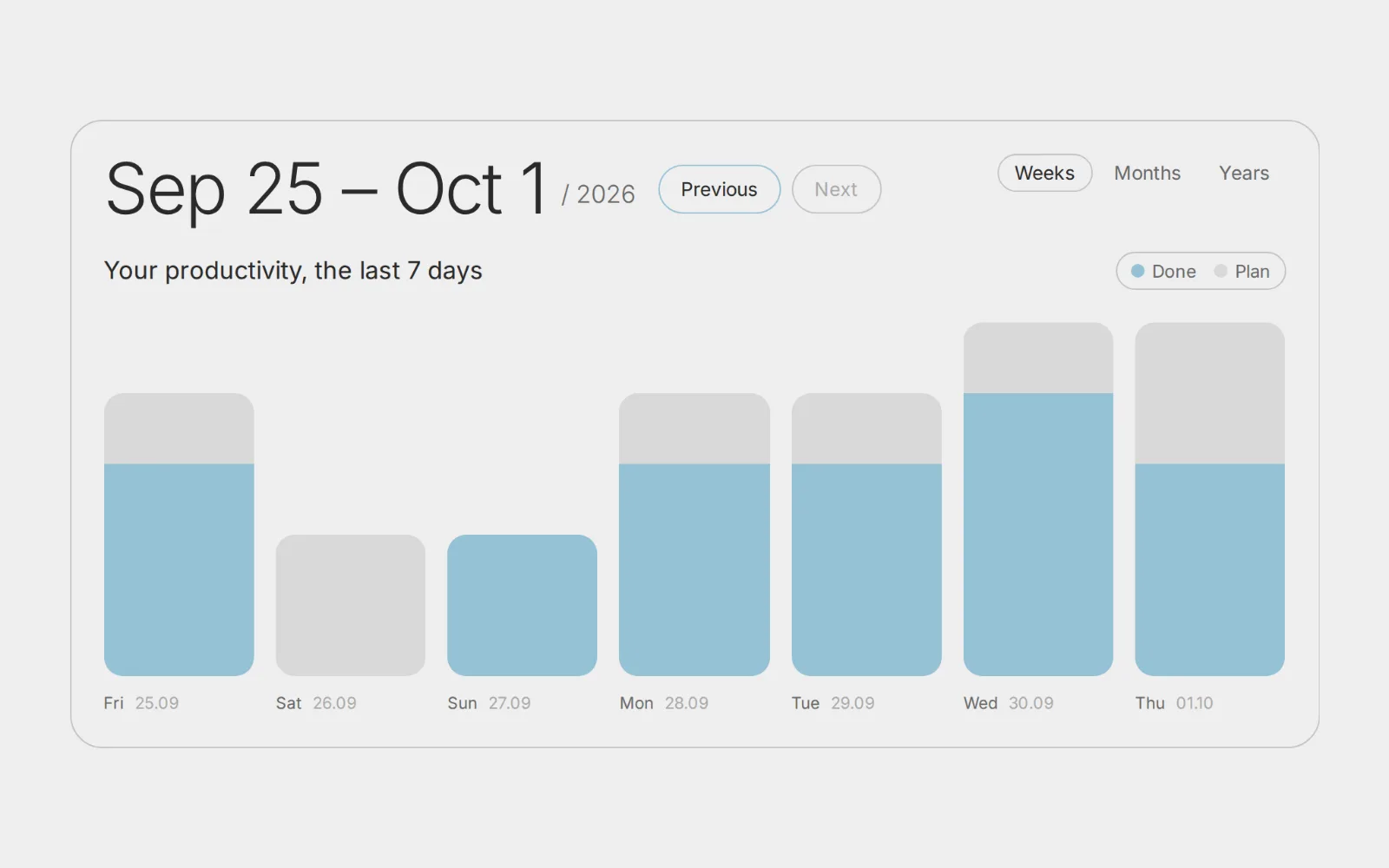
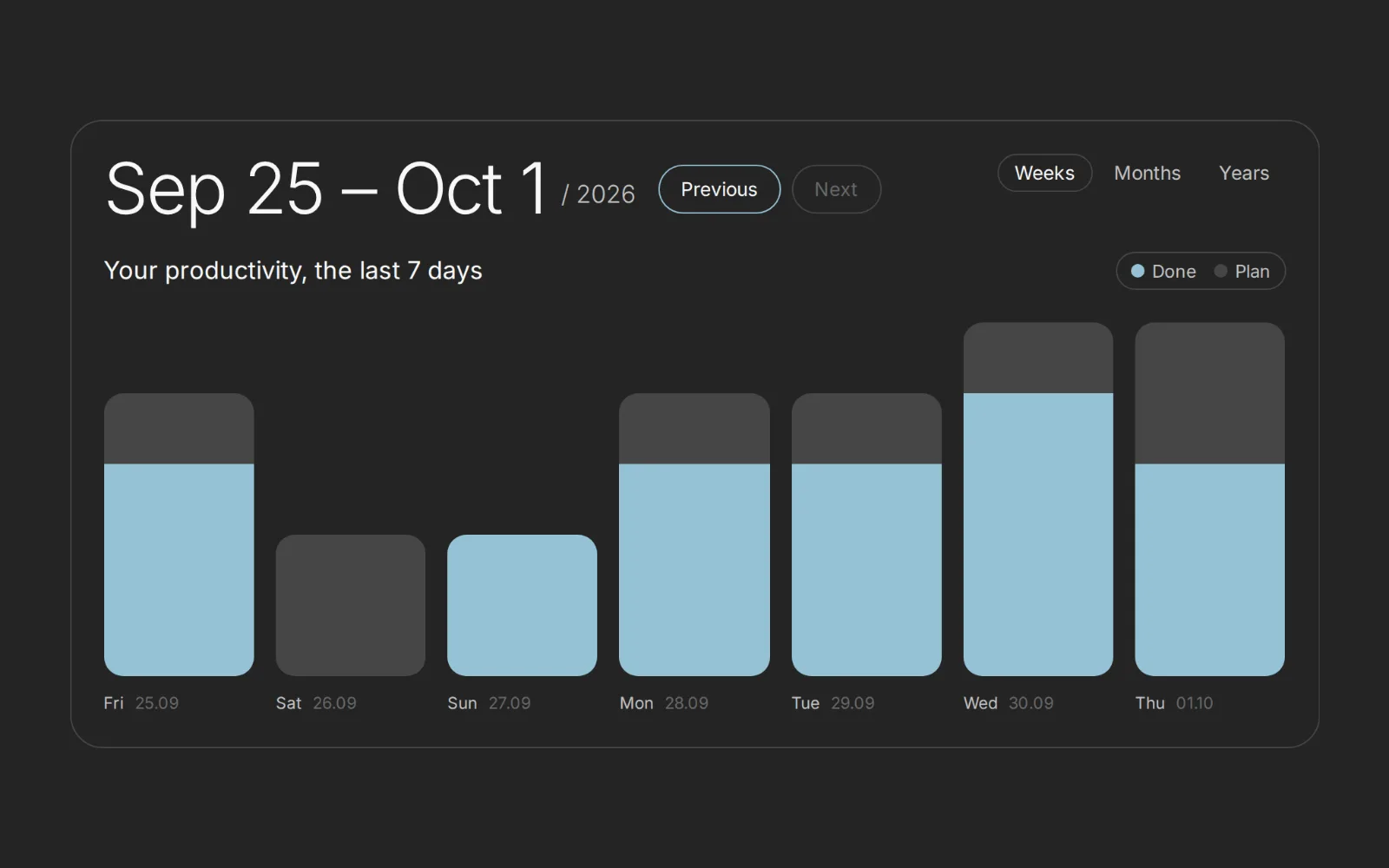
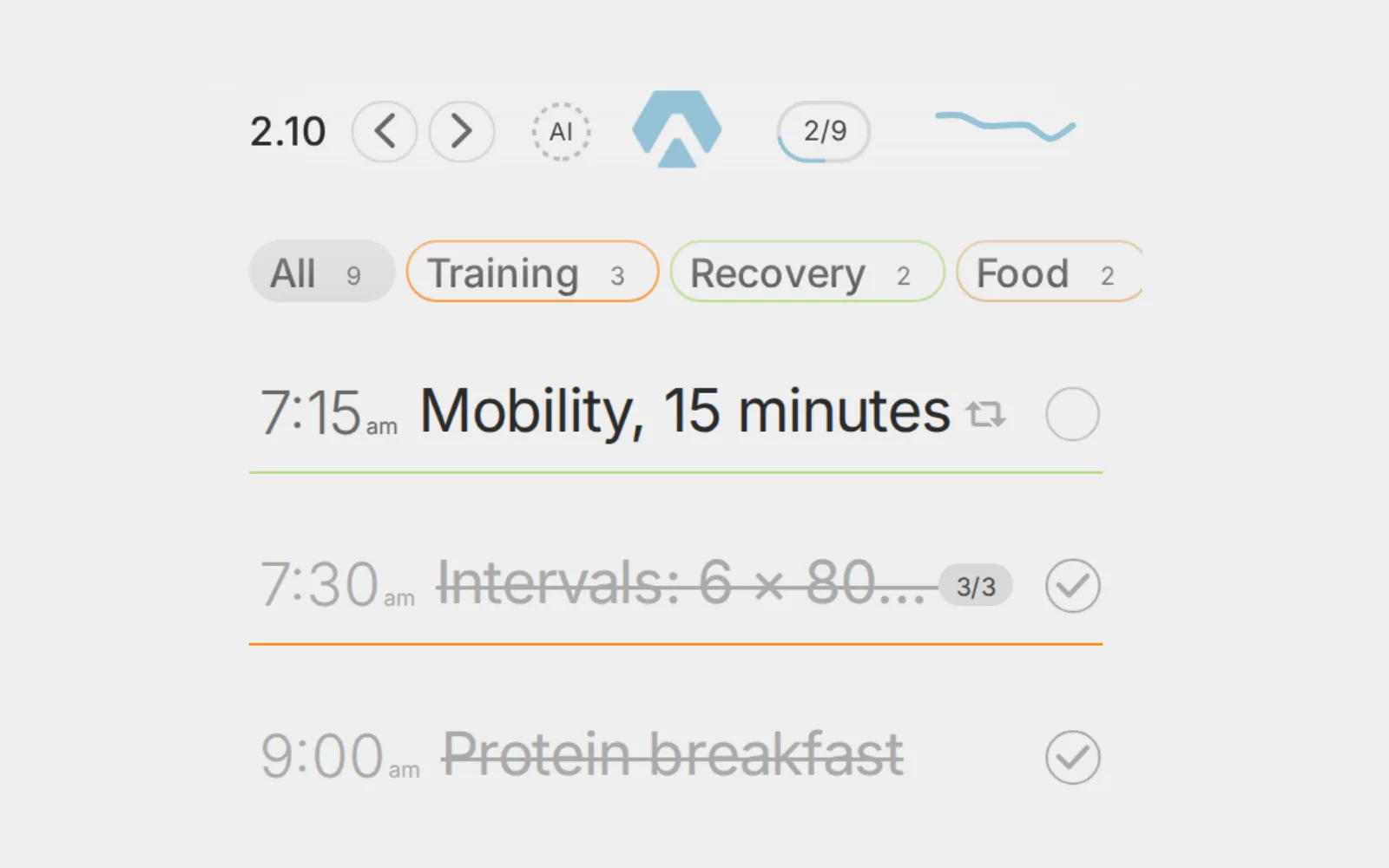
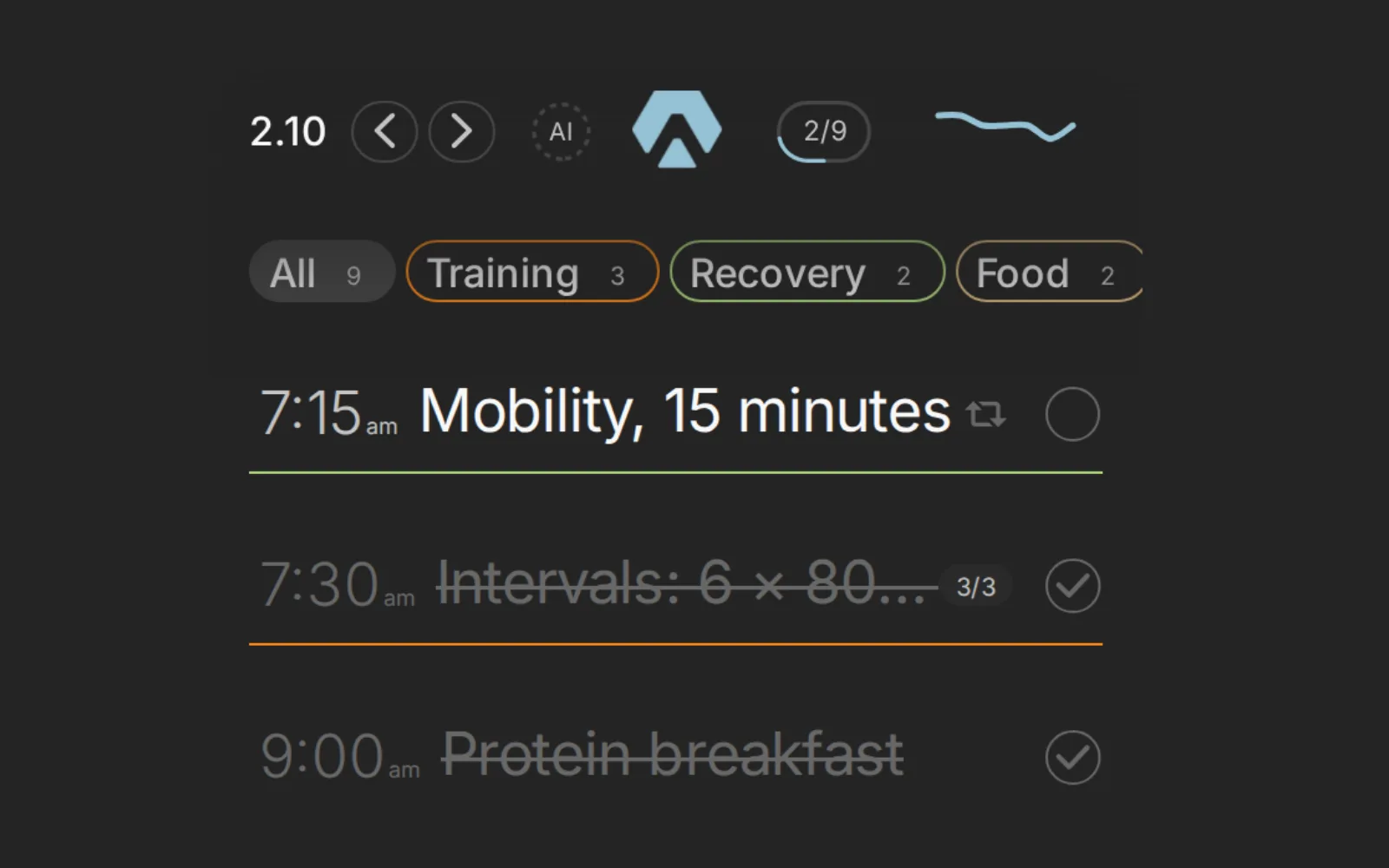
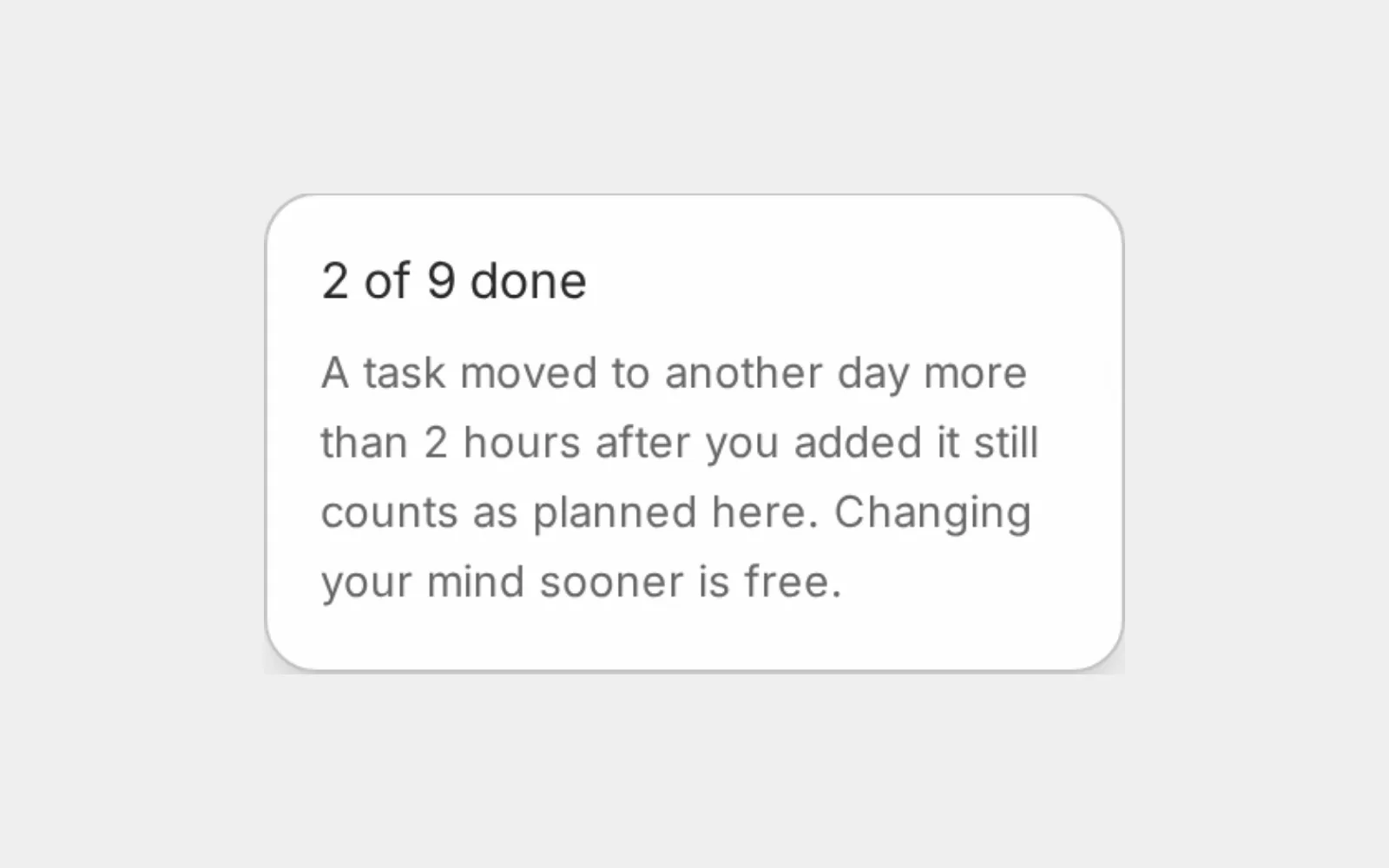
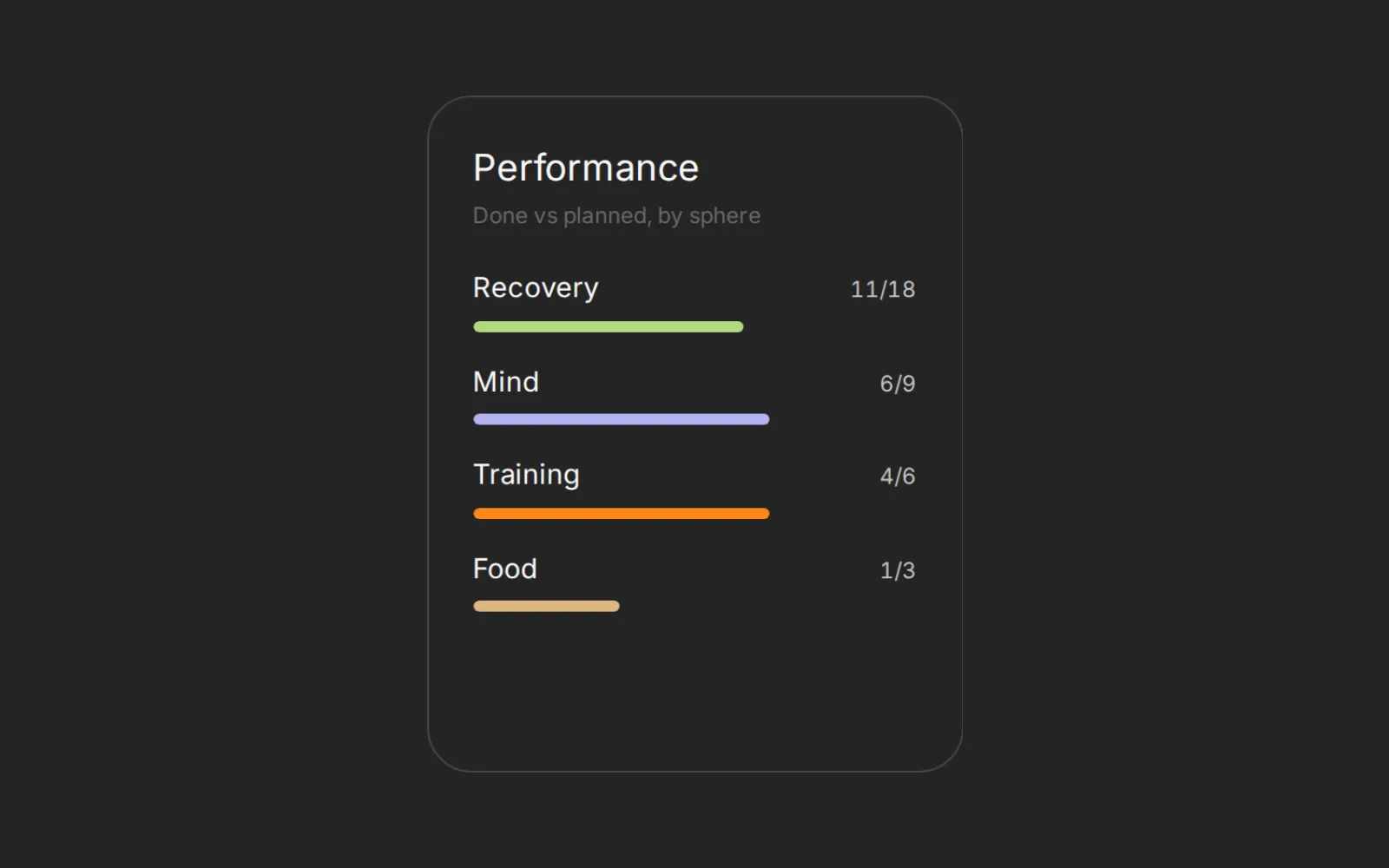
Two parts of Aimgod already support energy planning today. Timed tasks let you put deep work exactly where your energy is high: give a task a time and it takes its place at the top of the day, in order. The Productivity dashboard shows planned versus done for each day of the week, so you can see which days carried too much.
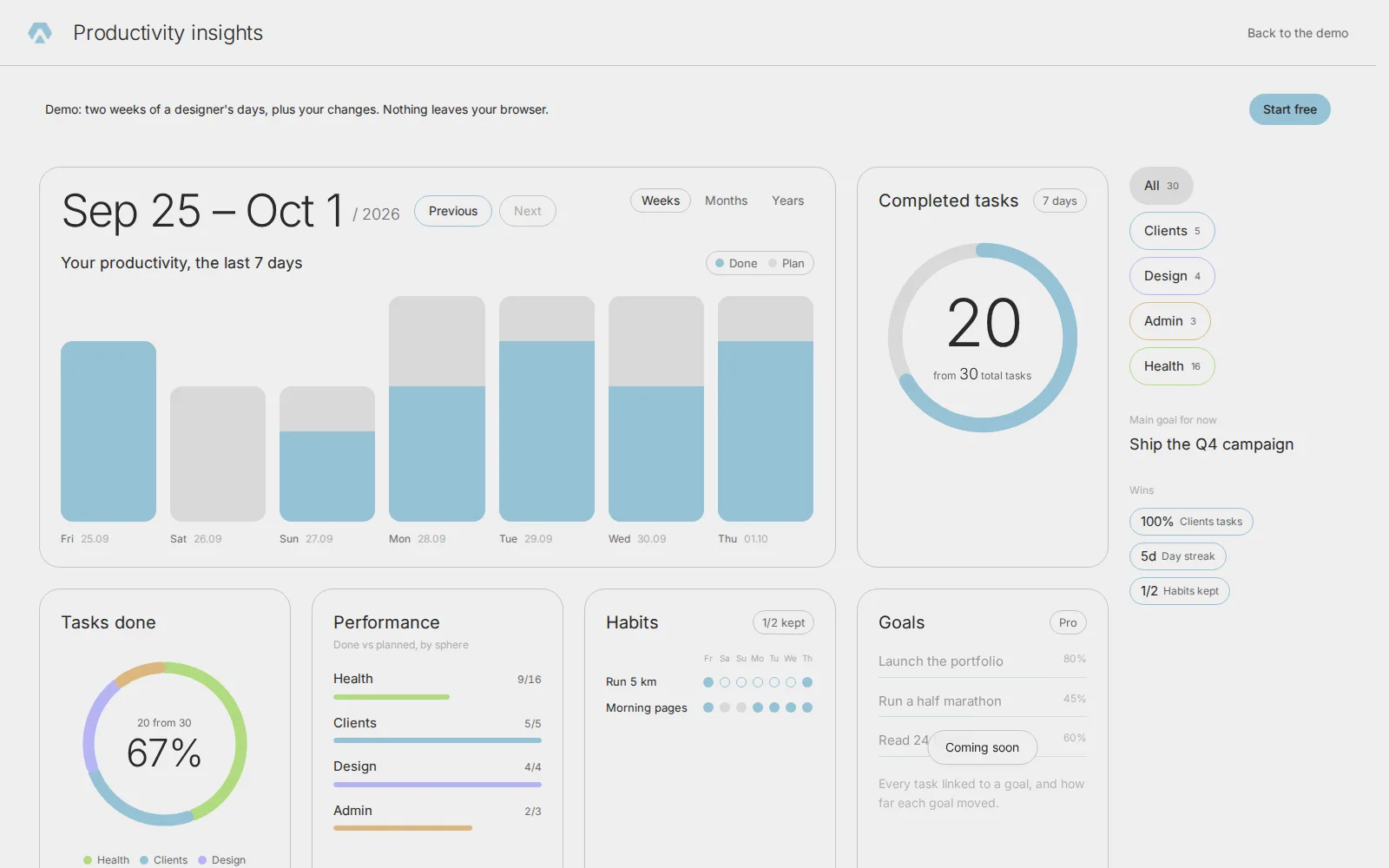
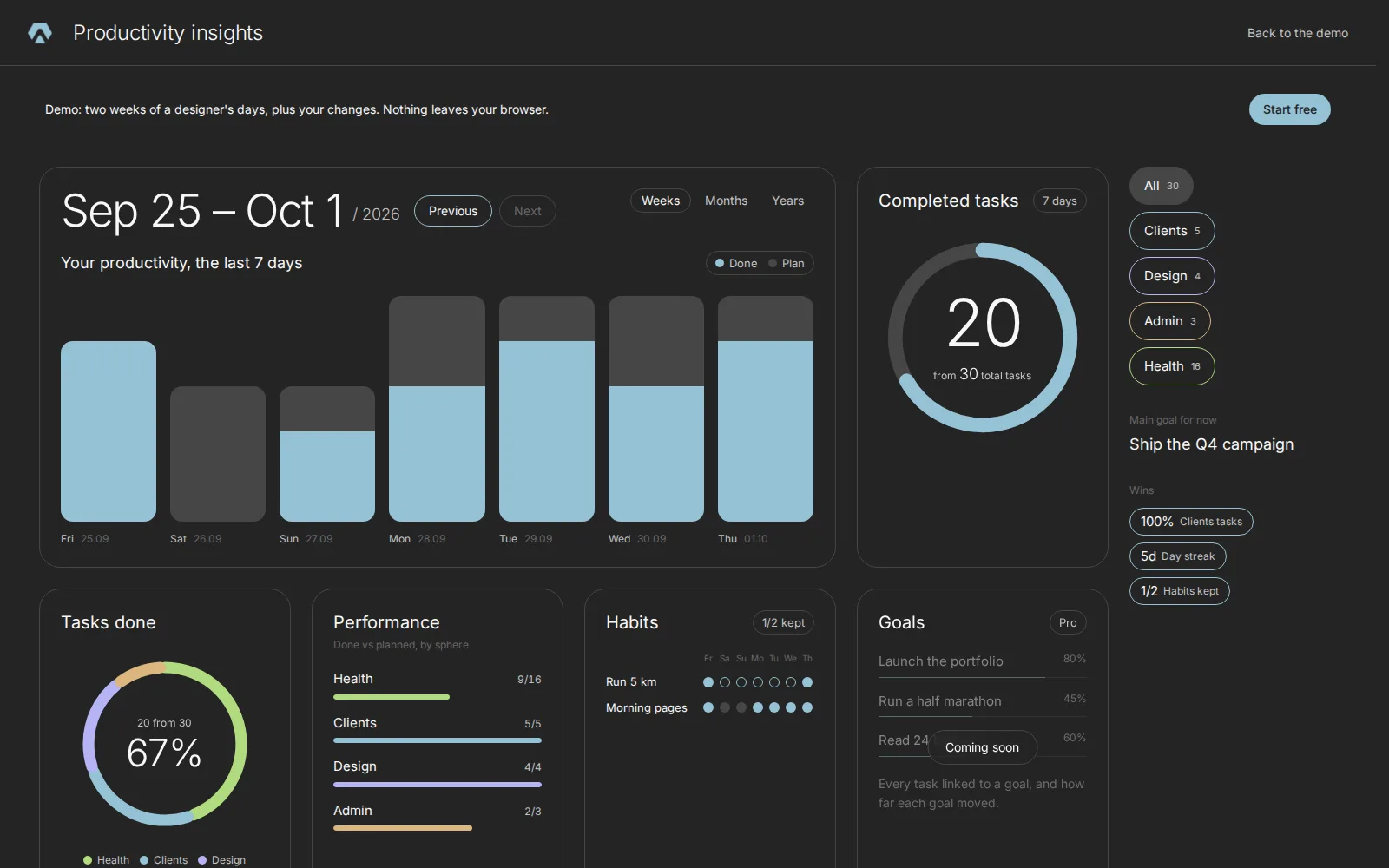
Coming in December 2026, Energy of the day: a one tap evening rating of your energy from 1 to 5. The dashboard will then show how your energy and your finished tasks move together over the weeks. The pattern you'd otherwise guess at becomes something you can see.
Work with the hours you have
Time tells you how long the day is. Energy tells you what each hour is good for, including when to do deep work. Find your peak, keep it for the work that matters most, and let the rest of the day handle the light stuff. A few weeks of honest evening check-ins will teach you more about your own productivity and energy than any shiny new method.
FAQ
How do I find my peak energy hours?
Rate your energy from 1 to 5 every evening for a week and note when hard work felt easiest. The pattern usually shows up within a week or two. Your own data beats any general rule.
What causes the afternoon slump?
For many people, alertness naturally dips in the early afternoon as part of the daily rhythm. A heavy lunch or short sleep can make it hit harder. Give that window light tasks and keep deep work for your peak.
Is energy management better than time management?
Both. Time tells you how many hours you have. Energy tells you which of them are good for deep work. Plan with both and you get more done without longer days.
Oleksandr Sendziuk believes you cannot schedule energy, but you can learn to listen to it.
Follow the build on LinkedIn ↗