In Aimgod: Evening wins, coming November 2026
Wins Journal: Write Down Five Wins Every Night
A wins journal takes five minutes a night: write down five wins to see real progress, quiet your inner critic, and build self confidence. Here's how to start.
 By Oleksandr Sendziuk, founder of Aimgod · · 6 min readFollow on LinkedIn ↗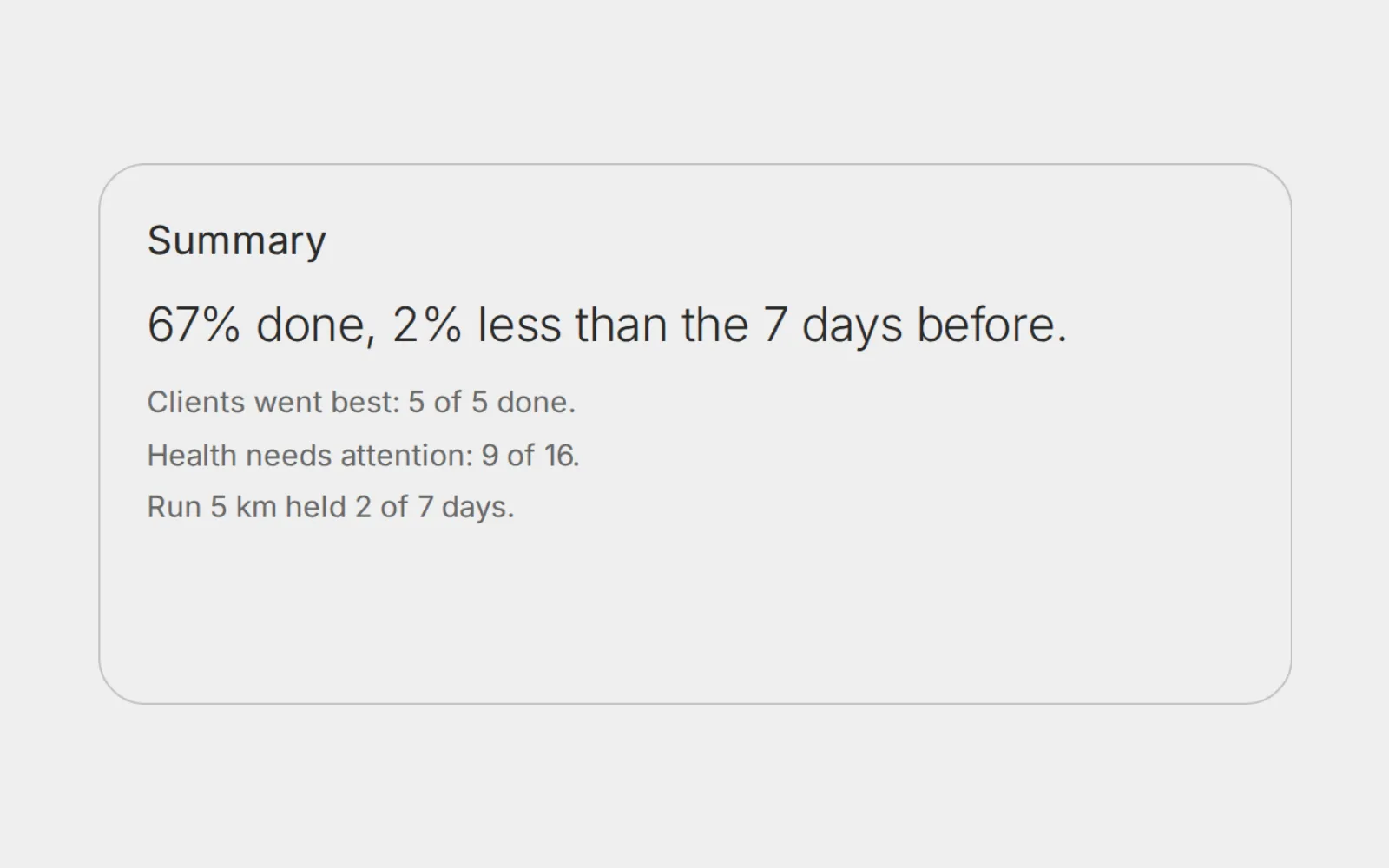
Most of us are world class at remembering what went wrong today. The email we forgot to send. The design review that ran long. The workout we skipped. What we did well? Gone by dinner.
A wins journal flips that. Every evening you write down five things that went well and that you had a hand in. It takes about five minutes, and it's one of the kindest habits you can give yourself.
I noticed the problem in myself years ago. I could finish a day where I'd shipped a feature, helped a client make a hard call, and cooked a decent meal, and still go to bed feeling behind. The facts said one thing. My memory said another. Writing five wins every night is the small practice that fixed that for me, and over the years it has done more for my confidence than any amount of planning.
What a wins journal is
A wins journal, sometimes called a success journal, is a short daily list of things that went well today and that you helped make happen. You write it at the end of the day, usually five items, in plain words.
A win can be big or small:
- Sent the proposal to the new client.
- Held my price on the call instead of discounting.
- Finished the onboarding flow, three screens.
- Walked for thirty minutes at lunch.
- Said no to a meeting that didn't need me.
The rule of thumb: each item is real, it's something you did or chose, and you'd be glad to see it again. It's not a gratitude list, though the two get along great. Gratitude looks at what you received. A wins journal looks at what you did.
Why small wins matter so much
They correct a built in bias. Psychologists call it the negativity bias. Roy Baumeister and colleagues summed it up in a famous review titled "Bad Is Stronger Than Good": people tend to notice, weigh, and remember negative events more strongly than positive ones of the same size. Handy when missing a threat was dangerous. Less handy at work, where it tilts your memory of the day toward what broke. Your memory is a lossy log, and it's biased about which entries it keeps. Writing wins down restores the other half.
They make progress visible. Teresa Amabile and Steven Kramer studied thousands of daily diary entries from people at work and found that making progress on meaningful work, even small progress, was among the strongest boosts to mood and motivation on a given day. They called it the progress principle. The catch: small wins are easy to miss. A wins journal is how you notice them on purpose.
They give your confidence evidence. Most advice on how to build self confidence skips one thing: you can't talk yourself into it. It grows from proof that you can do what you set out to do. After a few weeks, your journal is that proof. When a tough project starts and the old voice says "you can't do this," you've got pages that say otherwise, in your own handwriting.
They close the day. A short, concrete evening reflection gives your mind a clear finish line. Many people find it easier to switch off at night when the day has been looked at and put away, instead of replayed in bed on loop.
None of this is magic. Studies of positive journaling usually show modest effects, and they come from doing it consistently, not from one inspired evening. That's exactly why the format is small.
How to start a wins journal in your evening routine
- 01Pick a fixed moment. Attach the journal to something already in your evening routine: closing your laptop, making tea, brushing your teeth. An if-then plan like "after I close the laptop, I write five wins" makes it almost automatic. A steady cue beats the perfect notebook.
- 01Write five wins, no fewer. Five pushes you past the obvious ones. The first two come easy. The last three make you look harder at your day, and that's where the good stuff lives.
- 01Be specific. "Good work on the project" is vague and easy to shrug off. "Solved the empty state for the dashboard that had been bugging me since Monday" is a real memory you can come back to.
- 01Count small wins. On a rough day, a win might be "replied to the difficult client calmly" or "stopped work at seven like I planned." These count. Even starting a task you'd been dodging for days, say with the 5 minute rule for procrastination, absolutely belongs on the list.
- 01Include wins outside work. A day is more than billable hours. Cooking for your family, calling a friend, finishing a chapter: these go on the list too. They remind you that your life is bigger than your task list.
- 01Read back once a week. At the end of the week, reread your last five evenings. Patterns pop up: which work gives you energy, what you're consistently good at, what you're quietly proud of. That's when a wins journal starts working like a real success journal, a record you can learn from. It pairs beautifully with a simple Sunday weekly review.
- 01Keep going after a gap. You'll miss some evenings. Write tonight's five and carry on. There's no backlog to clear. If a long gap leaves you feeling guilty about the whole system, read about a fresh start without guilt.
Evening reflection mistakes to skip
Writing only big wins. If a win has to be a signed contract or a launched product, most days will have none, and the journal starts to feel like proof you're failing. Lower the bar to anything real you did or chose well.
Turning it into a to-do review. This isn't the place to list what you didn't finish. Keep tomorrow's plan somewhere else. Mix them and the inner critic walks right back into the one moment meant to quiet it.
Being vague. "Productive day" says nothing. Specific wins are the ones you remember and believe. Name the task, the moment, the choice.
Only doing it on good days. The practice helps most on the bad days, when your memory is most biased. Those are the evenings to write the list anyway, even if two of the wins are "rested" and "didn't give up."
How Aimgod helps
A wins journal is way easier when you don't have to rebuild your day from memory. Aimgod already keeps a lot of that record for you.
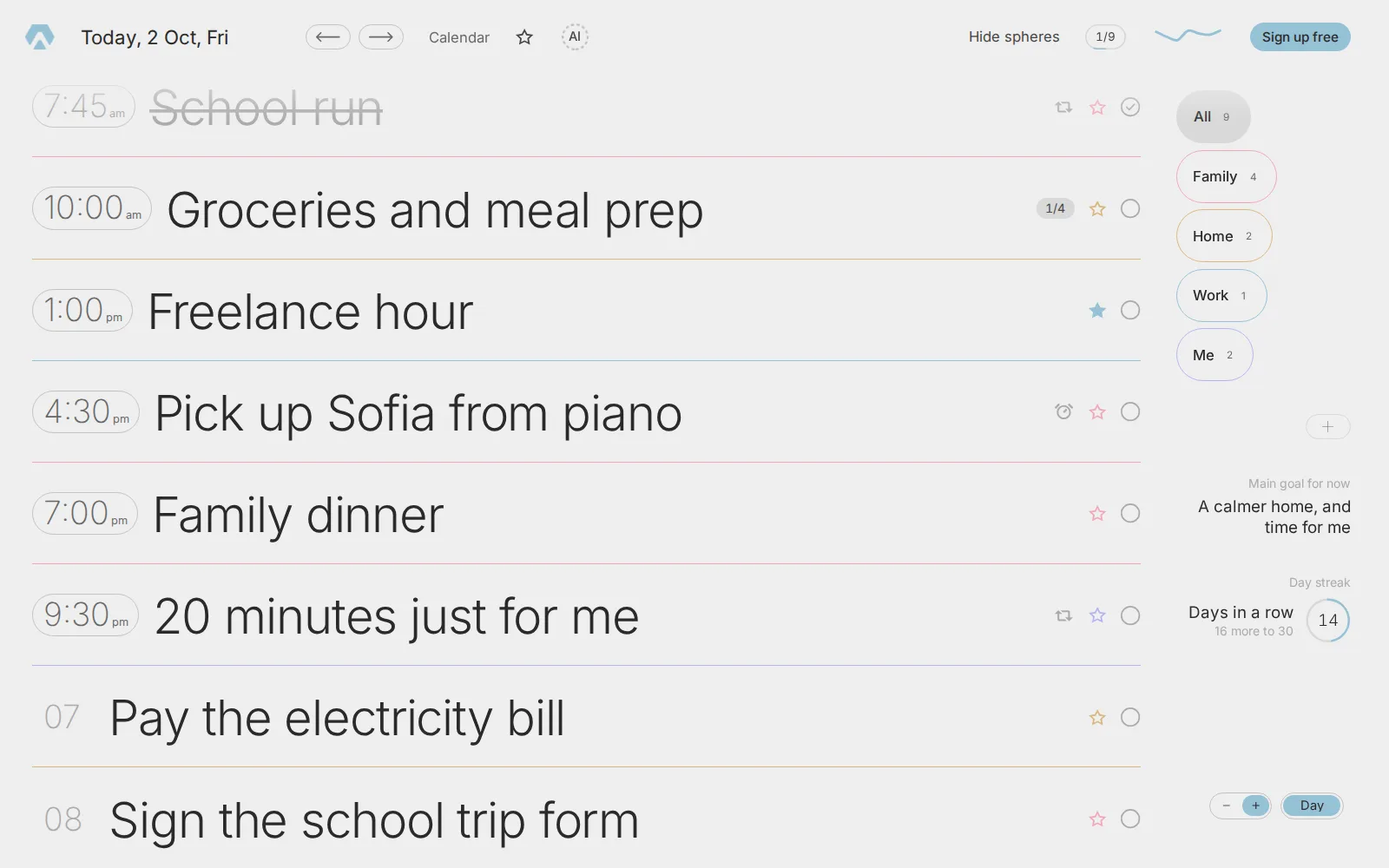
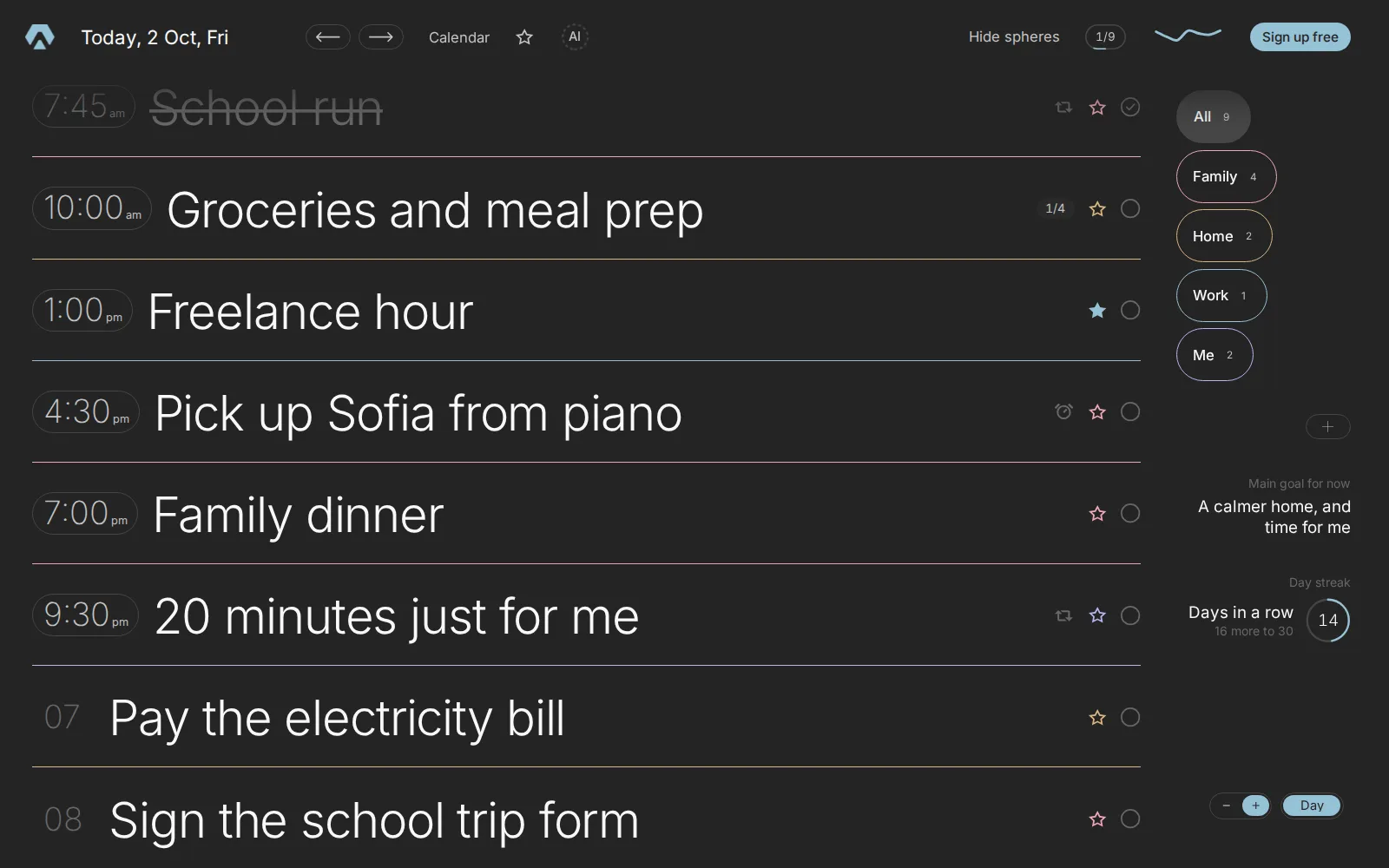
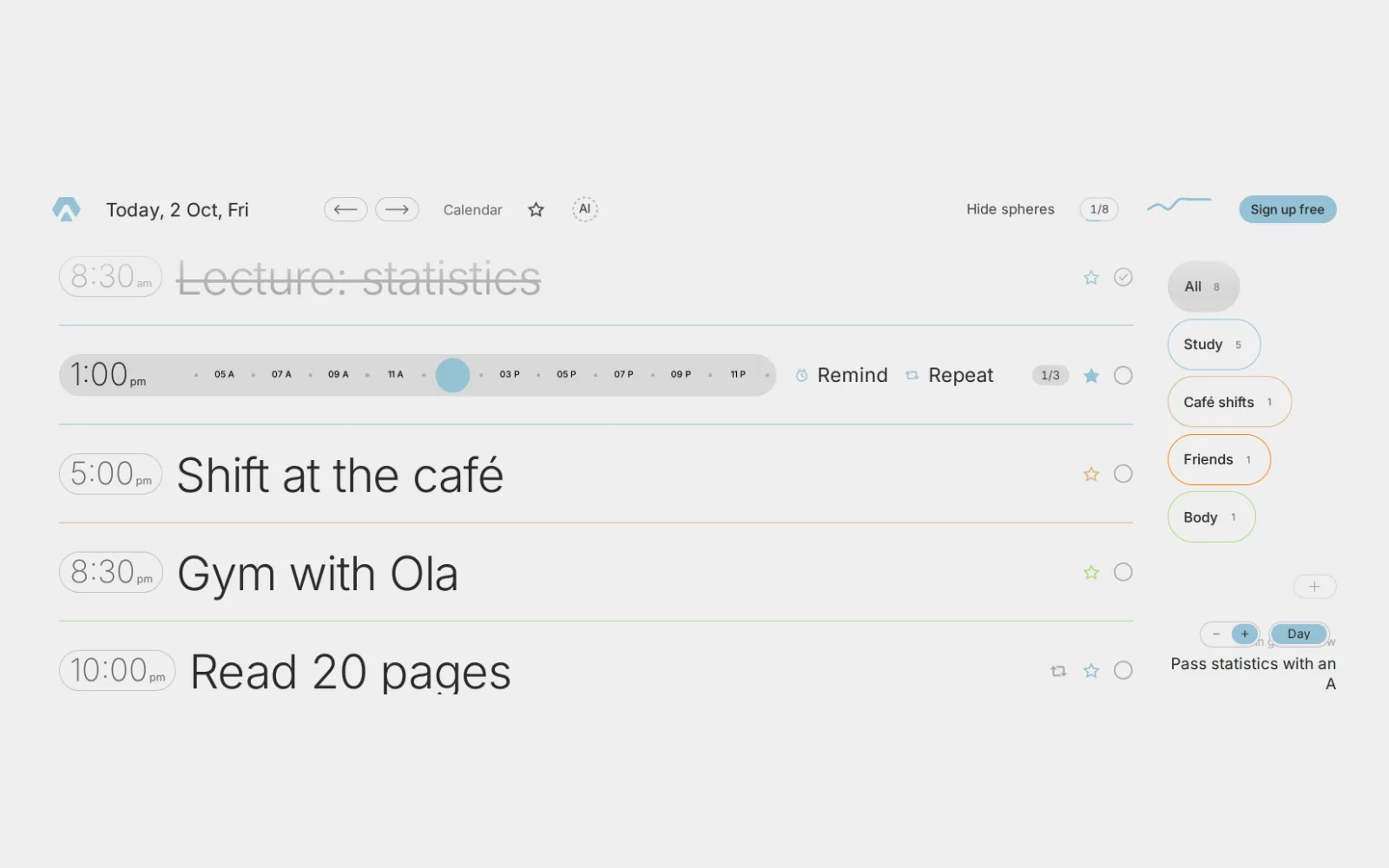
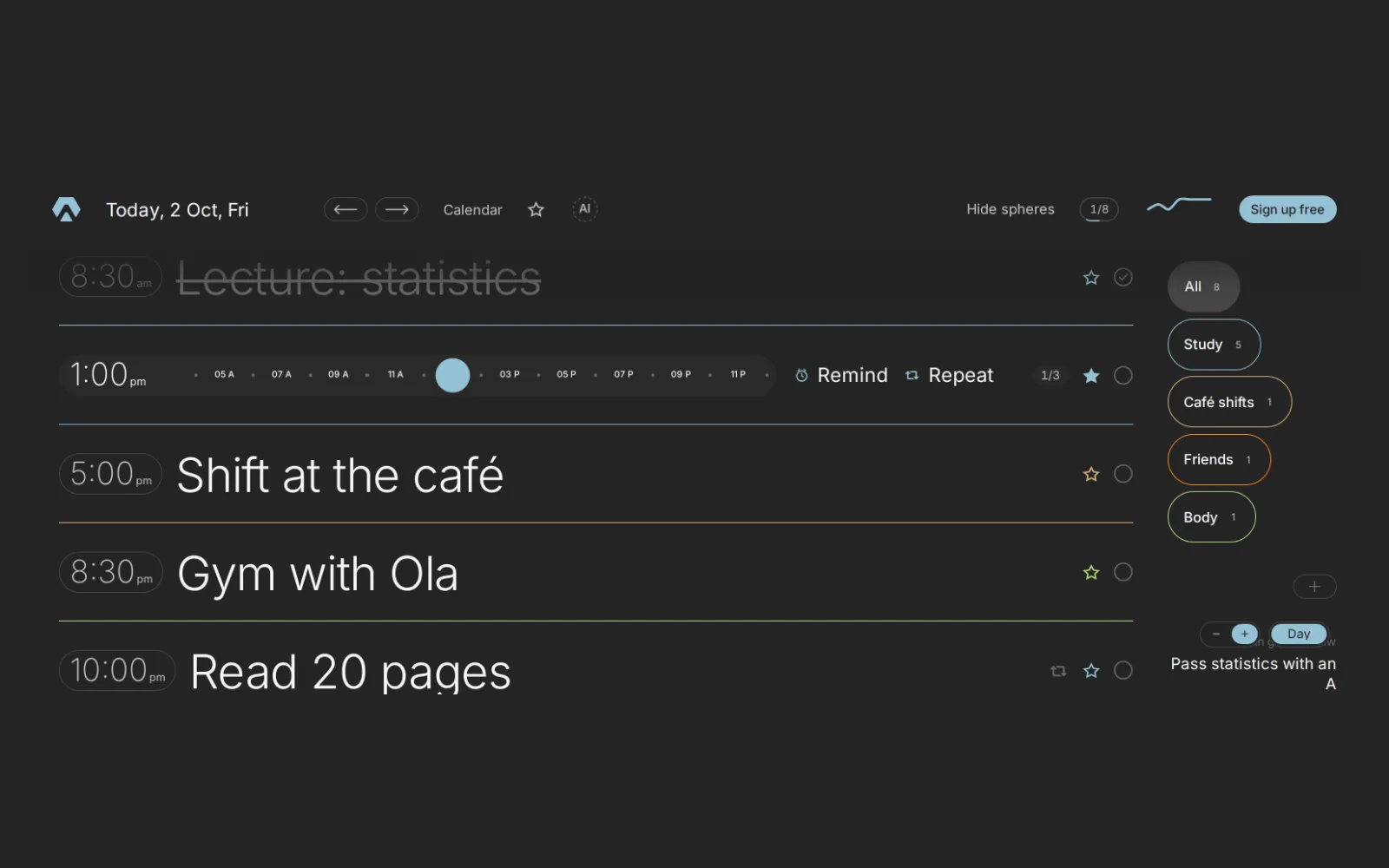
Done tasks stay visible, live today. When you finish a task in Aimgod, it stays on the day, marked done. In the evening you can scroll your day and see what actually happened. Most of your work wins are sitting right there.
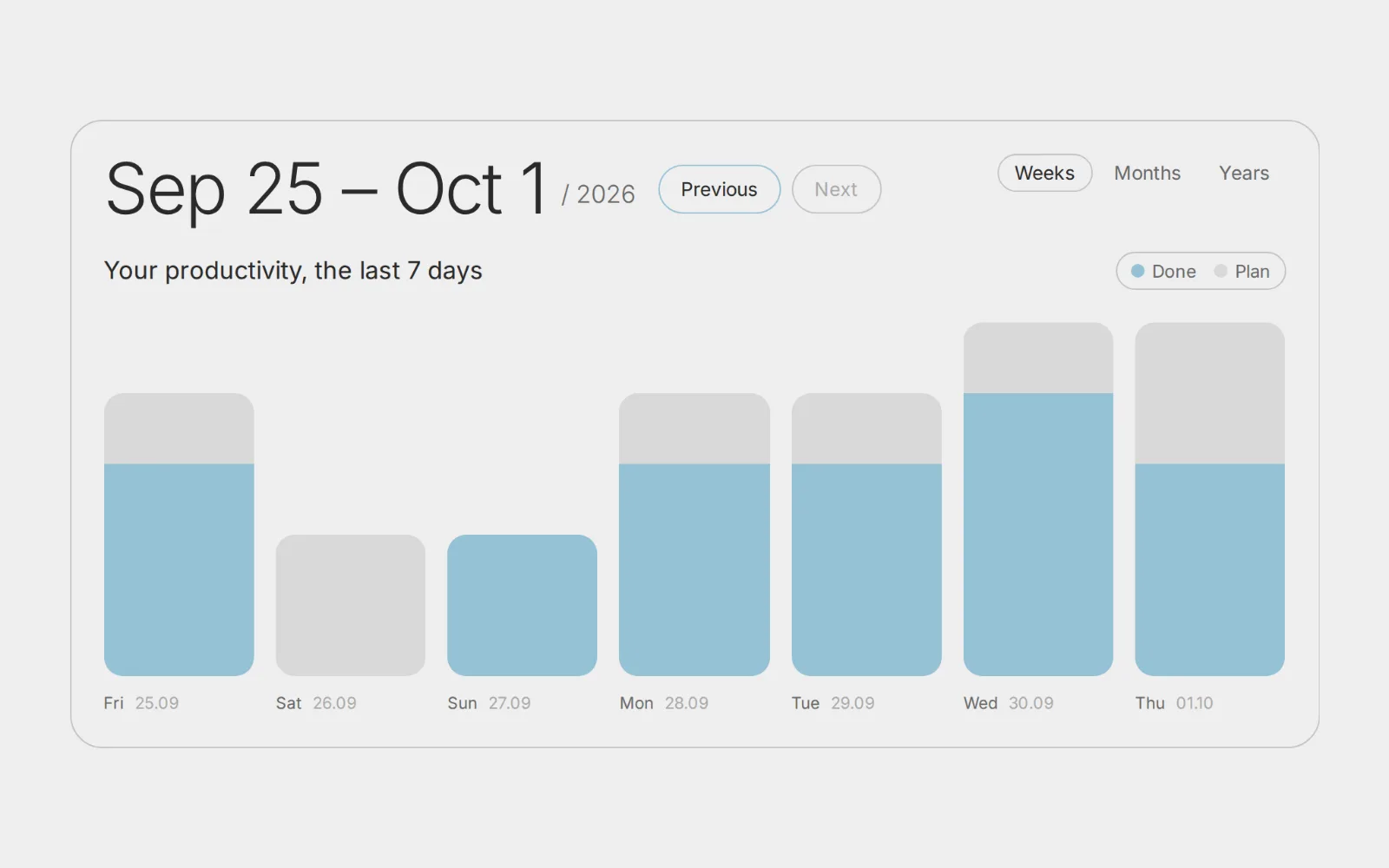
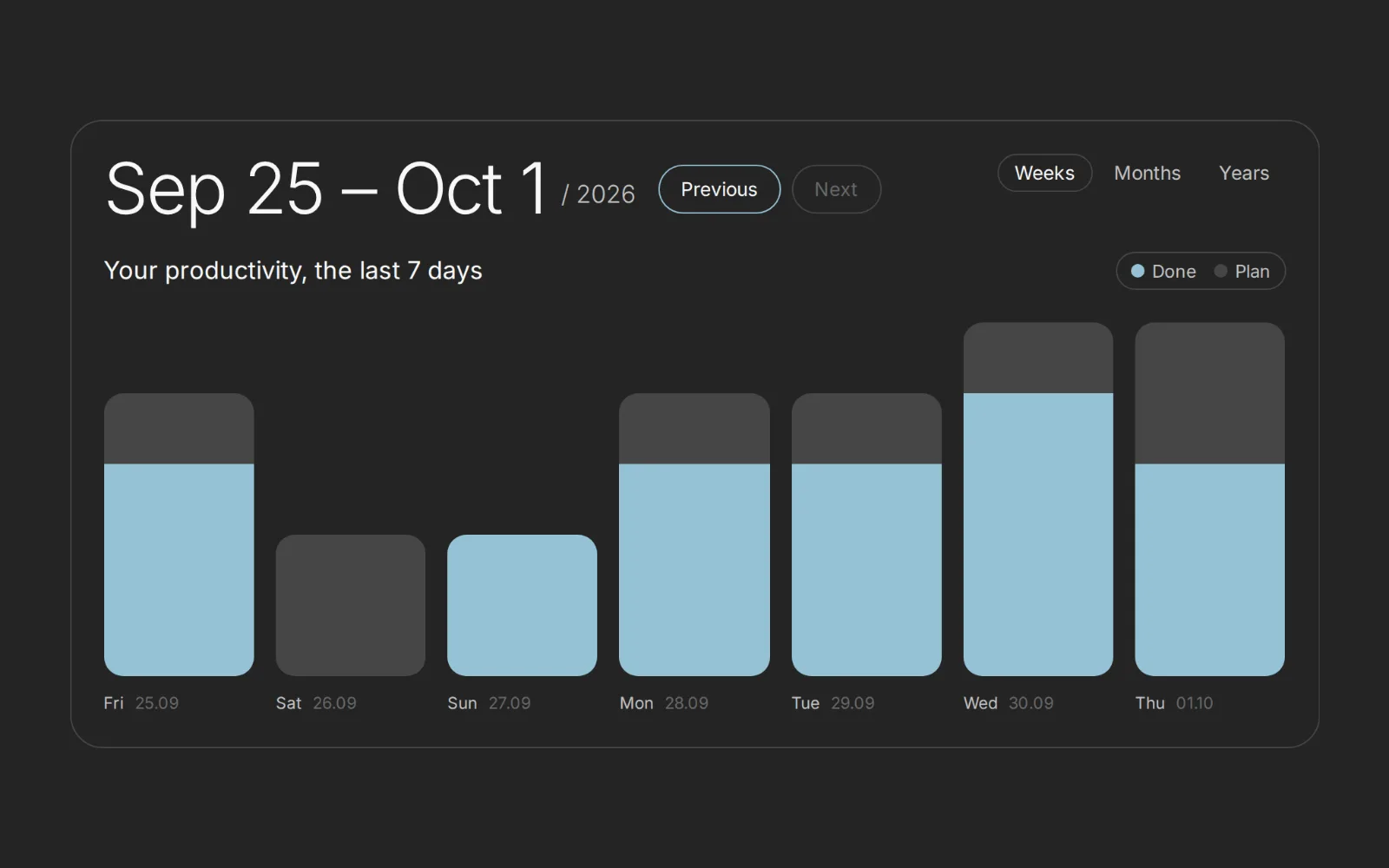
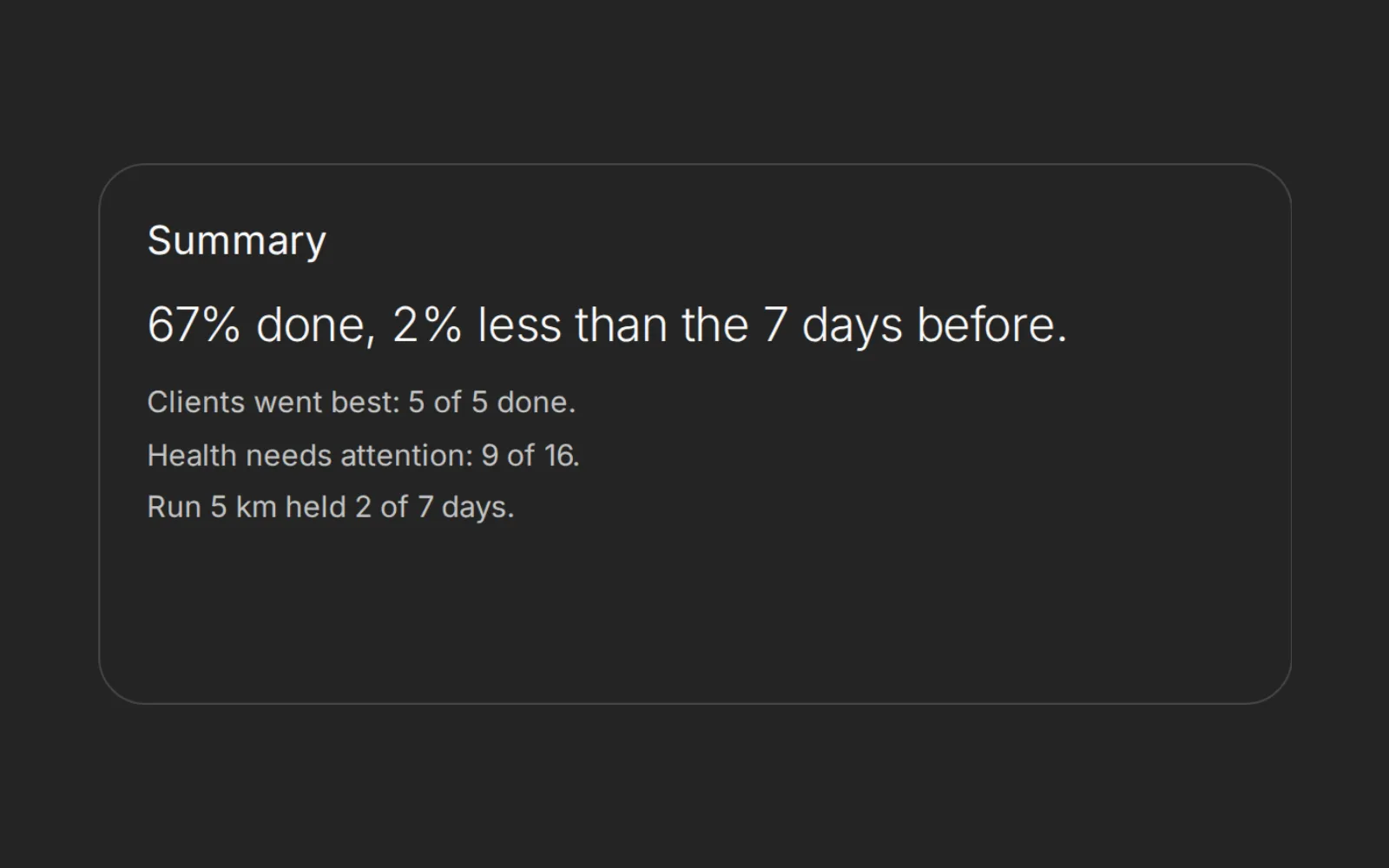
The Wins block and your week card, live today. The dashboard has a Wins block, next to your week bars of planned and done. You can also share a "My week in Aimgod" card, a simple picture of your week that's nice to send to a friend or keep for yourself.
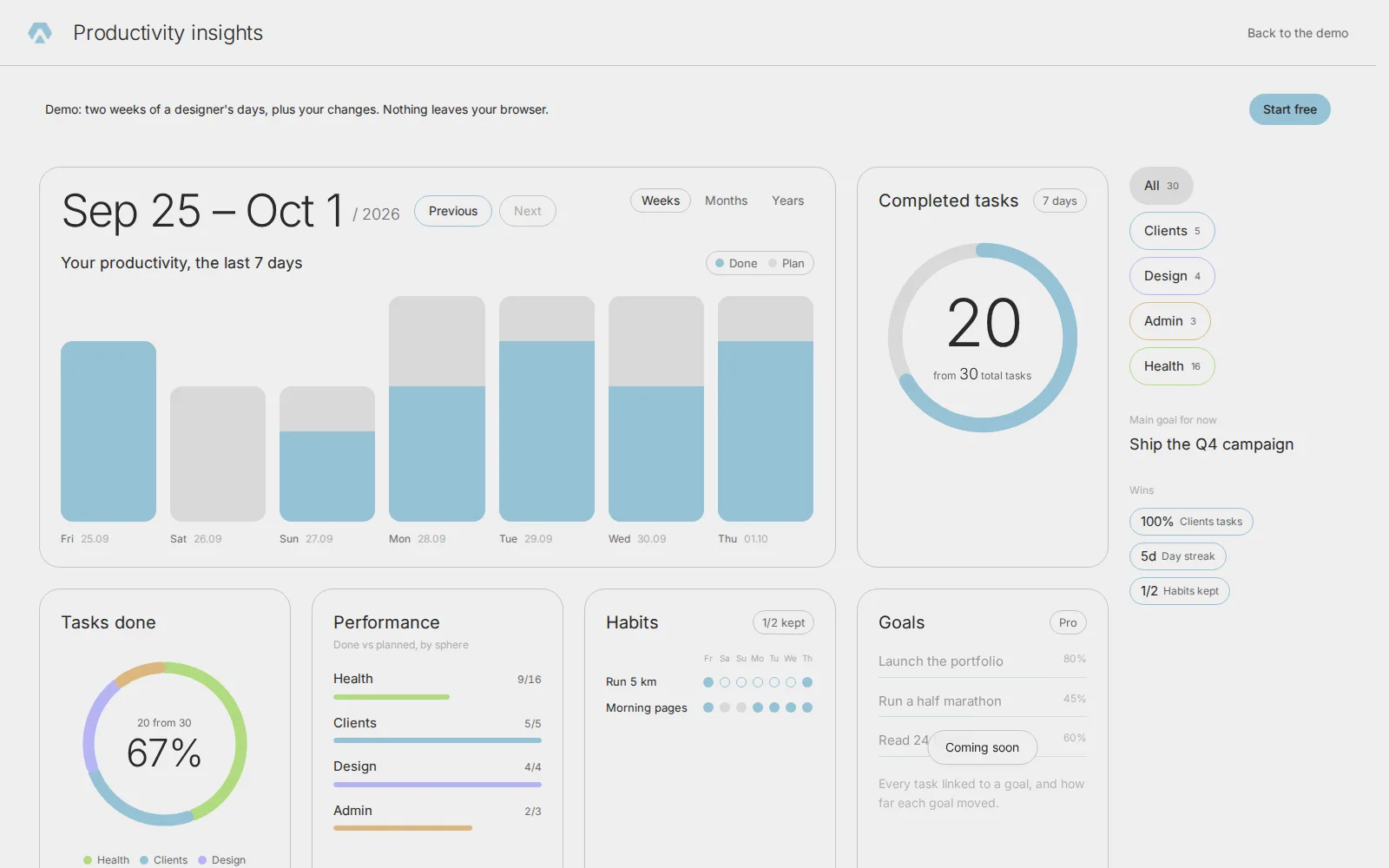
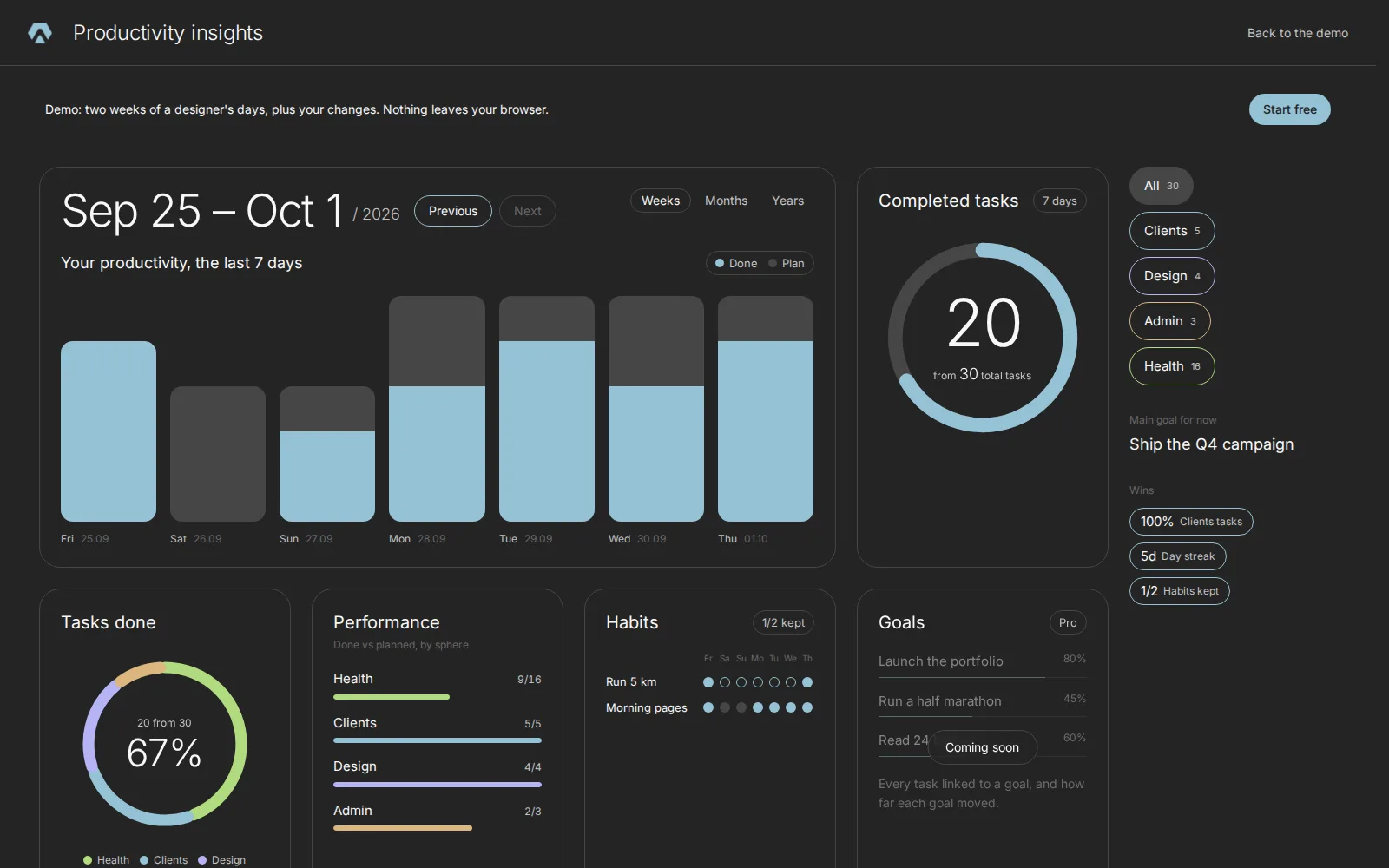
Evening wins, coming in November 2026. Aimgod will offer a short evening prompt with your done tasks already filled in as wins. You keep the ones that matter, add the ones from outside your list, and wrap up the day in a couple of minutes.
Five lines before bed
You already have wins every day. The only question is whether you notice them. Five lines tonight won't change a single day. Over a month, they change how you see yourself and your work. Before you close the laptop, write five. Then do it again tomorrow.
FAQ
What should I write in a wins journal?
Anything real that went well today and that you did or chose: a task finished, a hard conversation handled calmly, a walk, a boundary held. Be specific. Small wins count.
Is a wins journal the same as a gratitude journal?
Close, but no. A gratitude journal looks at what you received. A wins journal looks at what you did. They work great together, and some people write both in the same five minutes.
How to build self confidence with a wins journal
Steadily and practically. Over weeks it becomes a written record that you follow through, and that's the evidence confidence grows from. Day to day the effect is modest. It compounds with consistency.
Oleksandr Sendziuk believes noticing what went right is what keeps you going.
Follow the build on LinkedIn ↗