In Aimgod: Ask AI, live now
Daily Routine for Hard Times: Let Small Habits Carry You
A daily routine for hard times: why two or three small anchor habits at the same time each day keep you steady, and how to shrink them for the heavy days.
 By Oleksandr Sendziuk, founder of Aimgod · · 6 min readFollow on LinkedIn ↗
There was a hard stretch in my life a while ago. What kept me standing surprised me. Not a big decision, just the same green smoothie at the same hour, the mat, the gym on the usual days. A daily routine for hard times isn't built in the storm, it's the one you already have, made smaller.
What carried me
By then I'd done yoga every day for 15 years. I went to the gym, I went to the sauna, I played music. I also had a habit of posting a video of myself playing synths almost every week, or at least once a month.
None of this was built for a crisis. It was just my normal life. But when the hard period came, those habits turned out to be the floor under my feet.
I made one choice early on: I would feel the pain, not numb it. That's harder in the moment, because you don't get a break from it. What made it possible to go through it calmly was the routine. Small, almost silly things. Making the same green detox smoothie at the same time every morning. Rolling out the mat. Going to the gym on the usual days.
That's the part I didn't expect. I didn't have to invent a way through each day. The system already had one, and I followed it.
How routines help mental health, in plain terms
I'm a designer, not a doctor, so I'll keep this to what's widely understood and what I lived through.
When life gets loud, almost everything feels uncertain. A routine gives you a few things that stay the same. Research on stress keeps pointing in one direction: predictability and a sense of control help people cope. You can't control the big thing. You can control whether you stretch at 8 and eat breakfast at 9.
Routines also save decisions. A heavy period drains the energy you'd normally spend on choosing. If the morning already has a shape, you skip twenty small choices and spend what's left on what matters. If energy is the thing you're short on, here's more on how to manage your energy, not just your time.
And routines keep the body in the loop. Movement, daylight, regular meals, regular sleep. Just the basics a hard week tends to drop first.
That's how routines help mental health on an everyday level: less chaos to manage, fewer choices to make, a body that's still looked after. It's not therapy. It's a handrail.
Anchor habits: the core of a daily routine for hard times
An anchor habit is a small action you do at the same time every day, whatever is going on. Not a goal. Not a self-improvement project. A fixed point.
Most people already have a few, like morning coffee or a walk with the dog. The idea is to notice which ones keep you steady and protect them on purpose when things get hard.
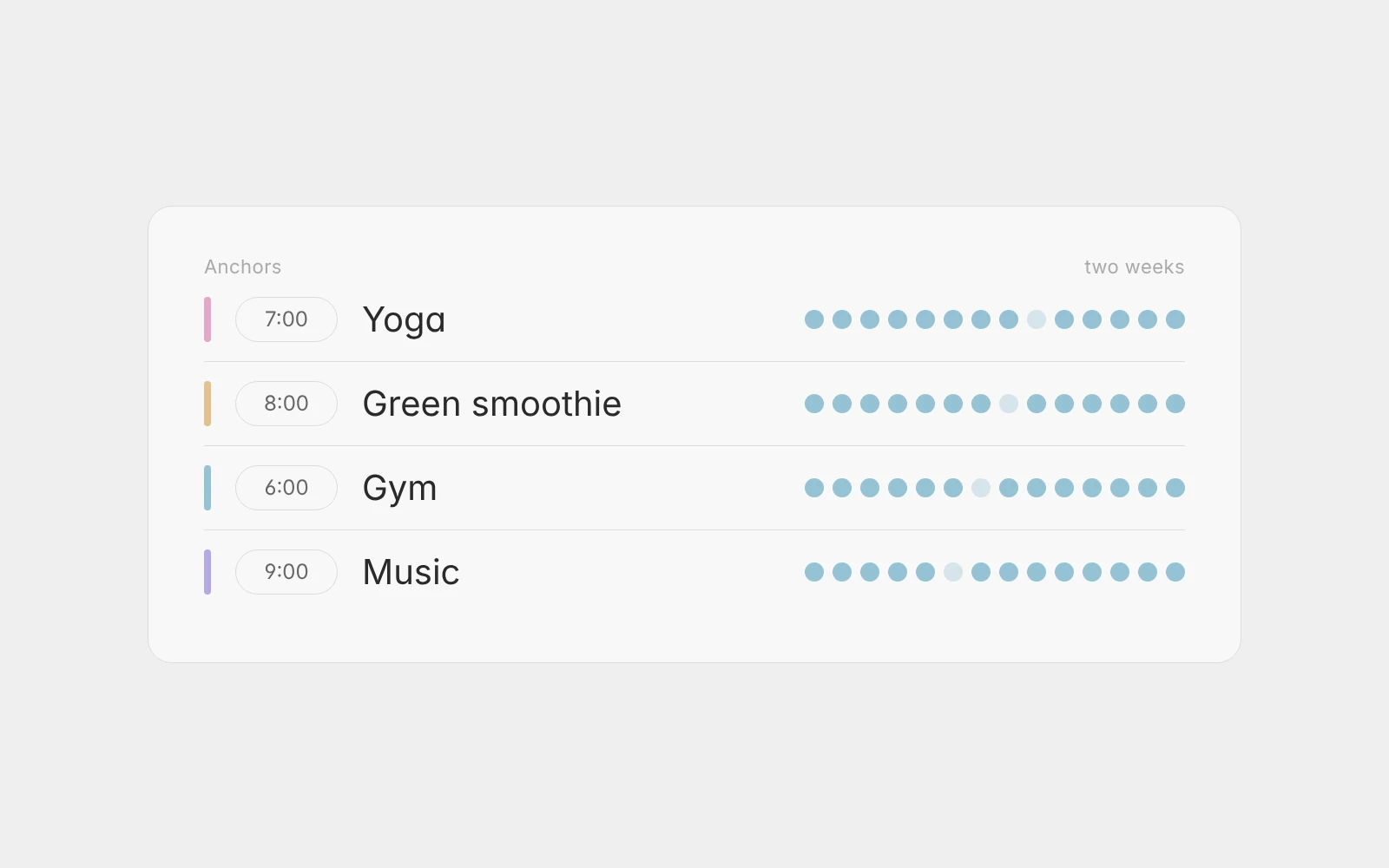
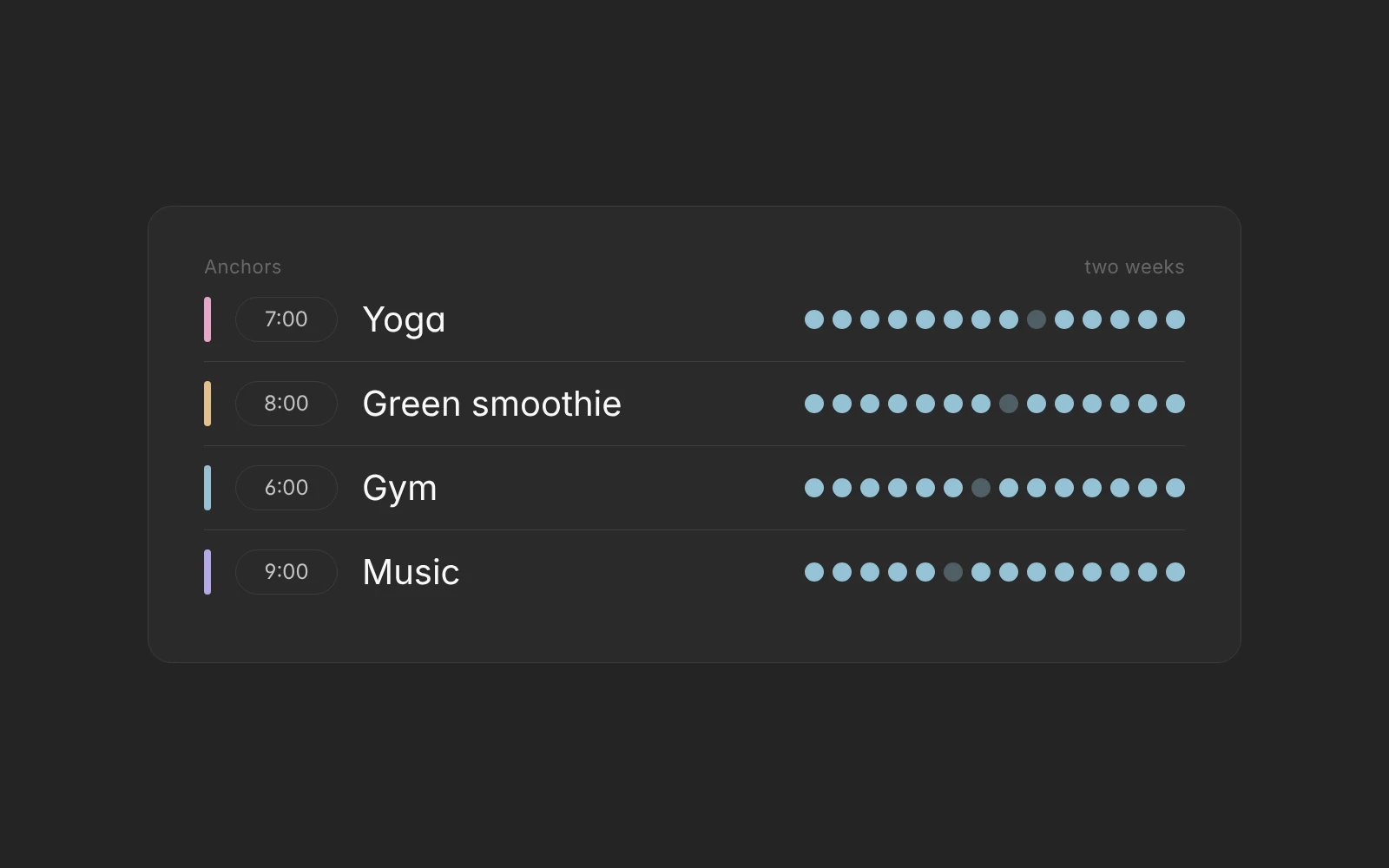
Mine were yoga, the green smoothie, the gym and music. Yours might be completely different. A walk around the block, tea on the balcony, ten minutes with a guitar, dinner at the same hour. What matters is that it's yours, it's small, and it repeats.
How to keep habits during stress
Here's what I'd tell a friend going through a hard stretch.
- 01Pick two or three anchors, not ten. Look at your normal week and choose the habits that steady you most. Let the rest pause, no guilt. A long list during a hard time just turns into a list of things you didn't do.
- 02Shrink them. If your usual workout is an hour, the hard-time version might be fifteen minutes. If yoga is a full session, a few poses count. Shrinking is how you keep habits during stress instead of dropping them. Same habit, lighter dose. More on that idea in the five minute rule.
- 03Same time, every day. Time is what lets a habit carry you. When the anchor happens at 8:00 every morning, you don't need motivation to start it. The clock is enough.
- 04Let the system carry you. Put the anchors in your plan as tasks with a time, so you don't have to remember them. On a bad day, open the plan and do the next thing on it.
- 05Plan the day, not the month. In a hard period, the future is the heavy part. Plan only today: the anchors, plus one or two things that truly have to happen. The rest can wait.
- 06Forgive the misses. You'll skip days. That's fine. One missed day barely affects a habit, which is good news covered in how long it really takes to form a habit. Tomorrow you pick it back up, as a fresh start without guilt.
A simple hard-time day can look like this. 8:00, fifteen minutes of stretching. 8:30, breakfast. One work task before lunch. 18:00, a short walk. 21:00, ten minutes of something you love, music, a book, a sketch. Five anchors, nothing ambitious. A day you can actually get through.
And one more thing, the way I'd say it to a friend at the next desk: if it gets too heavy to carry, talk to someone. A person you trust, or a professional. Routines help you walk. They're not meant to carry everything alone.
Structure in difficult times doesn't have to be strict
People hear "routine" and picture a rigid schedule. That's not what helped me. What helped was a few points of structure in difficult times, with plenty of space around them. Notice the habits that hold you, protect them, and go easy on yourself about everything else.
My takeaway from that period is simple: systematise your life before you need it. The habits I'd kept for years did the work when I had very little left to give. And today you can lean on technology for this, so that keeping the system running costs almost no effort. Bring the same approach to every important area of your life, with AI helping and with your own thinking leading.
How Aimgod helps
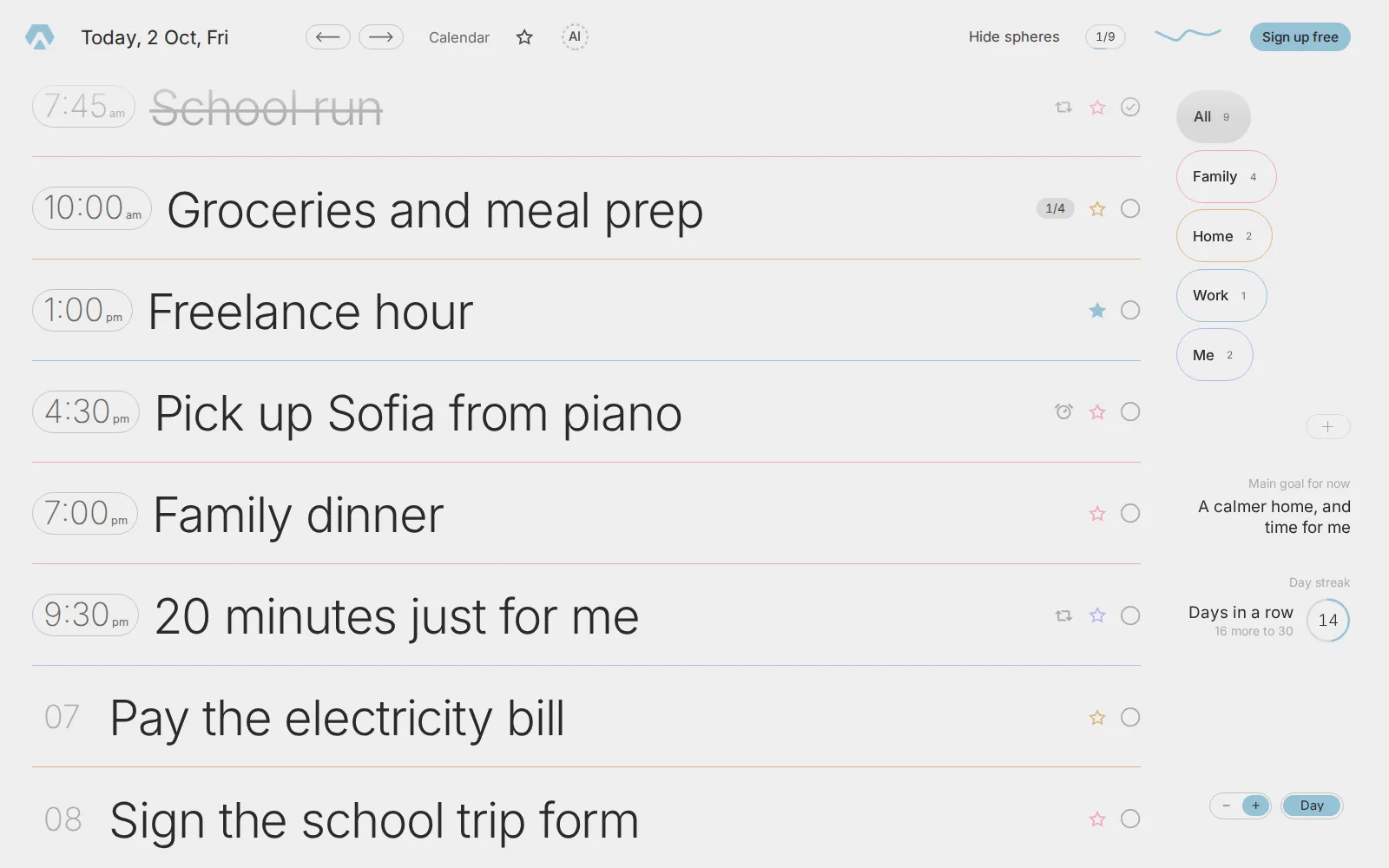
On heavy days, typing out a plan can feel like too much. That's where Ask AI comes in. Tap the AI circle, then speak, type or answer a few taps, and press "Plan my day". Say something like "stretching at 8, breakfast at 8:30, one client task before lunch, a walk at 6," and Aimgod turns it into a day. Every change is shown before it lands, so nothing moves behind your back.
Aimgod also works with Claude. Connect once, then move tasks in plain words: "Move the report to Friday," or "Spread these tasks across the week." You can look at the week and ask for a calmer layout without doing much by hand.
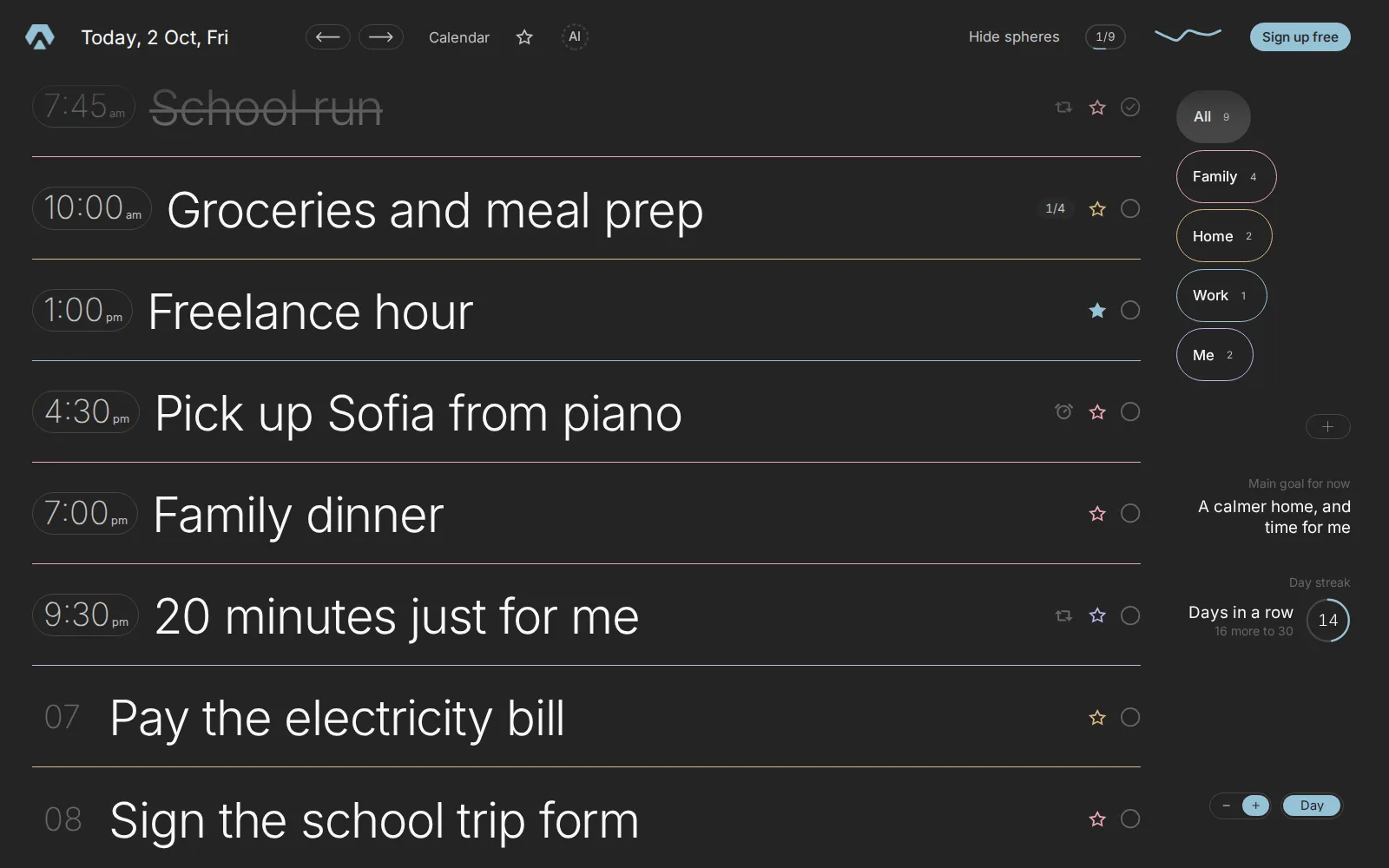
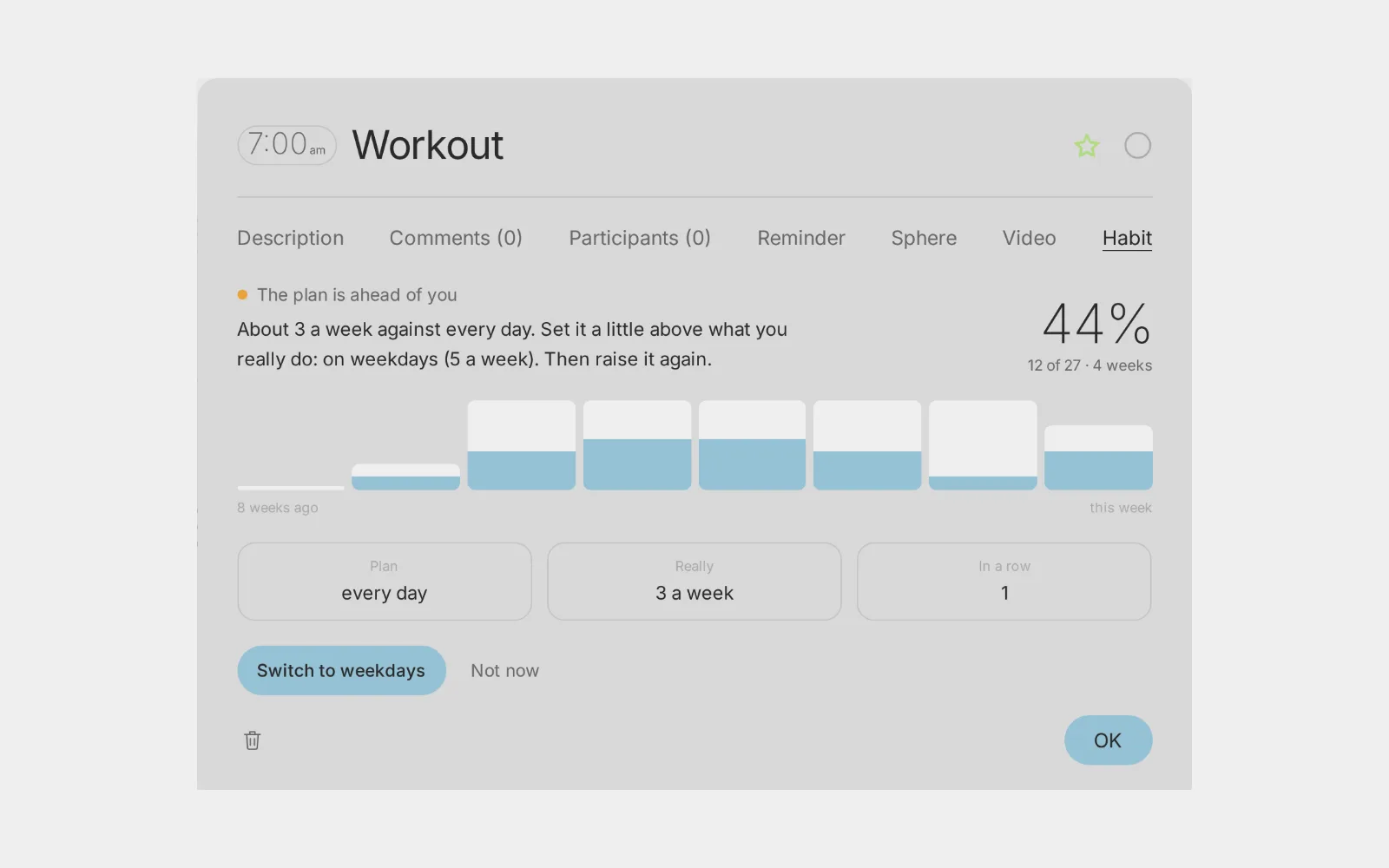
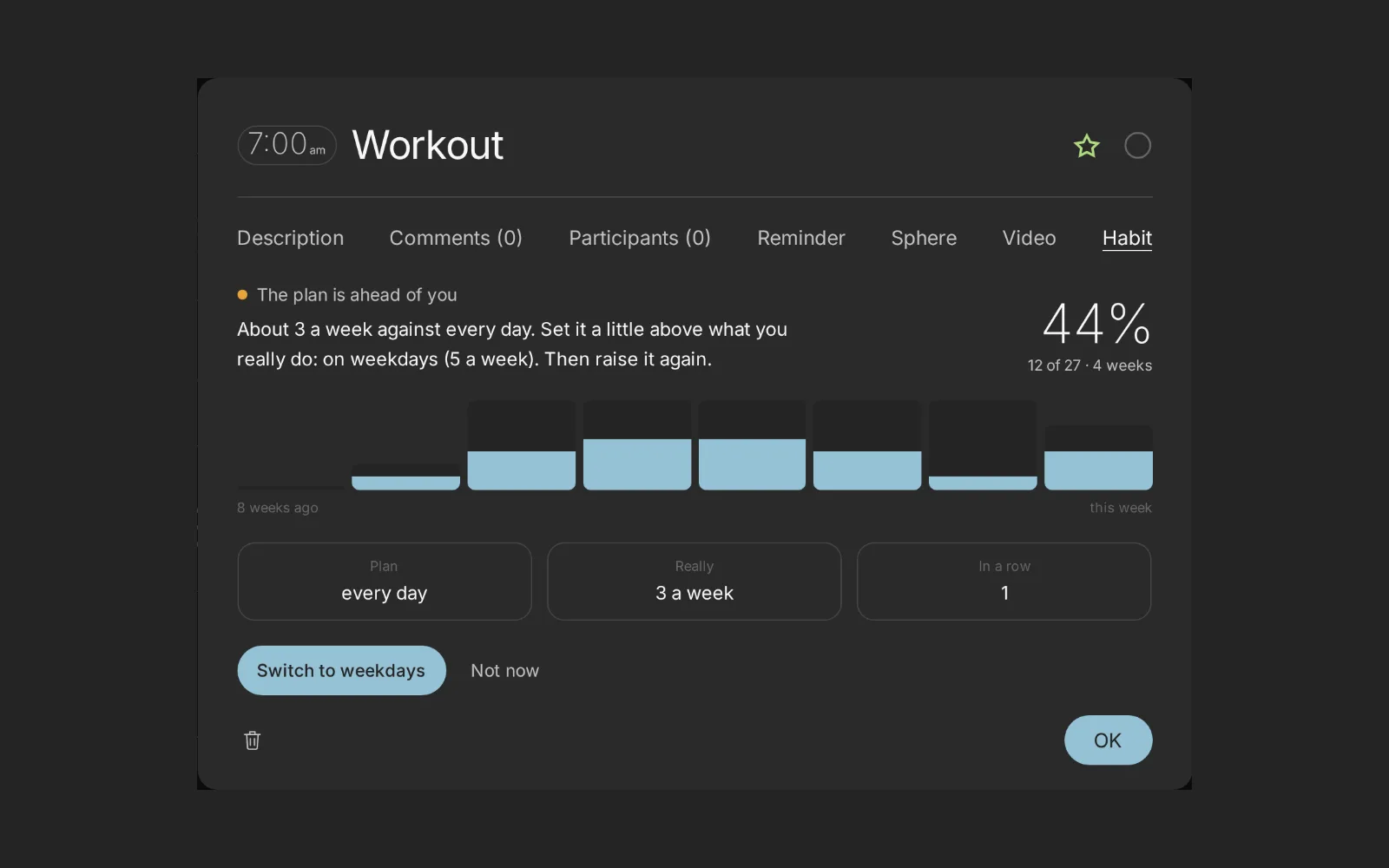
The day view keeps today to one short list. The time pill puts a task at a time in two taps, so your anchors land at the same hour. Repeats bring them back every day without retyping, and reminders show up in Google and Apple Calendar. The habit tab shows how your anchors are holding up, with a simple verdict and one suggestion.
Let the routine hold you
You don't need a new life plan during a hard time. You need a few small things that stay the same. Keep two or three anchors, make them small, put them at the same time, and let the system carry you for a while. A daily routine for hard times is less about discipline and more about kindness: you set it up on good days so it can look after you on the bad ones.
FAQ
What does a good daily routine for hard times look like?
A short one. Two or three small anchor habits at fixed times, like a walk, a regular breakfast or a few minutes of stretching, plus one or two tasks that truly have to happen. Everything else is optional until things settle.
How can I keep habits during stress when I have no energy?
Shrink them. Keep the habit and cut the dose: fifteen minutes instead of an hour, a few poses instead of a full session. Keep the same time each day so the clock starts it, not your motivation.
Can a routine replace professional help?
No. A routine can make a hard period easier to walk through, but if it feels too heavy, talk to someone you trust or to a professional.
One calm letter a week
A short read on planning, habits and focus, from the founder of Aimgod. No spam, unsubscribe anytime.
We only use your email to send the letter. Privacy
Oleksandr Sendziuk believes the habits you keep on good days are the ones that hold you on hard ones.
Follow the build on LinkedIn ↗