In Aimgod: Goals, coming January 2027
WOOP Goal Setting: Plan for What Stops You
WOOP goal setting in plain words: wish, outcome, obstacle, plan. A calm, research backed way to achieve your goals by planning for what usually stops you.
 By Oleksandr Sendziuk, founder of Aimgod · · 6 min readFollow on LinkedIn ↗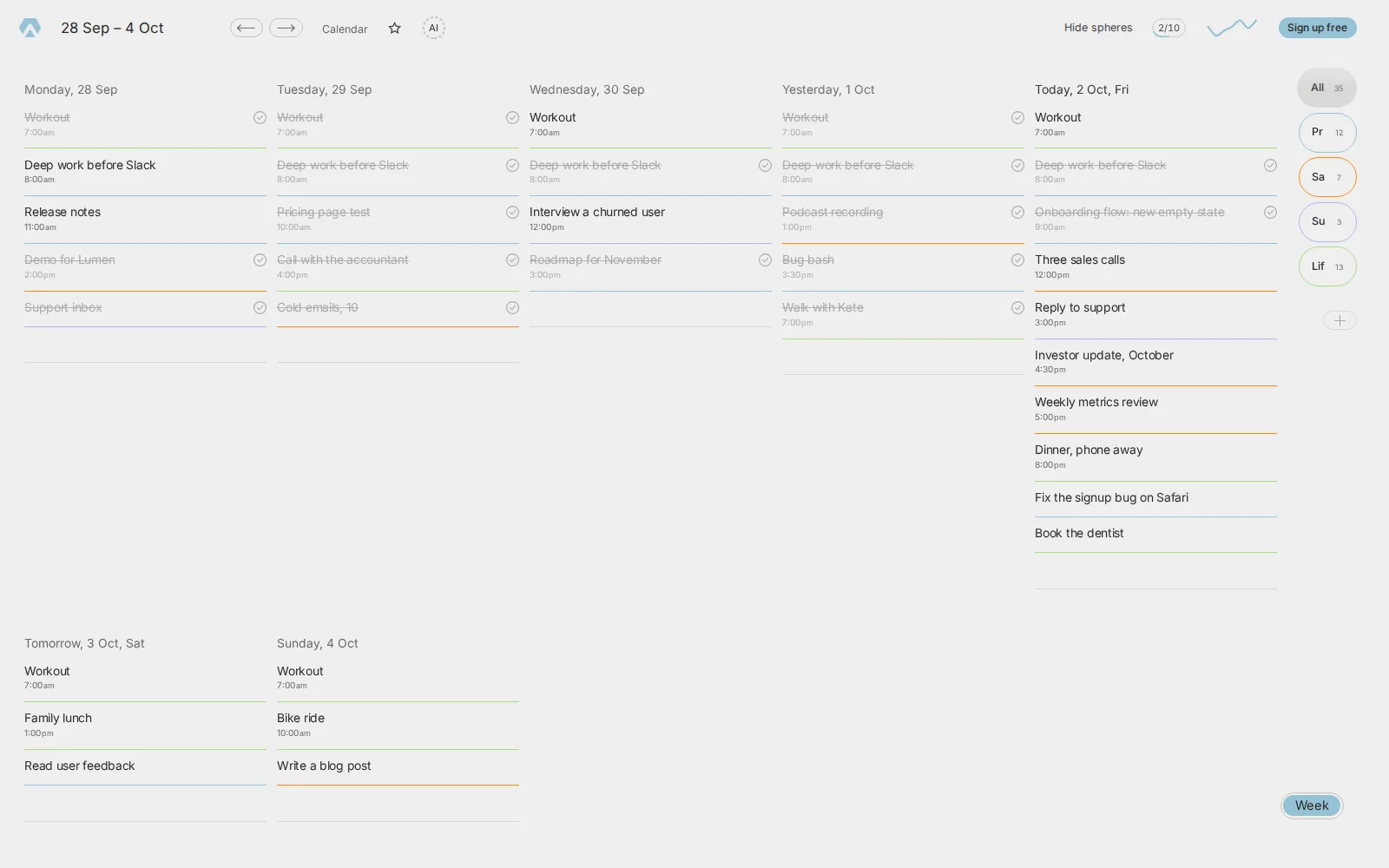
Before I learned WOOP goal setting, I set goals the same way every January, and honestly most Mondays. I'd picture the result in full detail: the finished product, the fitter body, the calmer schedule. Felt amazing. And by week three, most of those goals had quietly drifted out to sea.
It took me a while to see that the picturing itself was part of the problem. I was spending my energy on the feeling of having arrived and none of it on the road. When the first real obstacle showed up, a busy week or a tired evening, I had no plan for it. So the obstacle won. Every time.
What changed my results was one small addition. After I picture the outcome, I look straight at what's most likely to stop me, and I decide in advance what I'll do when it shows up.
What WOOP goal setting is
WOOP stands for Wish, Outcome, Obstacle, Plan. It was developed by psychologist Gabriele Oettingen, and it's a short, structured way to think through a goal in four steps:
- 01Wish. What do you want to achieve in the coming weeks? Something challenging but within reach. "Publish two case studies on my portfolio by the end of the month."
- 02Outcome. What's the best result of getting there? Picture it for a moment and let yourself feel it. "Clients see my best work and I stop underpricing because my portfolio shows what I can do."
- 03Obstacle. What's the main thing inside you that's most likely to get in the way? Be honest and specific. "When I sit down to write, I start polishing the visuals instead and run out of time."
- 04Plan. What will you do when that obstacle shows up? Phrase it as if, then. "If I notice myself adjusting visuals before the text is drafted, then I close Figma and write for twenty minutes first."
The whole thing takes five to ten minutes. Paper works. A walk works. Your planner works.
Why wish, outcome, obstacle, plan works
Research on positive thinking found something surprising. Daydreaming about a goal, on its own, tends to go along with less effort and weaker results, not more. Part of the reason seems to be that vividly imagining success lets your mind relax as if the goal is already done. You feel great. You also feel less need to move.
The fix is called mental contrasting. You hold the outcome you want and the obstacle in front of you side by side. The obstacle stops being a surprise and becomes a known problem to solve. Studies show this contrast helps people commit harder to goals that are realistic and let go of goals that aren't. That second part is useful too. Fewer zombie goals hanging around.
The plan step adds a second, well studied tool: implementation intentions. These are specific if-then plans that link a situation to a response ahead of time. You write the trigger and the action before you need them. When the situation arrives, the response kicks in more automatically, with less willpower required in the moment. Across many studies, people who make these plans follow through on their intentions more often than people who only set the goal. I go deeper on this in my guide to implementation intentions, with real if-then examples.
Put together, the four steps give you the pull and the route. Wish and outcome are the motivation. Obstacle and plan are the map.
How to achieve your goals with WOOP
- 01Choose one goal for the next few weeks. Not your whole life vision. Something you can make real progress on in two to six weeks. Not sure what to pick? Check it against what matters most to you. My post on values vs goals is a good place to start.
- 01Write the wish in one sentence. Short and concrete. "Launch the new pricing page" beats "grow my business."
- 01Picture the best outcome for a minute. Close your eyes if it helps. Notice how it would feel and what would change. Then capture it in a few words.
- 01Find the real obstacle. Ask yourself: what in me usually stops this? Look for habits, emotions and patterns, not outside stuff you can't change. "Clients interrupt me" is outside. "I answer every message the second it lands" is yours to work with.
- 01Write one if-then plan for that obstacle. Make the "if" a moment you'll recognize and the "then" a small, specific action. "If it's 10 a.m. and I haven't started the pricing page, then I set a timer for twenty-five minutes and open the file."
- 01Put the plan where you'll see it. A plan you forget is a plan you don't have. Turn the "then" into a task, or a repeating task on the days it applies.
- 01Check in weekly. Was that the real obstacle? Did the plan fire? If a different obstacle showed up, write a new plan for it. Goals rarely fail for just one reason, and a quick Sunday weekly review teaches you a lot about how you actually work.
Goal setting obstacles: common mistakes
Naming only outside obstacles. The goal setting obstacles people name first are usually external. "Not enough time" or "the client is slow" might be true, but they leave you with nothing to do. Find the part you control: how you react, what you pick first, where your attention goes.
Skipping the outcome. Some people jump straight to obstacles and plans, and the exercise turns into a list of problems. The outcome is what makes the effort feel worth it. Give it a real minute.
Making the plan vague. "If I get distracted, I'll focus" isn't a plan. It's a wish in a plan costume. A good plan names a moment and an action you could take right away, so it works even when you're tired.
Setting too many goals at once. Each goal deserves its own obstacle and its own plan. Three goals means three sets of plans to remember. Start with one. Add another once the first feels steady. Real change often takes longer than a few weeks to settle in, as I explain in how long it takes to form a habit.
How Aimgod helps
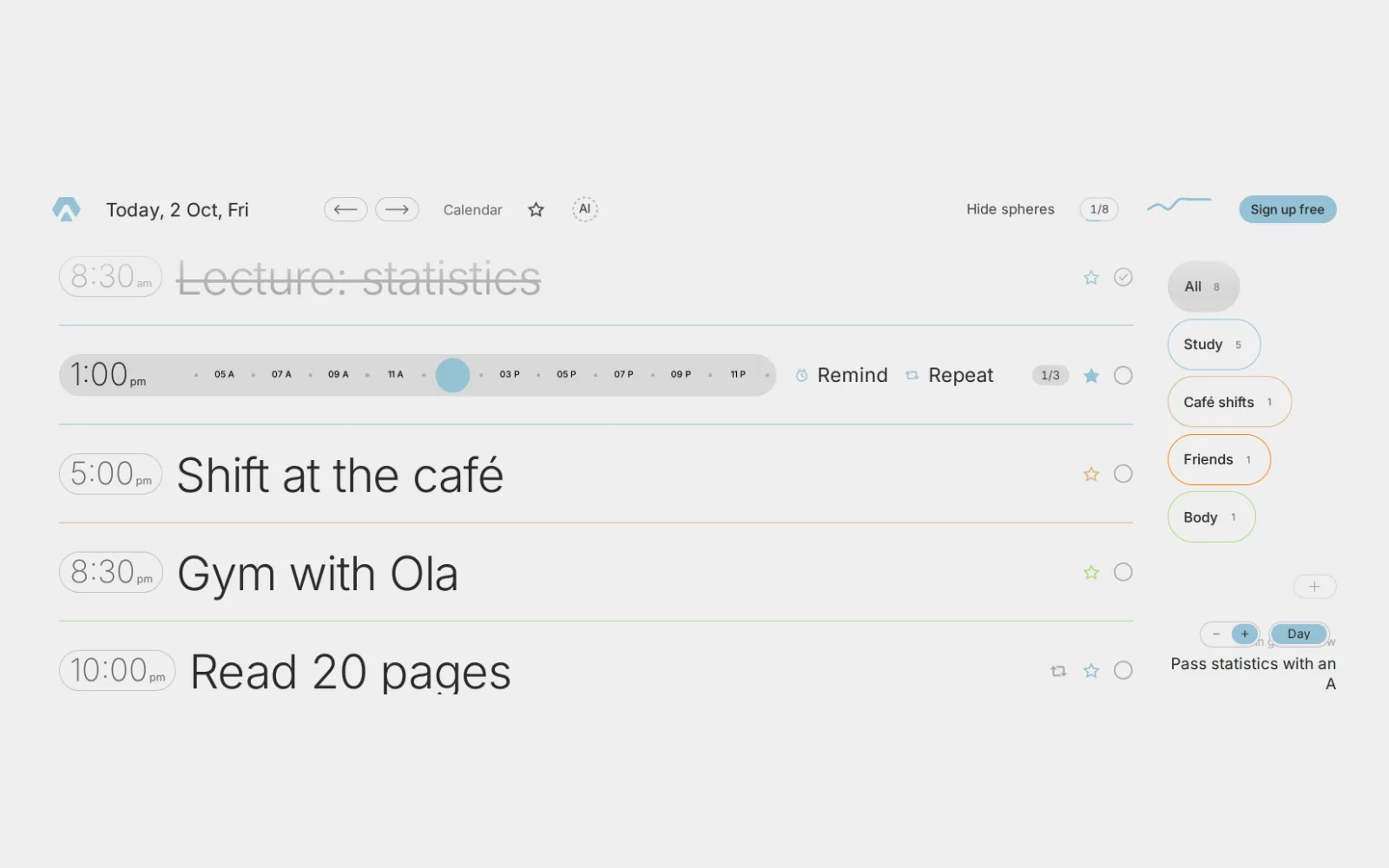
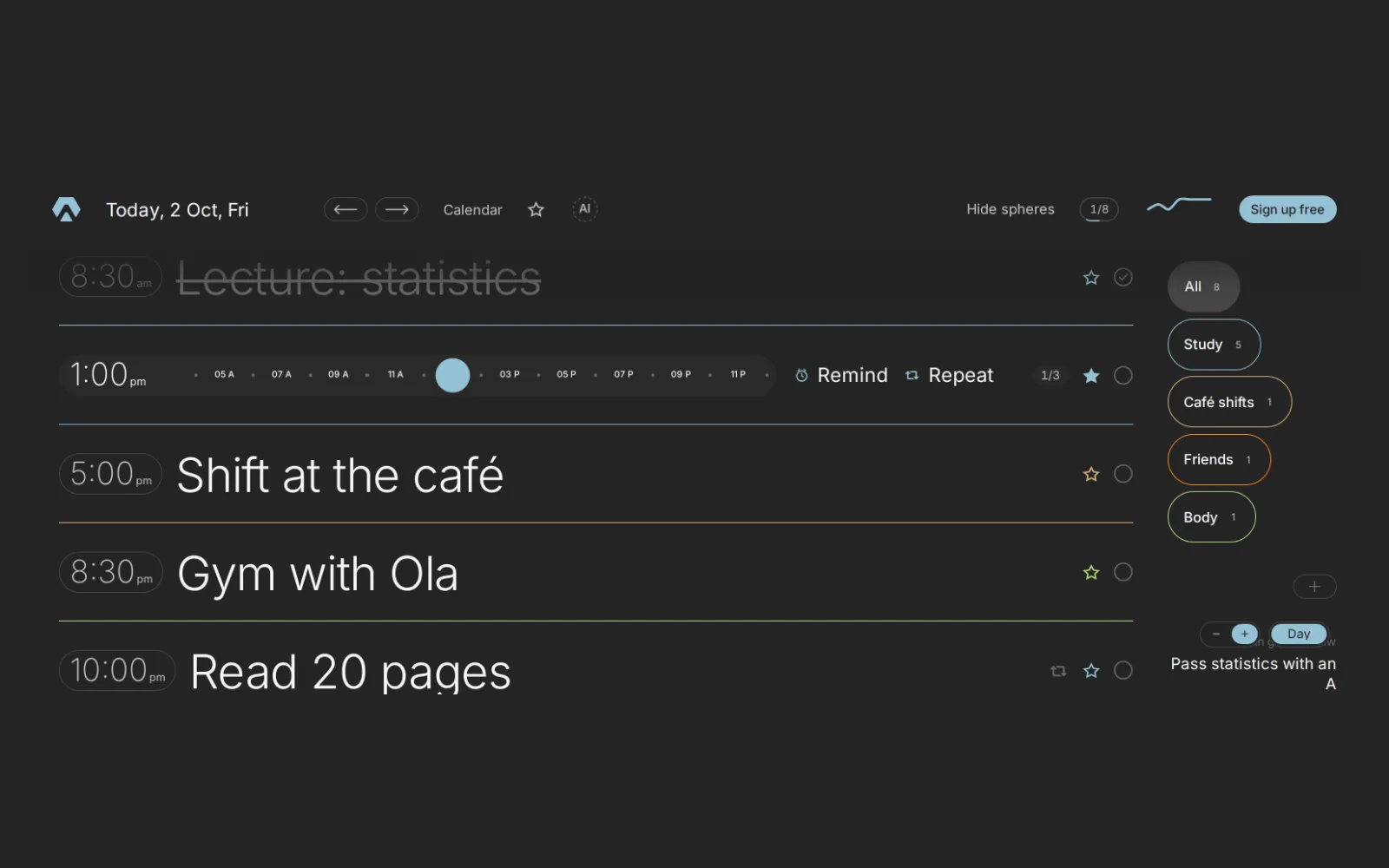
Aimgod is built around a calm, short day, but every day should point somewhere. You can already use it today to carry a goal and its plan.
The main goal for now, live today. Your current main goal sits at the side of the day, so it's in view every time you plan. Write your wish there. It keeps the tasks you choose each morning wired to something bigger.
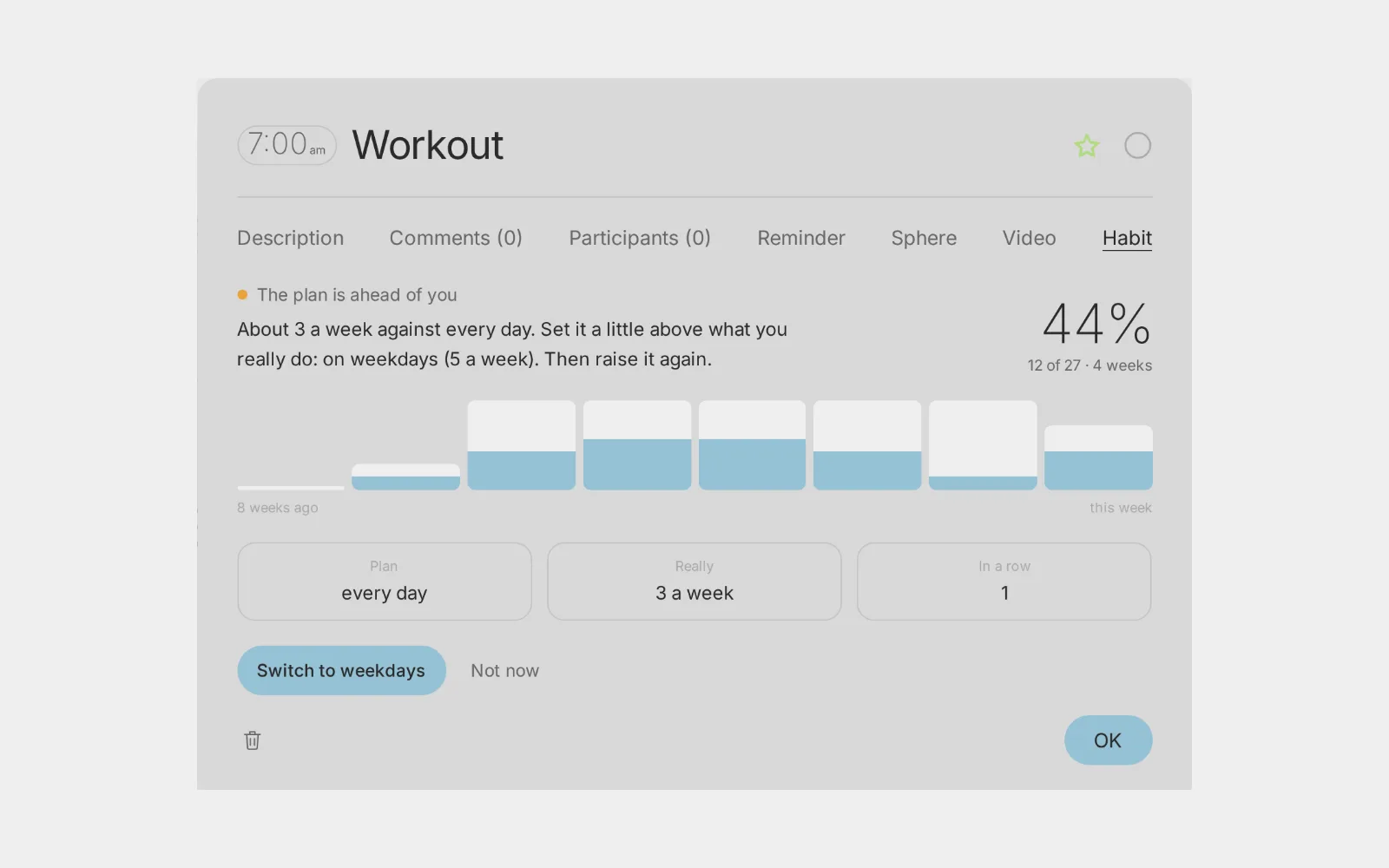
Repeating tasks, live today. Turn the "then" of your if-then plan into a repeating task on the days it applies. "Write for twenty minutes before opening Figma" can show up every weekday morning without you adding it again.
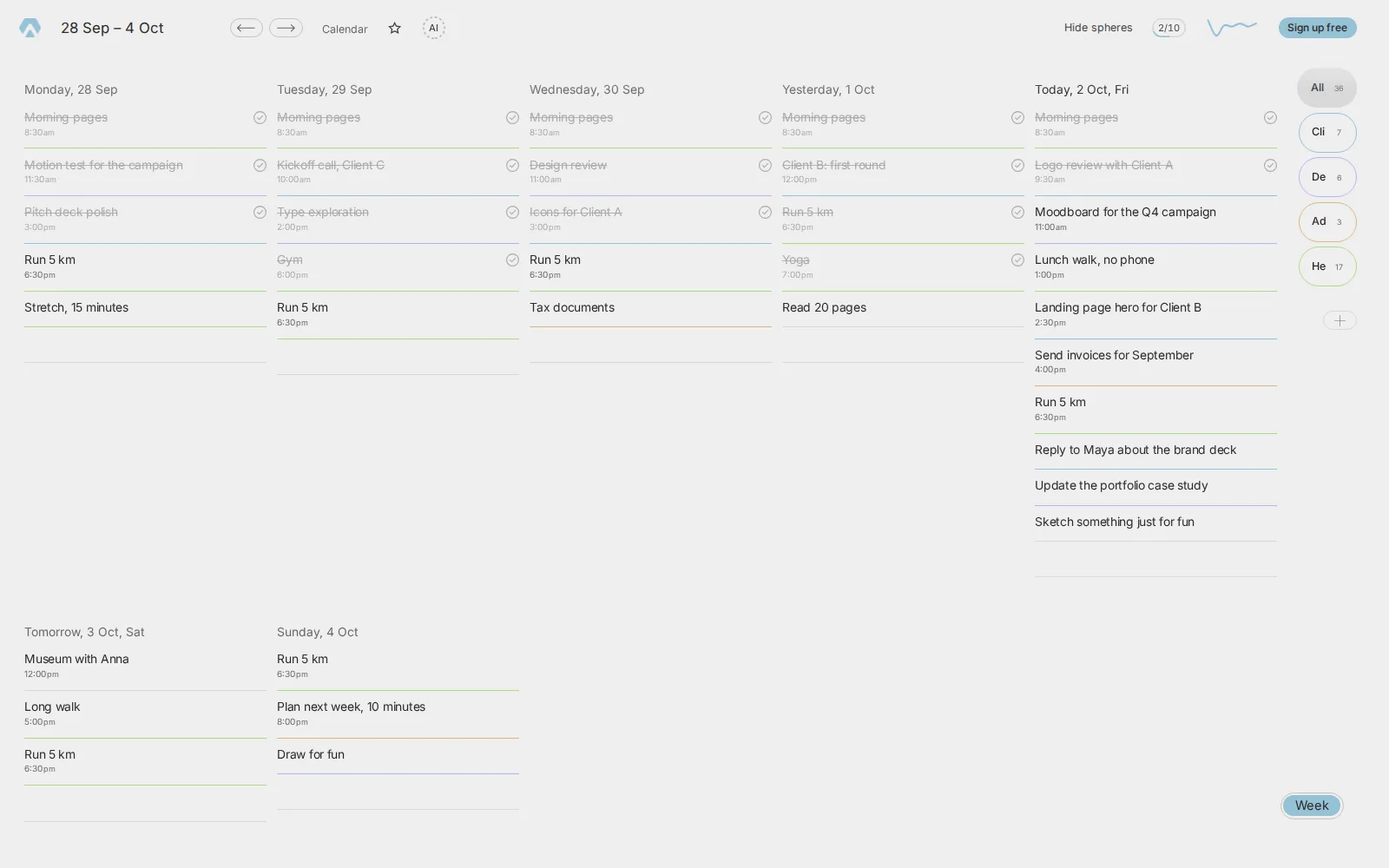
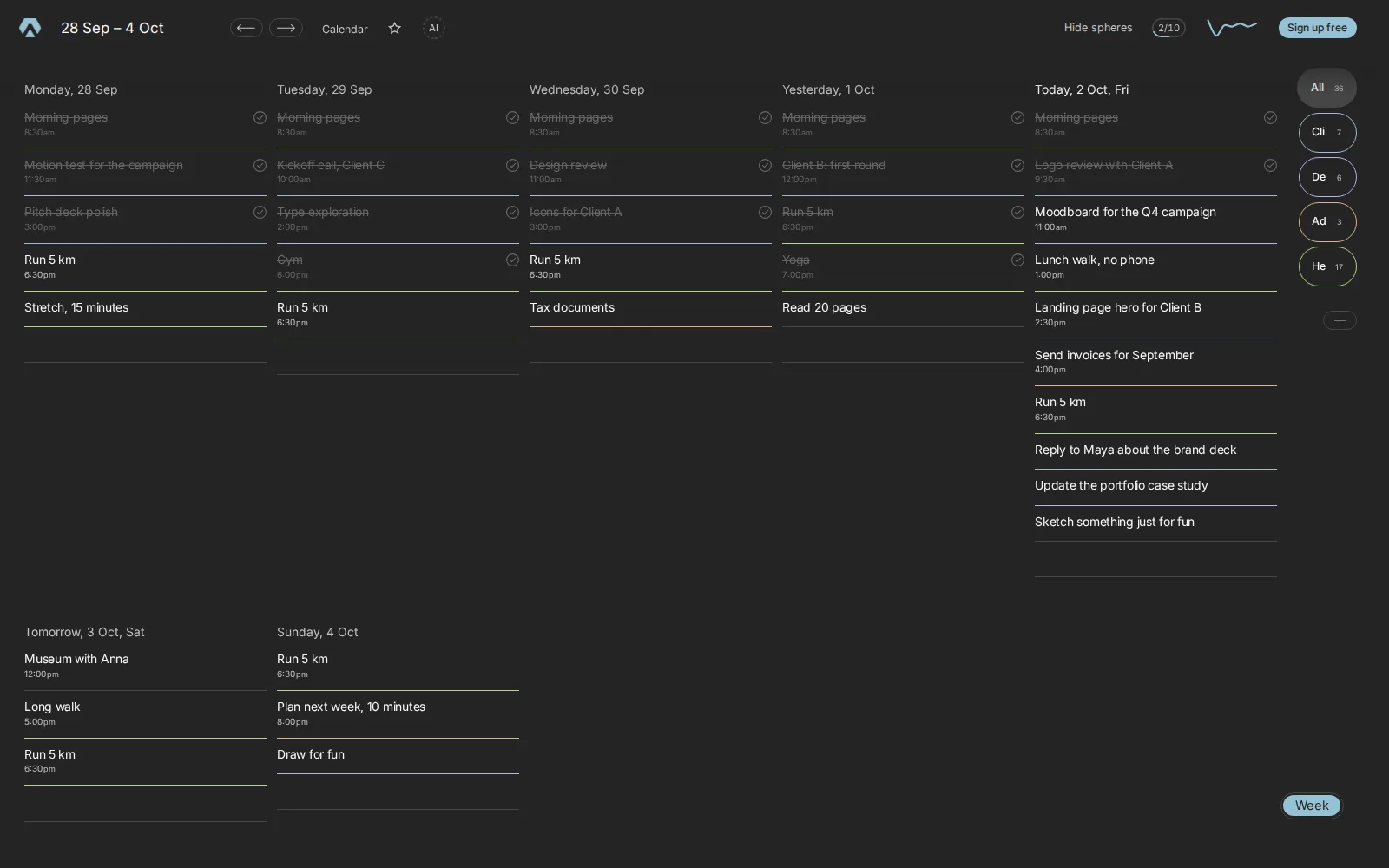
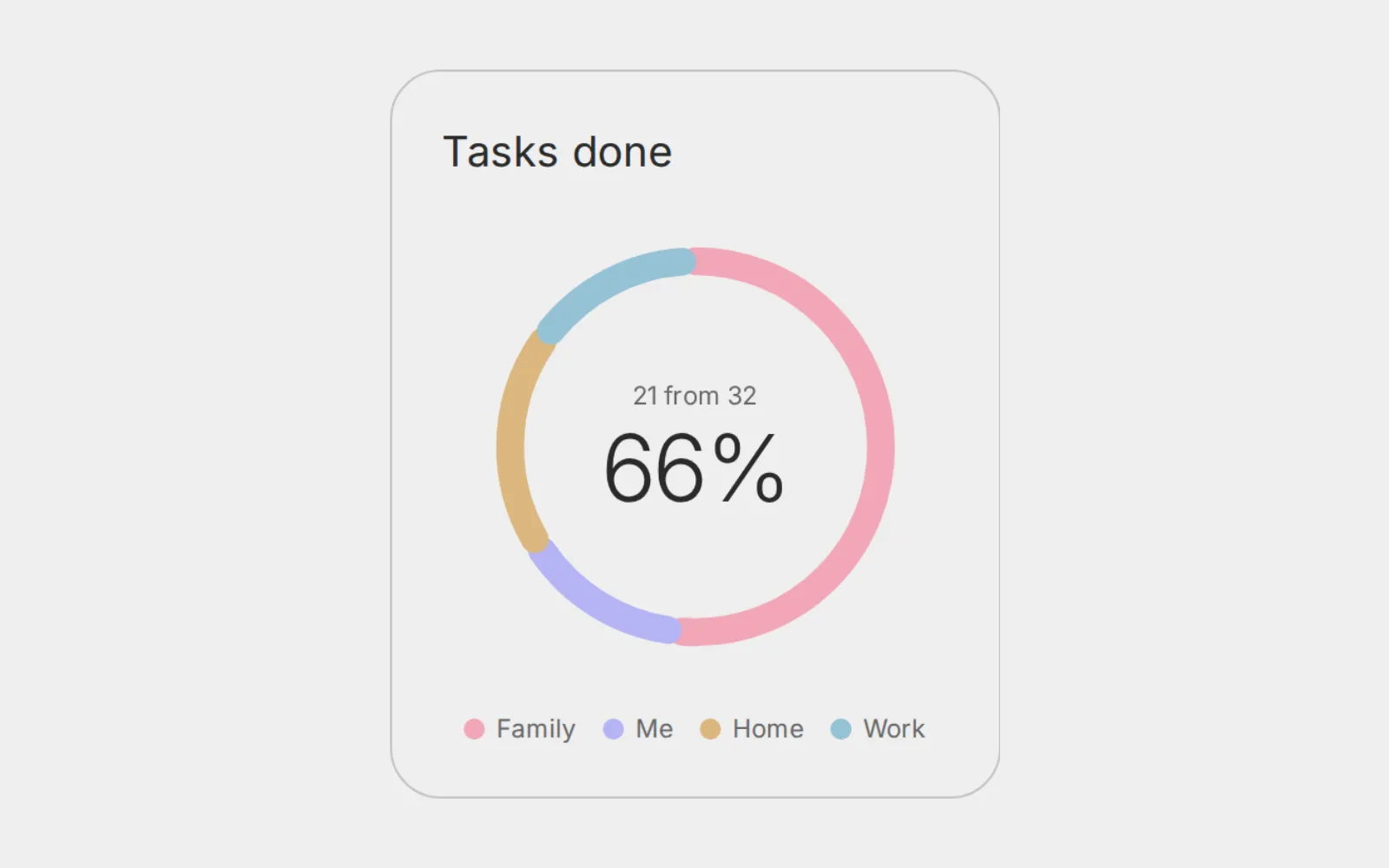
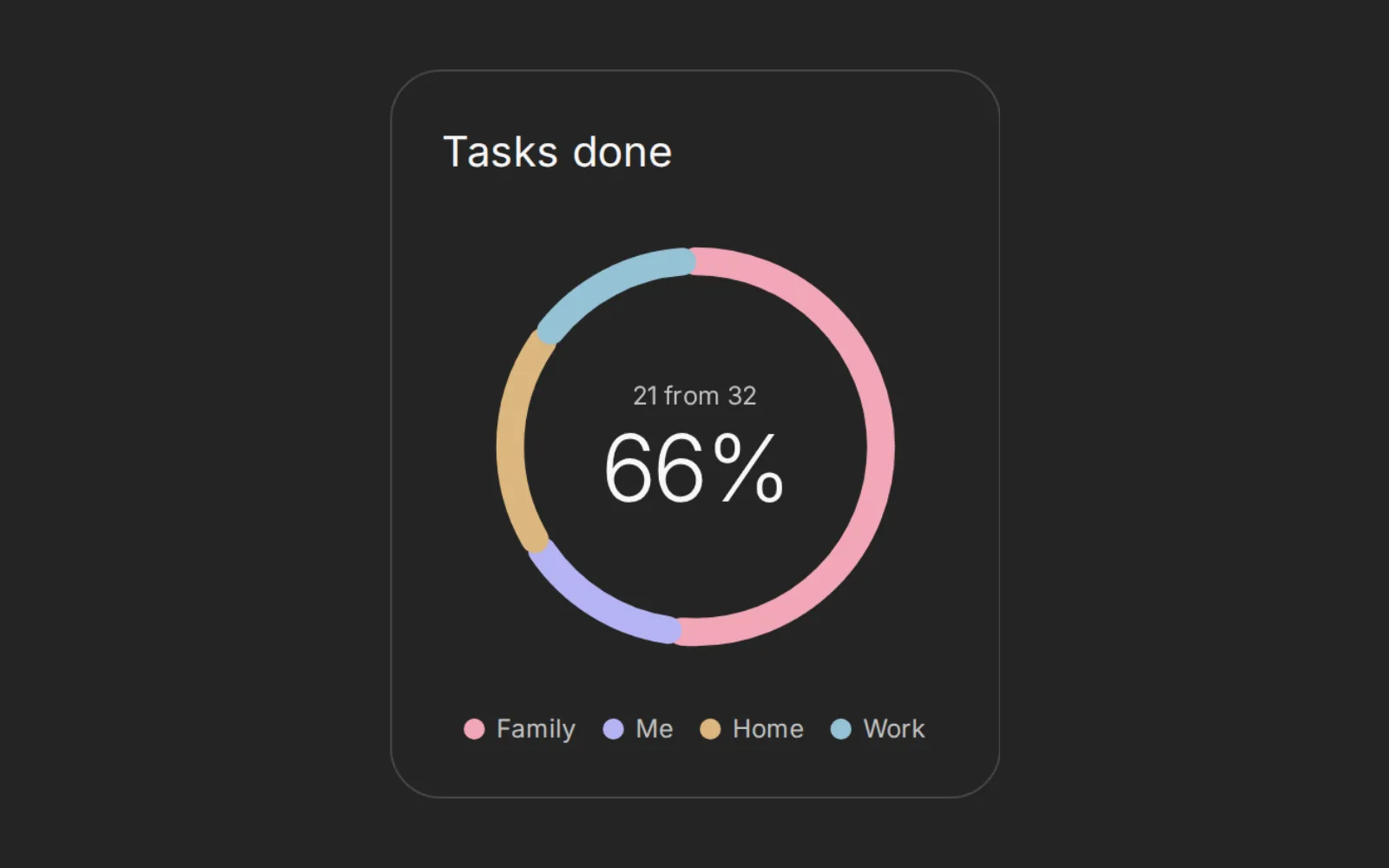
The dashboard, live today. Your week bars of planned and done show whether the plan is actually running. During a weekly review, this is where you see whether the obstacle is still winning.
Goals, coming in January 2027. Starting in January 2027, Aimgod will have Goals linked to your tasks. When you create a goal, Aimgod will ask you to name the obstacle and write its if-then plan, so the four steps become the default way every goal begins.
Look at the obstacle
Picturing success feels good, and it has its place. But when it comes to how to achieve your goals, the ones that come true are usually those where someone looked honestly at what would get in the way and decided ahead of time what to do about it. Pick one goal this week. Name the obstacle. Write one plan. Then watch what happens the first time that obstacle shows up. You'll be ready for it.
FAQ
What does WOOP stand for?
Wish, Outcome, Obstacle, Plan. You name a goal, picture the best result, find the inner obstacle most likely to stop you, and write an if-then plan for it.
What is mental contrasting?
Holding the future you want and the obstacle in your way side by side. Research suggests it helps people commit to realistic goals and drop unrealistic ones.
How often should I do WOOP?
Once when you set a goal, then a quick check during your weekly review. If a new obstacle shows up, run the four steps again and write a fresh plan.
Oleksandr Sendziuk believes the obstacle is part of the plan, not the end of it.
Follow the build on LinkedIn ↗