In Aimgod: Focus point, coming January 2027
Values vs Goals: How to Find Your Core Values
How to find your core values in about twenty minutes: values vs goals made simple, personal core values examples, and a calm way to set goals that fit you.
 By Oleksandr Sendziuk, founder of Aimgod · · 6 min readFollow on LinkedIn ↗
Most planning advice starts with goals. Write them down. Make them specific. Put a deadline on them. Fair enough, it works. Right up until the goal disappears.
The client you built your year around ends the contract. A launch date slides. The market shifts under your feet. Or you actually hit the goal, feel surprisingly little, and wake up the next morning with nothing to aim at.
The goal wasn't the problem. The missing piece was the layer underneath it. Learning how to find your core values is how you find that layer: the reason that's still standing after the goal is gone.
I started building Aimgod in 2013, after years of reading about and testing methods of personal productivity and psychology. This was the first problem I wanted to solve. So the system I built for myself has three horizons, stacked like layers in a product: a lifelong focus at the top, goals for the year and the quarter in the middle, tasks for today at the bottom. This post is about the top layer, and the values based goal setting that grows from it.
Values vs goals: what's the difference?
A goal is a result with a finish line. Ship the redesign by March. Earn enough this quarter to take August off. Run a half marathon. You can hit it, miss it, or lose it because something outside your control changed.
A value is a direction. It describes how you want to live and work, and it never gets checked off. Craft. Freedom. Calm. Generosity. Learning. You don't finish freedom. You move toward it or away from it, week after week, through lots of different goals.
The simplest way to hold the difference: a goal can be taken away, a direction can't. If the March launch gets canceled, your value of careful, honest work is still right there, already pointing at the next goal.
Above your values sits one more thing, a lifelong focus. A short phrase that sums up your direction in words you'll remember on a rough day. A principle, a line from a book, something a parent once said that stuck. A good one can stay the same for years while your goals change many times over. If goals are features, the focus is the product vision.
Why values based goal setting works
Goals motivate because they're concrete. That's also their weak spot. Reach one, and the drive attached to it often fades. Lose one, and it's easy to feel like the whole effort was wasted.
Psychologists who study motivation draw a line between goals you chase because they fit what you care about and goals you chase because you feel you should. The first kind tends to be easier to stick with and more satisfying to work on, even when the outcome is the same. Knowing your values helps you tell the two apart before you hand months to the wrong one.
Values also make decisions lighter. When two good options fight over the same Tuesday afternoon, a goal list only tells you what's urgent. A value tells you which option is closer to the person you're trying to be.
And values keep you steady through change. If each goal is the whole story, every ending feels like a crash. If each goal is one step in a direction you chose, an ending is just a bend in the road. Enjoy the view, keep driving.
How to find your core values, step by step
You won't find your values by staring at a list of nice words. They're hiding inside the goals you already have. Here's the method I use. Grab a notebook. It takes about twenty minutes, and nobody's grading it.
- 01Write down one goal you care about right now. Keep it real and specific. For example: "Land two retainer clients by the end of the year."
- 02Ask: what would this goal give me? Think about what it would let you feel or live. "Steady income."
- 03Ask the same question about the answer. What would steady income give me? "I could stop saying yes to every project."
- 04Ask once or twice more. And what would that give me? "Time to do work I'm proud of, at the pace it deserves." And that? "Craft, and some calm while I do it."
- 05Stop when the answer stops changing. Usually after three or four rounds you hit words that describe a direction, not a result. Here they're craft and calm. Those are values.
- 06Repeat with two or three other goals. The same words often come back. That repetition is the signal, the pattern in the data. If you're asking yourself "how many core values should I have?", here's the usual answer: most people end up with three to five values that cover nearly everything they want.
- 07Choose your lifelong focus. Look at your values and find a phrase that holds them. Maybe it's something you already tell yourself, a line a grandparent liked to repeat, or a principle from your trade, like "do it properly or leave it alone." Keep it short enough to remember in a stressful meeting.
- 08Connect the layers. Under the focus, set one to three goals for the year and one or two for the quarter that move in that direction. Under those go today's tasks. If a task connects to nothing above it, it's fair to ask whether it belongs on the list at all.

Personal core values examples
Some personal core values examples people often land on this way: craft, freedom, health, family, learning, honesty, calm, contribution, adventure, independence. None beats another. What matters is that they're yours, and that you got there from goals you actually have.
Once you know them, the daily choice gets simpler. The task that serves your values most is usually the one worth doing first, which is the whole idea behind do the hardest thing first. And if a goal that fits your values keeps stalling anyway, something specific is probably in the way. That has its own fix, which I cover in planning for the obstacle.
Common mistakes when choosing values
Picking values that sound good. It's tempting to grab words you admire in other people. Fix: keep a value only if it showed up when you asked "what would this give me?" about your own goals.
Turning a value into a goal. "Be healthy" is a value. "Run 5 km without stopping by June" is a goal that serves it. Fix: keep values as directions and let goals carry the deadlines.
Too many values. A list of twelve gives you no direction, because almost any choice fits one of them. Fix: cut it to three to five, and accept that the rest are things you like, not your compass.
Never looking at them again. Values written once in a notebook don't do much. Fix: keep your lifelong focus somewhere you see it daily, and check your goals against it during your weekly review.
How Aimgod helps
The three horizons are the reason Aimgod exists, and they're arriving in the app in stages.
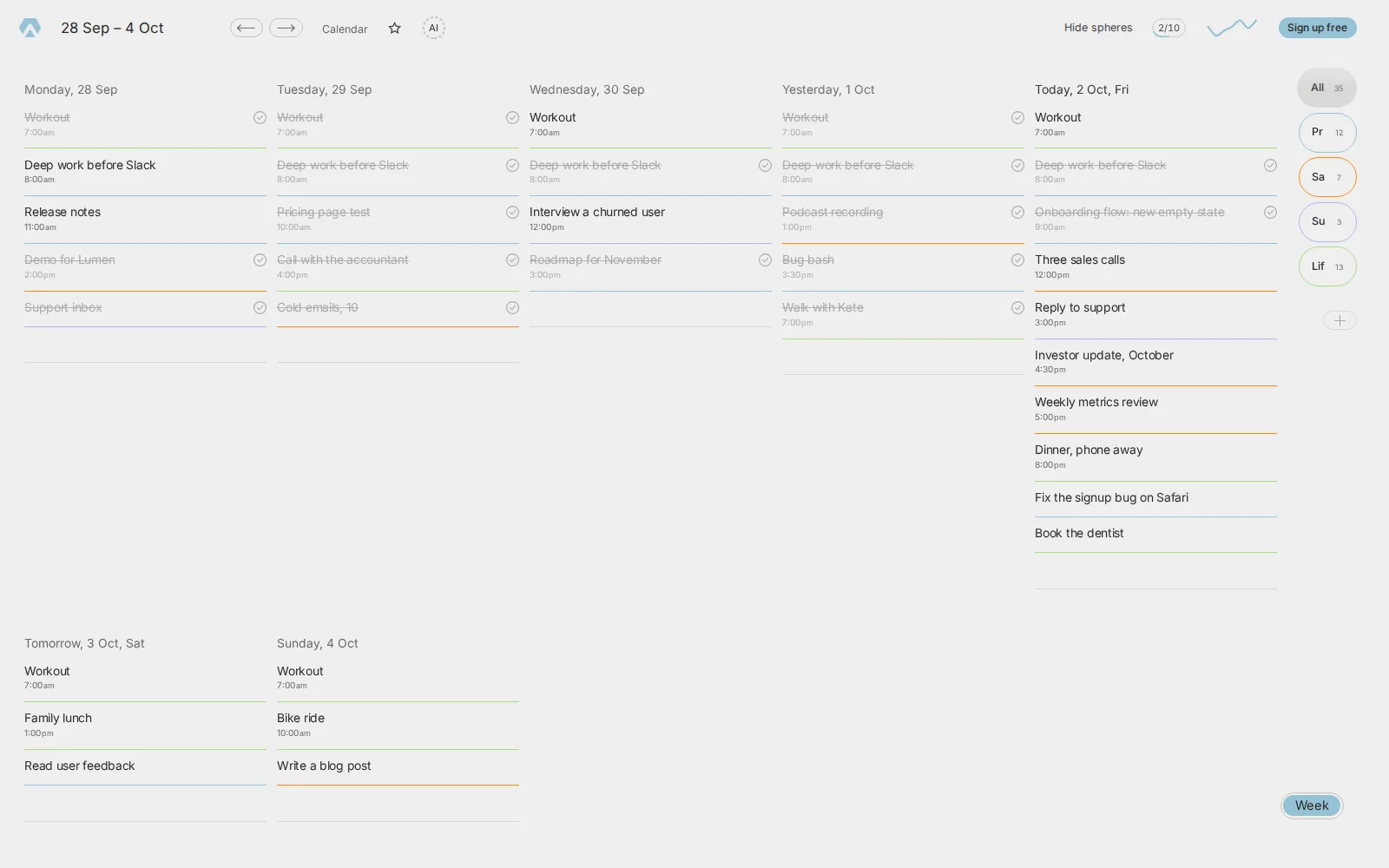
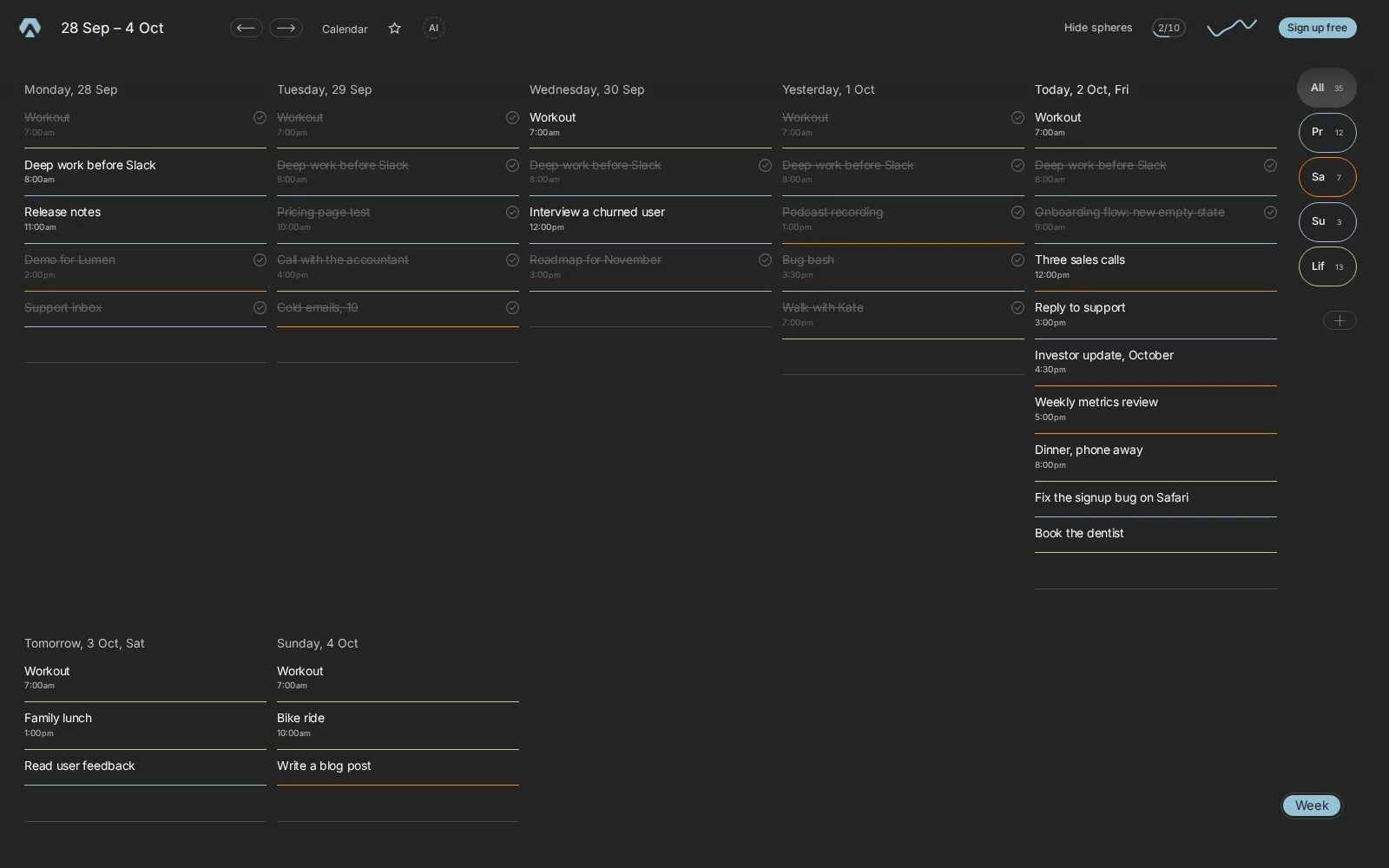
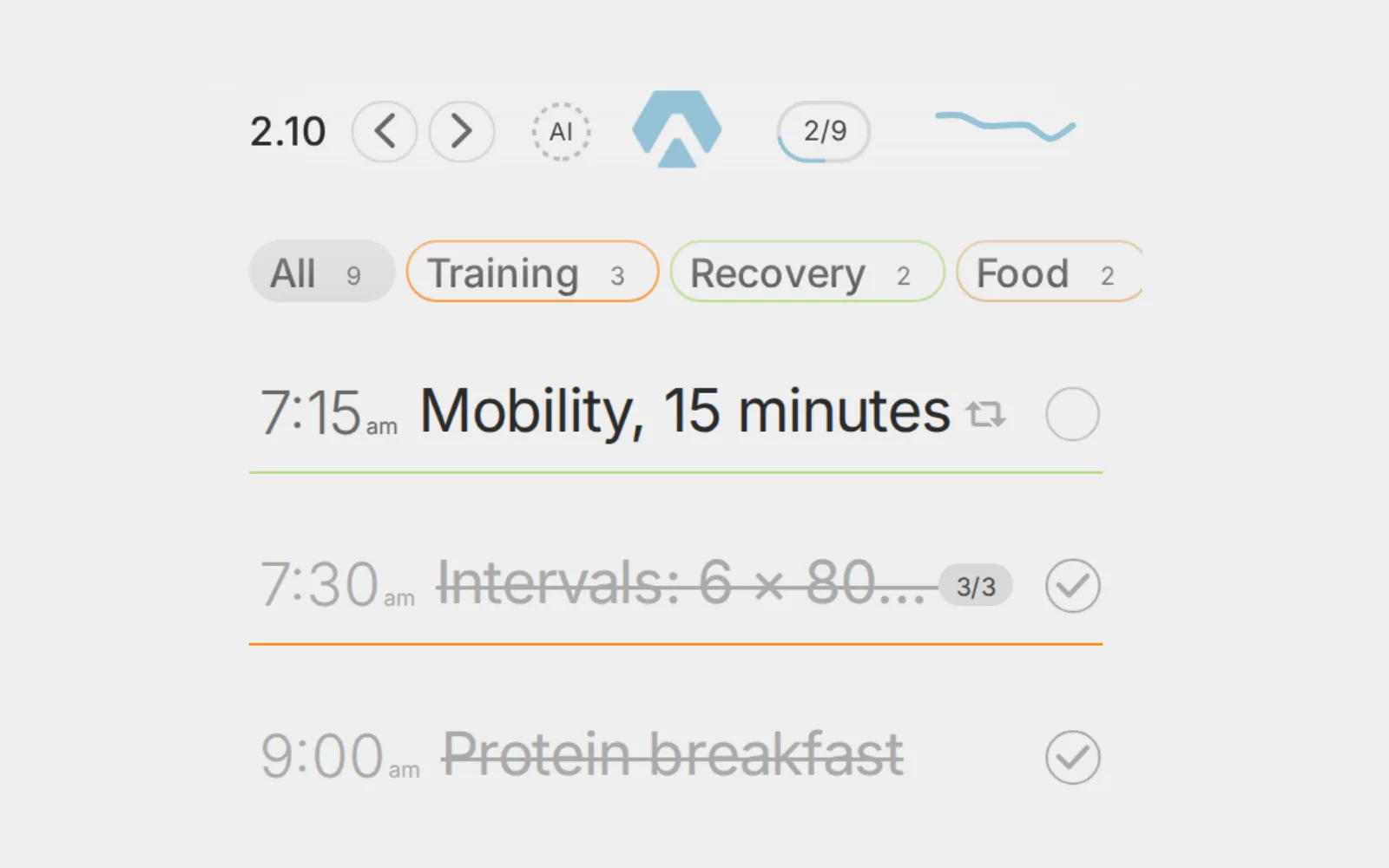
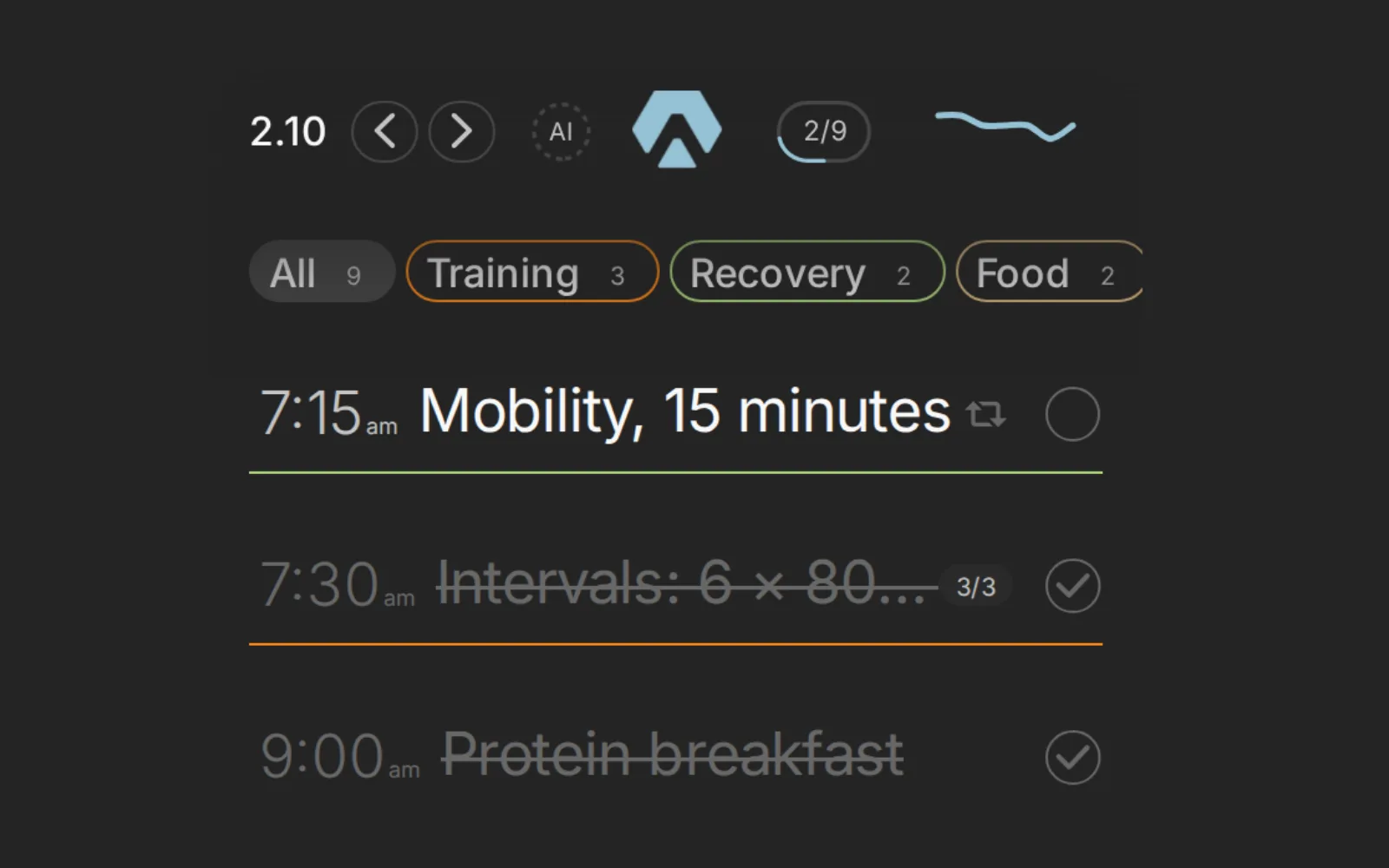
Today, you can write your main goal for now in the line beside the day. It sits right next to your tasks, so every morning you see what the day is in service of. When a task doesn't fit that line, you notice.
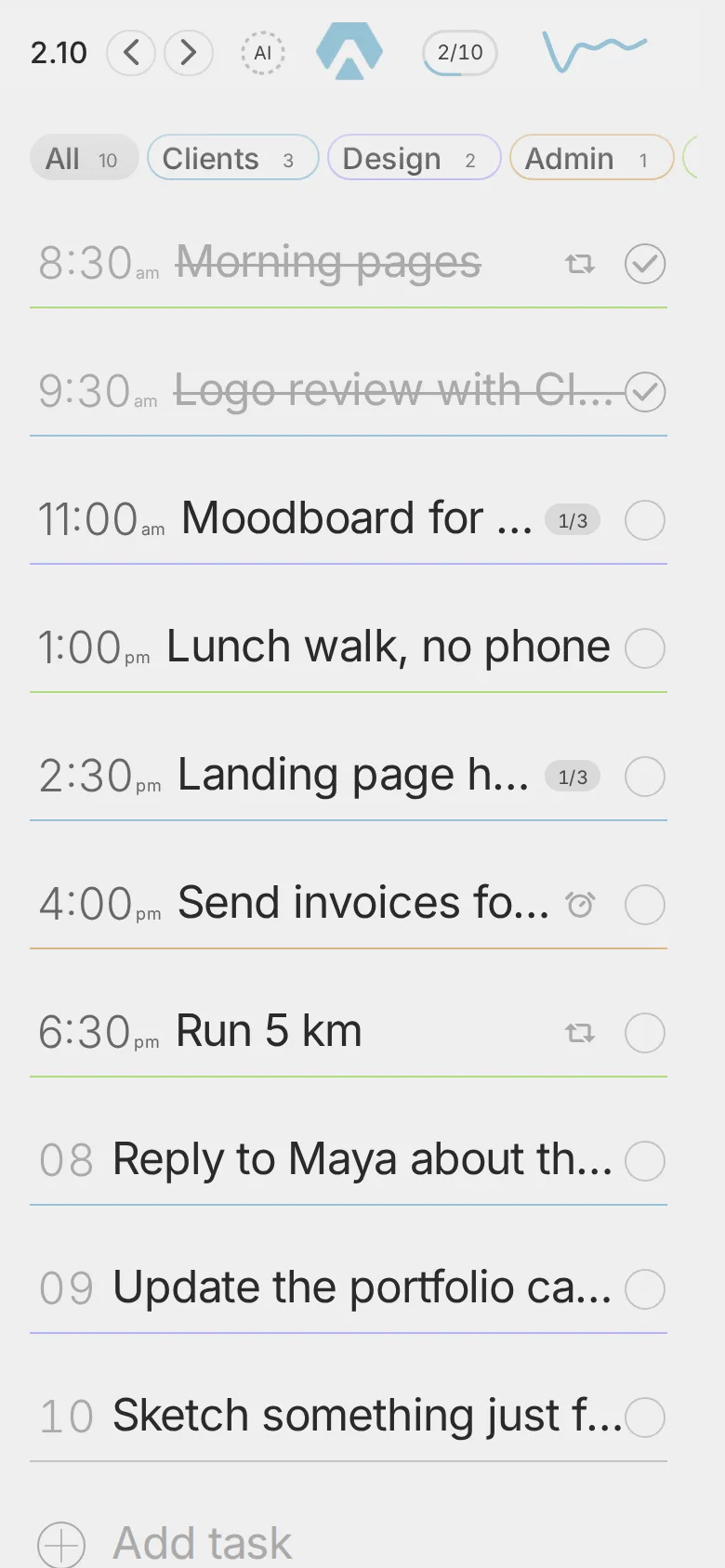
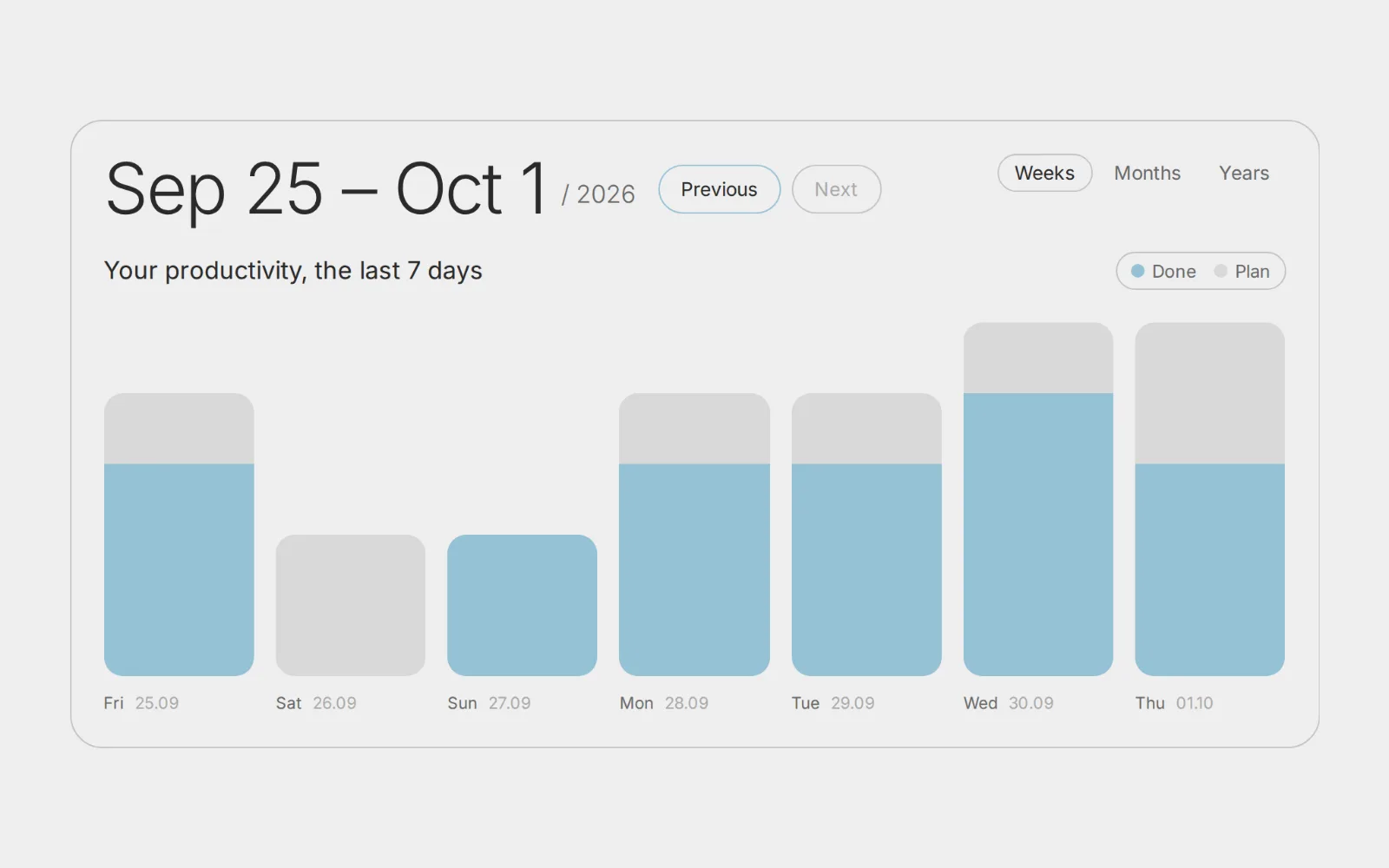
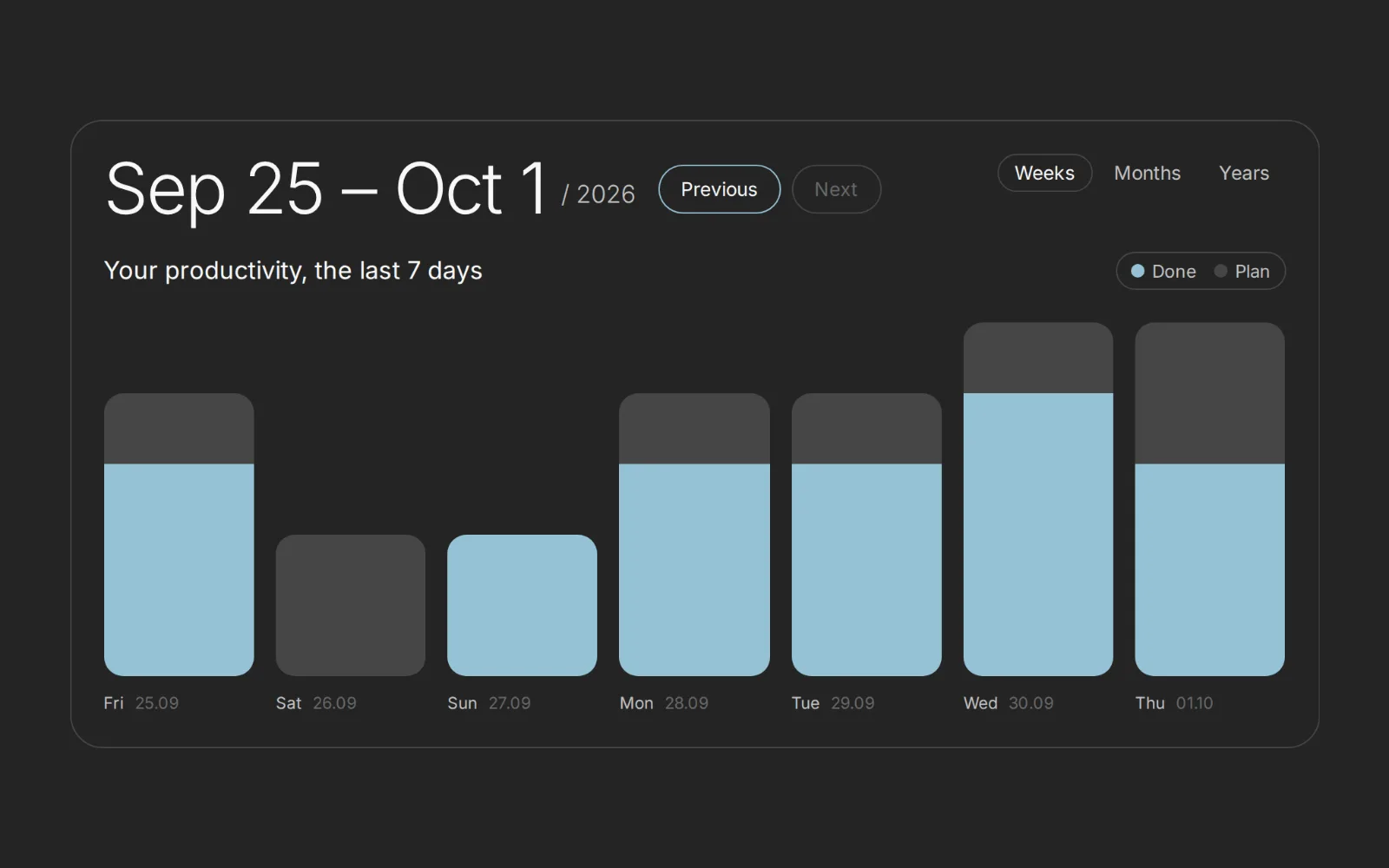
Coming in January 2027, the Focus point: a Focus section for the lifelong horizon, where you keep your values and your focus phrase, plus Goals for the year and the quarter that link straight to tasks. Open a goal and you'll see the work that moves it.
Until then, the main goal line and a short weekly check are plenty. If your days feel scattered, it helps to stop overplanning your day and keep only the tasks that point somewhere.
A direction you keep
Goals come and go. That's normal, and it's a lot easier to live with when the direction underneath stays put. Find what sits behind your goals, give it a few honest words, and let today's tasks follow from there.
FAQ
What is the difference between values and goals?
A goal is a result with a finish line, like shipping a project by March. A value is a direction you keep moving in, like craft or freedom. You never check it off.
How many core values should I have?
Three to five. Go past that and almost any choice fits one of them, so they stop steering anything.
Can your core values change over time?
Yes, slowly, as your life changes. For most people they stay fairly stable for years, while the goals that serve them change often. Your lifelong focus tends to be the most stable layer of all.
Oleksandr Sendziuk has spent his life looking for what matters. Aimgod is where he keeps the answer.
Follow the build on LinkedIn ↗